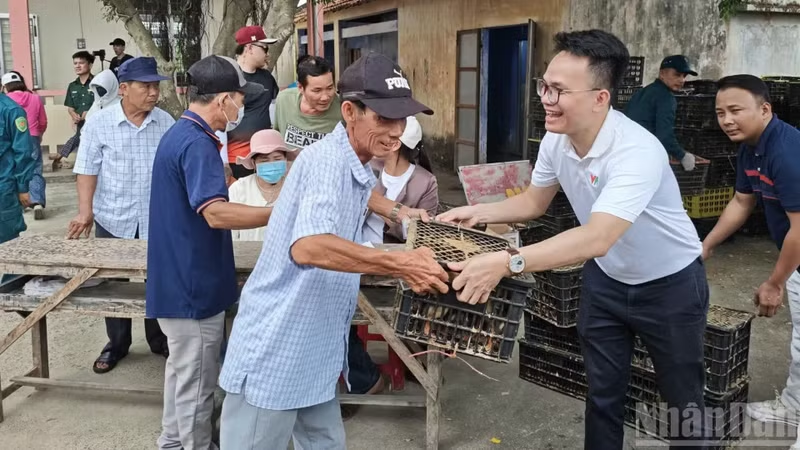
On trucks and pickup vehicles climbing steep slopes and crossing muddy roads still bearing traces of the flood season were “special gifts”: breeding cows, chicks, ducklings, and new bicycles for disadvantaged pupils.
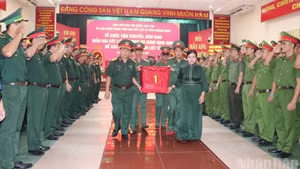
Over three days, from May 8 to 10, the third season of the “Life after floods” programme, jointly organised by the Youth Union of Viet Nam Television, the An Phuc Charity Club, the Military Youth Board, the Political Department of Military Region 5, Military Region 7, and partner units, was implemented in Khanh Hoa, Dak Lak, and Lam Dong provinces.
A total of 63 breeding cows, more than 55,000 chicks and ducklings, along with 100 bicycles, were handed directly to residents and pupils in disaster-affected areas, with a total value of nearly 3 billion VND. However, the value of the programme went far beyond the numbers.
Livestock breeds help restore hope after floods
In rural areas once submerged by floodwaters, where crops were swept away, barns were collapsed, and livestock perished, the livestock breeds handed to residents today are not only short-term support. They are start-up capital for a new beginning, an opportunity to rebuild livelihoods, and a source of confidence for struggling families to rise again after disaster.
Following the storms and floods in 2025, many communes in mountainous, remote, and ethnic minority-inhabited areas in Khanh Hoa, Dak Lak, and Lam Dong provinces suffered severe damage. Floodwaters swept away fields, gardens, and livestock, leaving behind empty barns and mounting debts.
For many poor and near-poor households, losing a cow means more than losing property. It means losing savings, losing an economic pillar for the whole family. That is why many residents waited from early morning when the vehicles carrying breeding cows and poultry arrived in their villages.
A special aspect of the programme was that every support package was carefully prepared rather than distributed only for formality.
From Nam Khanh Vinh Commune of Khanh Hoa Province and D’Ran Commune of Lam Dong Province to Hoa Xuan, Hoa Thinh, Son Thanh, Son Thanh Tay, and Song Hinh Communes of Dak Lak Province, each type of livestock was selected based on local climate conditions, farming practices and residents’ ability to care for them.
The healthy breeding cows were selected from prestigious facilities and suitable for household farming models.
The chicks and ducklings all underwent health checks, full vaccinations, and sufficient brooding before being handed over to facilitate initial care for people.
“Presenting livestock breeds to residents after floods cannot end with simply handing them over. We carefully calculate from breed sources and farming conditions to adaptability in each locality, so the support can generate long-term effectiveness,” shared Chu Viet Ha, Chairman of the An Phuc Charity Club.
Alongside preparing the livestock breeds, armed forces, local authorities, and mass organisations directly reviewed each household, prioritising poor and near-poor families and those facing hardship but capable of raising livestock. As a result, each gift reached the right recipients according to actual needs.
In D’Ran Commune, Lam Dong Province, where many households have not fully recovered from natural disasters, Phan Thi Hoai Thanh, Deputy Secretary of the Communal Party Committee, said that the breeding cows and poultry presented are not only post-disaster support gifts but also initial capital for residents to rebuild their household economies. The locality will continue accompanying residents and providing technical guidance to ensure sustainable effectiveness, she added.
In Hoa Thinh Commune, Dak Lak Province, Dinh Thi Tin from My Dien Village tightly held the rope leading the cow she had just received, her eyes filled with joy after months of hardship.
“After the floods, people only hoped for conditions to start over. Having a cow in the barn means having more hope and more work to care for every day. My family will try our best to raise it well to create additional income in the future,” she said.
Truong Thi Bay from Thach Tan 1 Village, Hoa Xuan Commune, said that the gift arrived at the right moment. “After the floods, we had no capital to raise livestock again. Now we have received support, we are very happy. We will try to take good care of the animals to stabilise our lives,” she emotionally shared.
These simple words show that for residents in flood-affected areas, a breeding cow or dozens of chicks and ducklings are not merely livestock. They are a foundation for a fresh start.
Extending children’s journey to school in disadvantaged areas
Not only supporting livelihoods for adults, the third season of the “Life after floods” programme also paid special attention to children in disadvantaged areas.
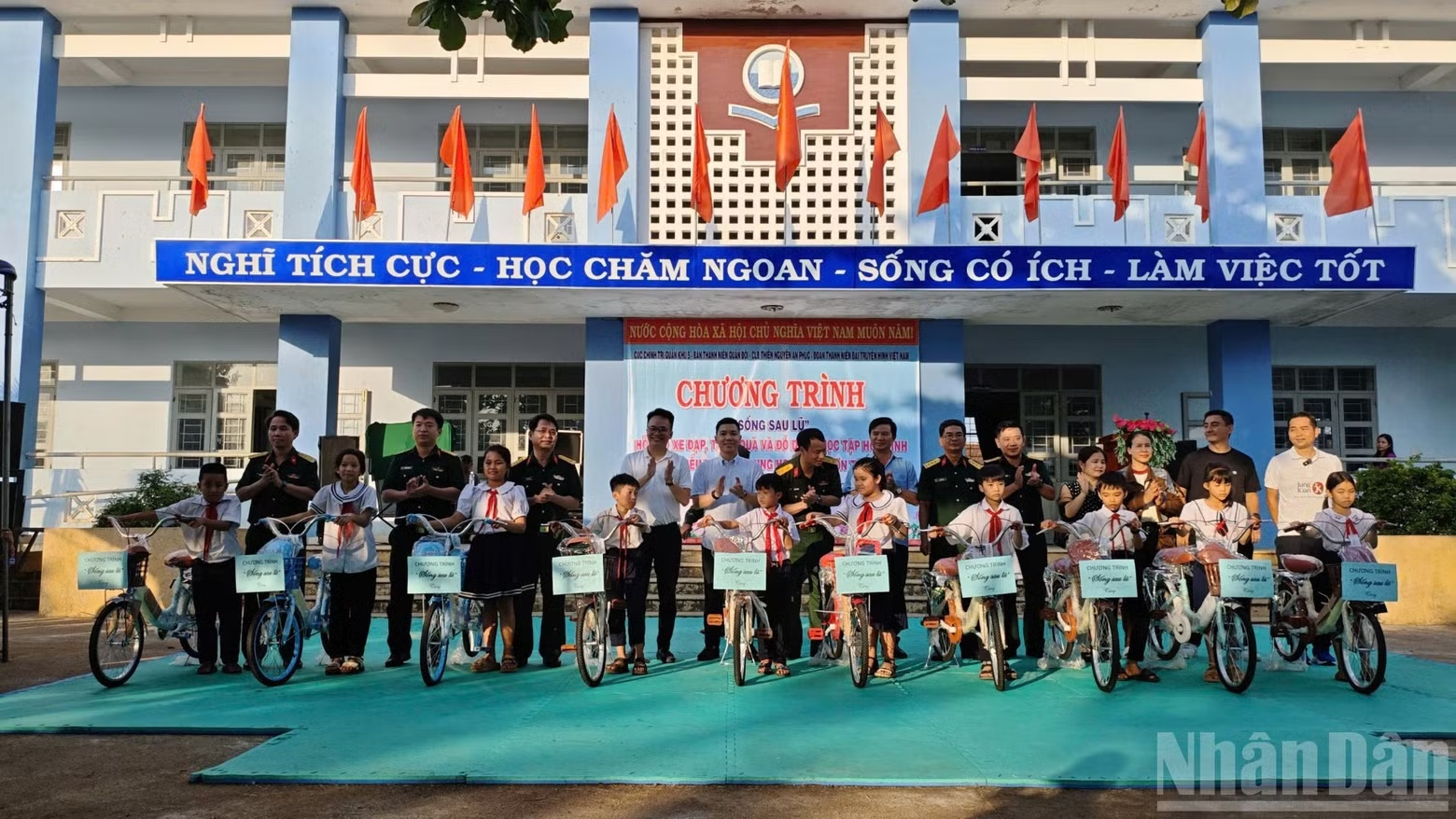
A total of 100 new bicycles were presented to disadvantaged pupils, many of whom are ethnic minority children living far from school and facing difficult journeys to class.
At Son Thanh Tay Primary and Secondary School in Dak Lak Province, which has 610 pupils, including 68 ethnic minority students, joy was visible on every face as bicycles were handed directly to the children.
H’Ha, a Grade 6B student from the Ba Na ethnic group, could not hide her emotion: “I used to feel very tired going to school, especially on rainy days. Today I received a bicycle and I’m very happy. From now on, I can attend school more regularly and try to study harder.”
Nguyen Nhu Son, the principal of Son Thanh Tay Primary and Secondary School, said that for pupils in disadvantaged areas, especially ethnic minority students, a bicycle has a great significance. It helps them travel to school more conveniently, eases the burden on families, and creates more motivation for them to attend classes regularly.
Speaking about the programme’s significance, Nguyen Hoai Dam, Secretary of the Youth Union of Viet Nam Television, said: “After storms and floods, adults need to restore production while children need to continue going to school. For the youth of Viet Nam Television, accompanying social welfare programmes is not only about spreading meaningful stories but also directly contributing to the community. When each organisation joins hands, social resources are multiplied and become a support for flood-affected residents to gradually stabilise their lives.”
Happiness comes from sharing
The reality of the third season of the “Life after floods” programme shows that post-disaster support efforts are gradually shifting from short-term relief thinking to restoring livelihoods, stabilising lives, and caring for the future of younger generations. Instead of providing temporary support gifts, participating organisations chose to address the most essential needs of flood-hit residents: households need livestock breeds to rebuild production, pupils need means of transportation to continue their journey to school, and localities need coordinated efforts so social resources can be used effectively and sustainably.
Along the journey from Khanh Hoa through Dak Lak to Lam Dong, the image of officers, soldiers, youth union members, charity volunteers, and local authorities busily transporting breeding cows, chicks, and ducklings, and carefully handing bicycles to residents and pupils, became vivid examples of solidarity and mutual support during difficult times.
At every destination, armed forces demonstrated their close connection with local communities and coordination capabilities; grassroots authorities directly reviewed and selected appropriate beneficiaries and monitored post-support implementation; while youth organisations and volunteer groups mobilised social resources. This close coordination not only ensured that the programme was implemented systematically and practically but also guaranteed that every support package truly generated value.
After floods, residents need to rebuild houses, repair barns, and revive gardens and fields. Children in disadvantaged areas still need to continue going to school and nurturing unfinished dreams. Therefore, the breeding cows, poultry, and bicycles provided through the programme carry far more than material value. They are hope, support, and encouragement for residents and children to move forward after losses caused by natural disasters.
From lands once devastated by floods, the third season of “Life after floods” is quietly sowing seeds of livelihood and hope. In the future, as livestock herds grow and bicycles continue rolling steadily along roads to school, life in flood-affected areas will gradually recover through the resilience of local people and the warm support of the community.
![[Video] Renewal and growth milestones of Ha Noi through the lens](https://en-cdn.nhandan.vn/images/1XgBTSIw0KyfD4abQsg-hd4ly6fBUHXC7_OAKyN4YwPfAhBw0Xs6rVX3rF0up9Tr6rLNn30Muc4bzp90E7yOqg/10-10-hanoi-cover.jpg.avif)