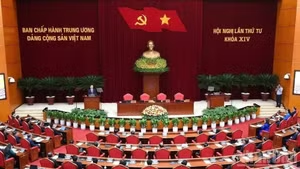
For Viet Nam, as the country enters a new era of development, culture has been identified as an important endogenous resource, a driver of growth and a factor contributing to the country's enhanced position on the international stage. This spirit is clearly reflected in Resolution No. 80-NQ/TW, issued by the Politburo on January 7, 2026, on the development of Vietnamese culture.
Resolution No. 80-NQ/TW sets out clear development targets for the cultural industries, with specific indicators. By 2030, the cultural industries are expected to contribute around 7% of GDP, with 5-10 national cultural industry brands to be established. By 2045, the cultural industries and creative economy are expected to contribute around 9% of GDP, while Viet Nam aims to rank among the top three ASEAN countries and the world's top 30 in terms of soft power and cultural industry product export value.
These targets show that culture has been placed within a broader development framework. Previously, cultural value was viewed primarily in terms of preserving national identity and enriching people's spiritual lives. It is now seen as a direct resource for generating added value, promoting innovation and enhancing national competitiveness.
This approach is also in line with global development trends, as countries increasingly recognise the role of cultural industries as a source of new growth and an effective means of increasing their influence in an increasingly integrated international environment.
Associate Professor and PhD Nguyen Thi Thu Phuong, Director of the Viet Nam Institute of Culture, Arts, Sports and Tourism under the Ministry of Culture, Sports and Tourism, said that developing culture to affirm Viet Nam's position in the nation's rise is an objective requirement of reality and a major direction set out by the Party in Resolution No. 80-NQ/TW. In the new development period, culture must truly become a firm spiritual foundation of society, an important endogenous strength for development, a driver of innovation and a resource for strengthening national soft power.
This requires comprehensive changes in the awareness and actions of the entire political system, from improving institutions and investing resources to building a healthy cultural environment, developing Vietnamese people in a comprehensive manner and integrating culture deeply into all areas of life.
To harness culture as an endogenous resource for development, Resolution No. 80-NQ/TW identifies the development of cultural industries as a strategic direction for transforming cultural potential into soft power and national competitive advantage.
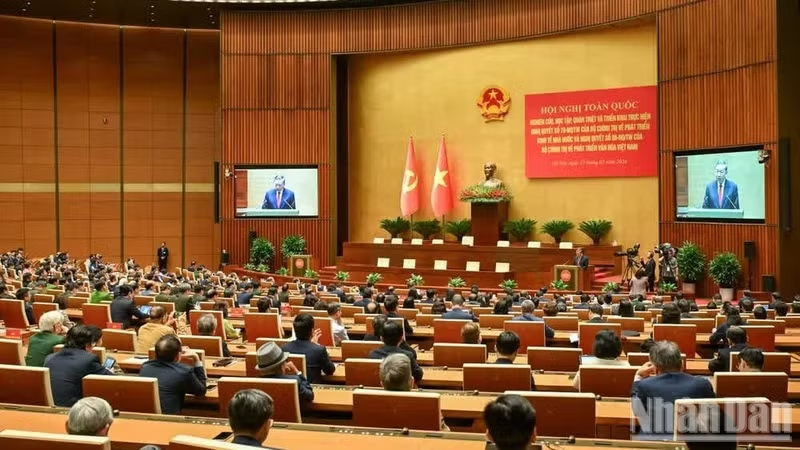
At a conference to disseminate and implement Politburo Resolutions No. 79-NQ/TW and 80-NQ/TW, General Secretary and President To Lam also stressed the need to develop the cultural industries so that culture can serve simultaneously as a spiritual foundation, an economic resource and a source of national soft power.
According to him, a strong culture is measured not only by the depth of its traditions but also by its creative capacity and ability to produce high-quality cultural products with broad appeal and a firm foothold in the market. This direction calls for the vigorous development of the cultural industries by harmoniously combining traditional values with modern technology and national identity with creative thinking, thereby creating products bearing a distinct Vietnamese imprint while being competitive in the global cultural space.
Amid today's global competition, cultural soft power is gradually becoming an important component of comprehensive national strength. A country with a distinctive cultural identity, attractive cultural products, a compelling national narrative, a dynamic creative environment and the ability to transform cultural resources into economic value will enjoy significant advantages in attracting investment, developing tourism, expanding markets and enhancing its international reputation.
Therefore, Associate Professor and PhD Nguyen Thi Thu Phuong said that when culture is given its proper place in the national development strategy, supported by innovative thinking and realised through comprehensive policies, it will not only better meet people's spiritual and cultural needs but also become an important resource for building the national brand and enhancing Viet Nam's position, stature and appeal in the new era of development.