In the last days of the year, the weather in Mang Den town is getting colder and colder. However, many ethnic minority households here are still working hard on their vegetable gardens. Having been involved in growing cold-climate vegetables for a while, they understand that this model will be an effective “fishing rod” for each family to develop their economy and build a stable life on this land.
A Hung, head of group 1 of the cold-climate vegetable growing cooperative in Kon Vong Kia village, Mang Den town, said that his family had no intention of growing cold-climate vegetables. The family’s cultivated land was used to grow some short-term crops. Later, after receiving direct propaganda from local officials about crop conversion, his family began to “get involved” in growing cold-climate vegetables.
Not only A Hung, but most ethnic minority households in Kon Vong Kia village were mobilised by the local authorities to convert low-yield crops to growing cold-climate vegetables.
At first, the households were still confused, because in the past, people still maintained the old farming methods with traditional crops. However, the locality has stepped up propaganda, mobilization and provided people with necessary support in building a cold-climate vegetable and root growing model, allowing people to participate in training courses to learn about knowledge and how to apply science and technology to the model.
Thereby, many households have boldly converted crops to participate in the model, gradually forming cooperative groups in Kon Vong Kia village to grow cold-climate vegetables and roots.
Up to now, Kon Vong Kia village has 3 cooperative groups with 35 participating households. The total area of concentrated cold-climate vegetable and root growing is 5.83 hectares.
“Currently, group 1 of the cooperative group growing cold-climate vegetables and roots in Kon Vong Kia village consists of 10 households, cultivating 0.79 hectares. In the first crop, our group planted Australian sweet potatoes and Japanese squash. After a period of cultivation, we harvested 3.4 tonnes of Australian sweet potatoes and 0.45 tonnes of Japanese squash, earning 80 million VND. Currently, we have planted the second crop (including carrots, green onions, kohlrabi, cabbage, Australian sweet potatoes, etc.), all vegetables and tubers are growing well, promising to bring a significant source of income to the family during this Tet holiday”, A Hung excitedly said.
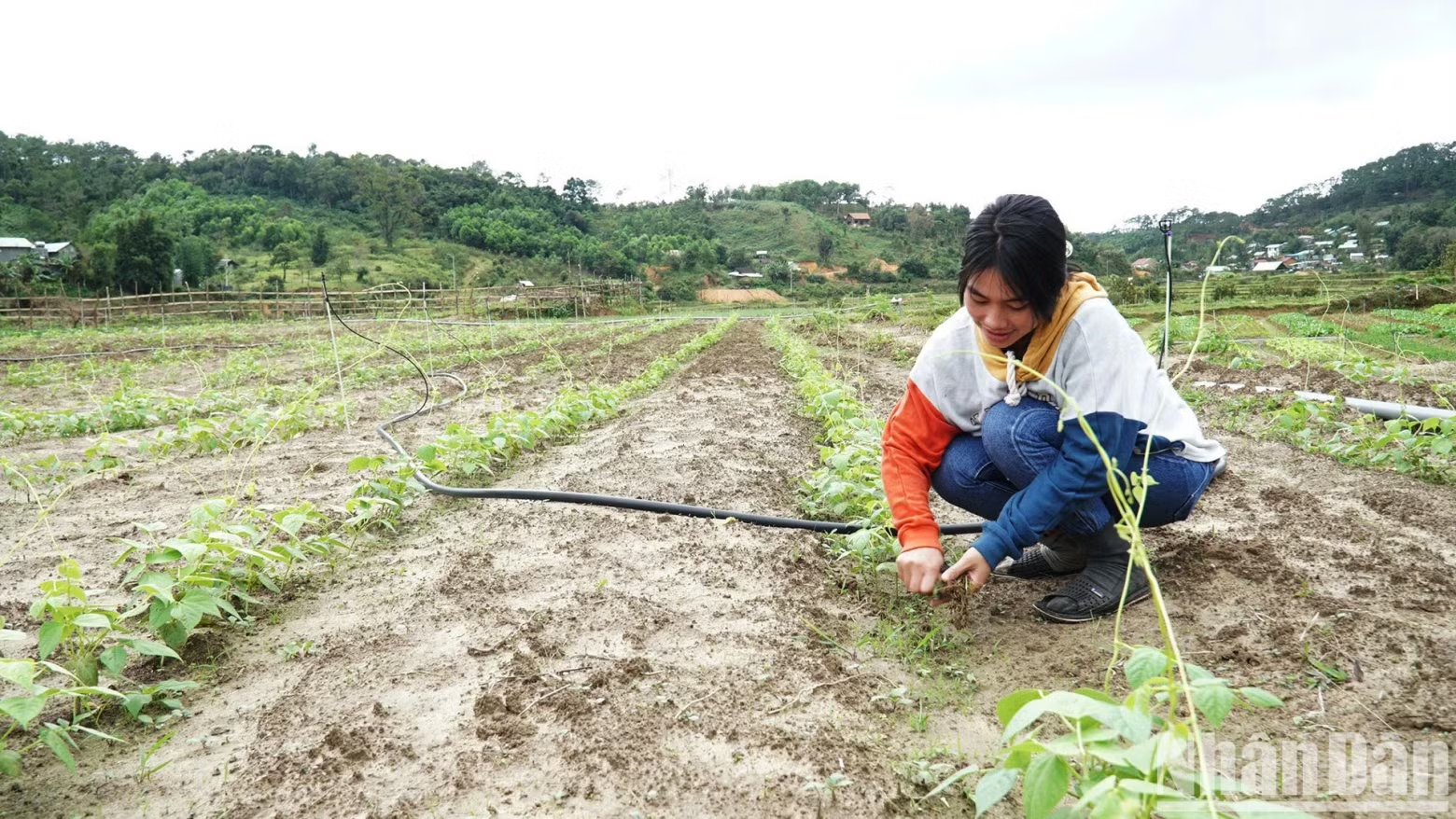 |
| Y Loi was excited when she decided to switch crops to growing cold-climate vegetables and tubers. |
Following Hung, Y Loi (Kon Vong Kia village) also beamed: “I feel it was the right thing to do because I joined the cooperative group growing cold-climate vegetables and tubers in the village. Before, I used this land to grow rice. Every year, it was only enough for my family to eat. But since growing cold-climate vegetables and tubers, I have had a more stable source of income. Typically, in just the past 20 days after selling vegetables and tubers, I earned 4 million VND. I am very happy!”.
Currently, the total area of vegetable garden development for households in Mang Den town is 3.8 hectares. The locality has implemented it at the homes of households in villages, hamlets and schools, including the following vegetables and tubers: mustard greens, sweet mustard greens, cabbage, eggplant, wild vegetables, chayote...
The cold-climate vegetable and tuber growing model is one of the locality’s methods in implementing the Campaign on changing the thinking and working methods of ethnic minorities, helping ethnic minorities to rise up and escape poverty sustainably.
Since the beginning of 2024, the locality has actively mobilised people to implement the Campaign with the motto of each household having a “Family Vegetable Garden” to renovate mixed gardens, create livelihoods for people, and sustainably reduce poverty.
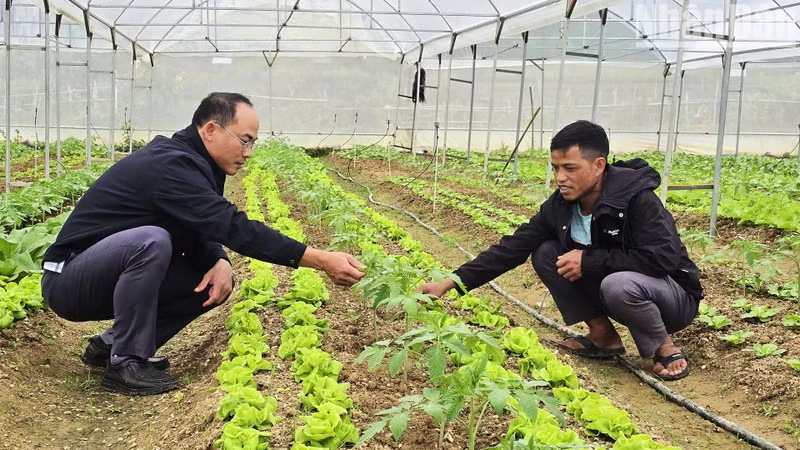
Ethnic minorities in Kon Vong Kia village grow vegetables and tubers in a concentrated manner, linking production and developing the economy.
To develop a number of concentrated models, the People's Committee of Mang Den town has supported the establishment of a Mang Den cold-climate vegetable cooperative, with 17 members, including 9 members from ethnic minorities, with a total registered capital of 1 billion VND.
The Mang Den cold-climate vegetable cooperative has linked and consumed products with people in the process of implementing vegetable and tuber cultivation models in the town. Applying science and technology in production, the Mang Den cold-climate vegetable cooperative has grown vegetables in greenhouses. All greenhouses are equipped with automatic irrigation systems supported by the district's Agricultural Service Center.
According to Mr. Vo Minh Luan, Director of Mang Den Cold-climate Vegetable Cooperative, in phase 1, the Cooperative invested in 500m2 of greenhouse. The Cooperative has organised the production of the first crop of vegetables including: lettuce, sweet cabbage, Chinese cabbage... all kinds of vegetables have grown and developed well. Up to now, the harvest is underway, with an expected output of 500kg of various vegetables. It is estimated that if this model is produced smoothly and stably, the revenue will reach 1.5 billion/1ha/year.
Currently, the Cooperative is organizing the planting of the second crop and will harvest after 1 month. In phase 2, the Cooperative continues to invest in an additional 500m2 of greenhouse.
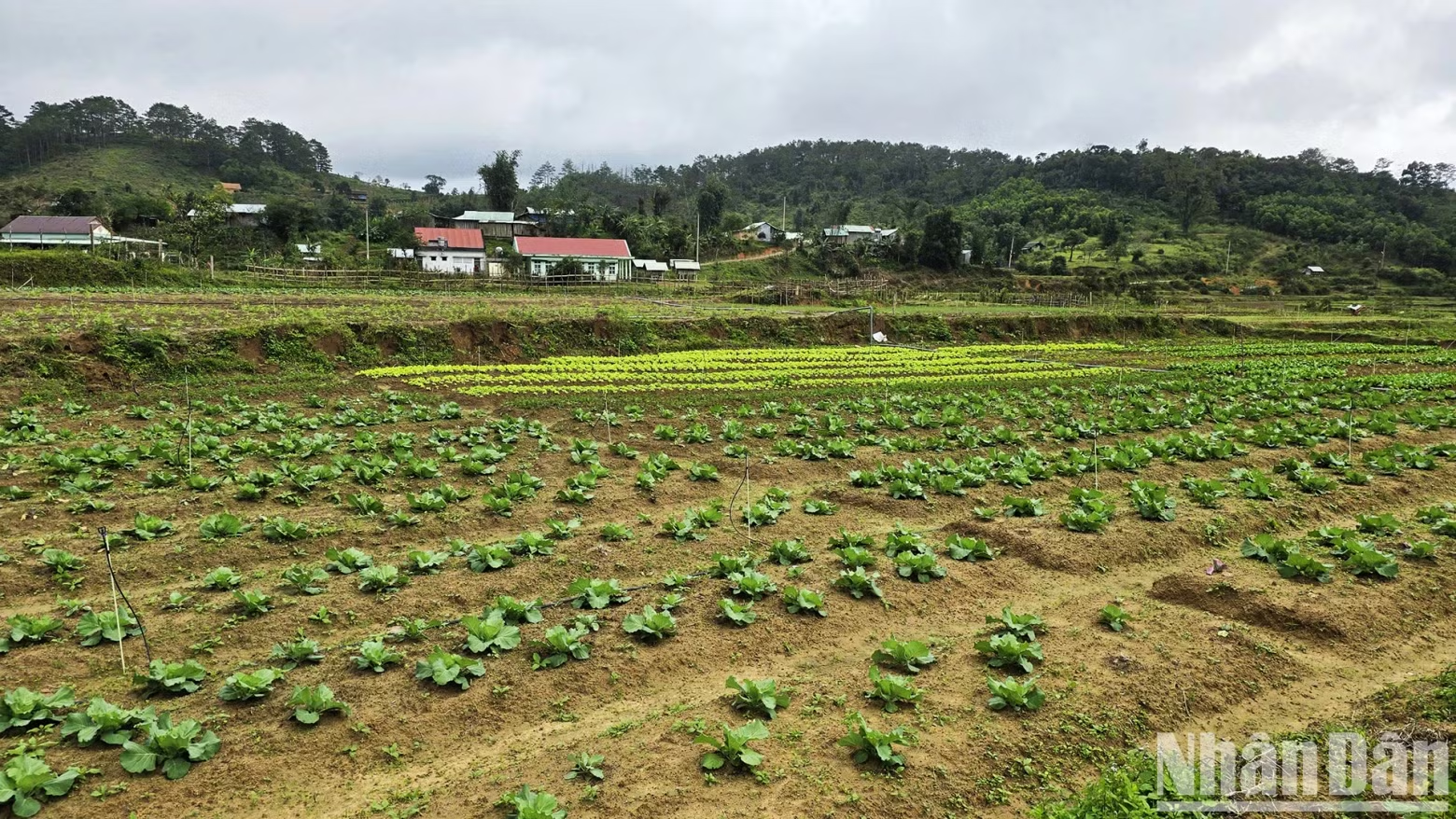 |
| The vegetables and tubers are growing well, promising a bumper harvest for farmers. |
Vice Chairman of Mang Den Town People’s Committee Dong The Danh said that based on the achieved results, in the coming time, Mang Den Town authorities will continue to mobilise household groups to expand and develop vegetables and fruits suitable for local soil and climate; thereby, aiming to change the crop structure to bring high economic efficiency; and closely coordinating with the Department of Agriculture and Rural Development of Kon Plong district, the District Agricultural Service Centre and Mang Den Cold-climate Vegetable Cooperative to support techniques, varieties, guide households to properly implement the process, techniques and take good care of the models.