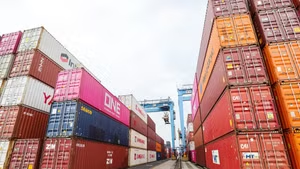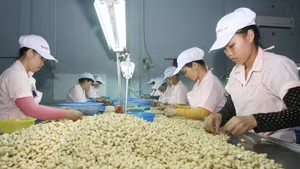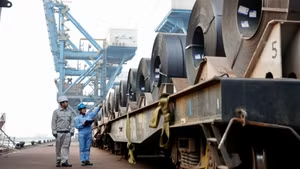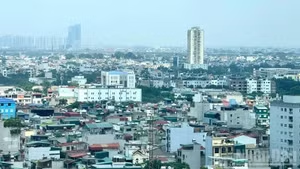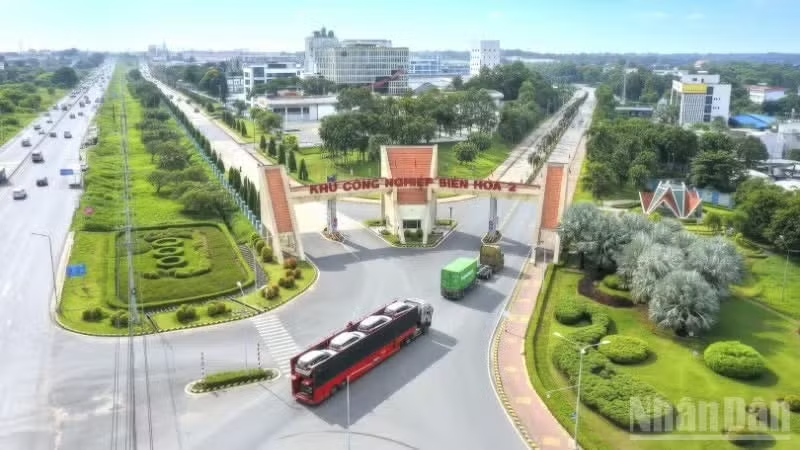
Dong Nai has long been known as the country’s “industrial capital”. From Bien Hoa 1 Industrial Park, the earliest of its kind in Viet Nam established in 1963, to date, the province has 58 industrial parks, attracting thousands of domestic and foreign enterprises.
A destination for major brands
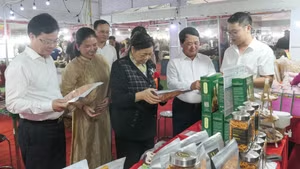
At the product showroom of AQUA Viet Nam Electric Appliance Co., Ltd (Bien Hoa 2 Industrial Park), refrigerators and washing machines manufactured three decades ago are displayed alongside newly launched smart, modern product lines introduced in early 2026.
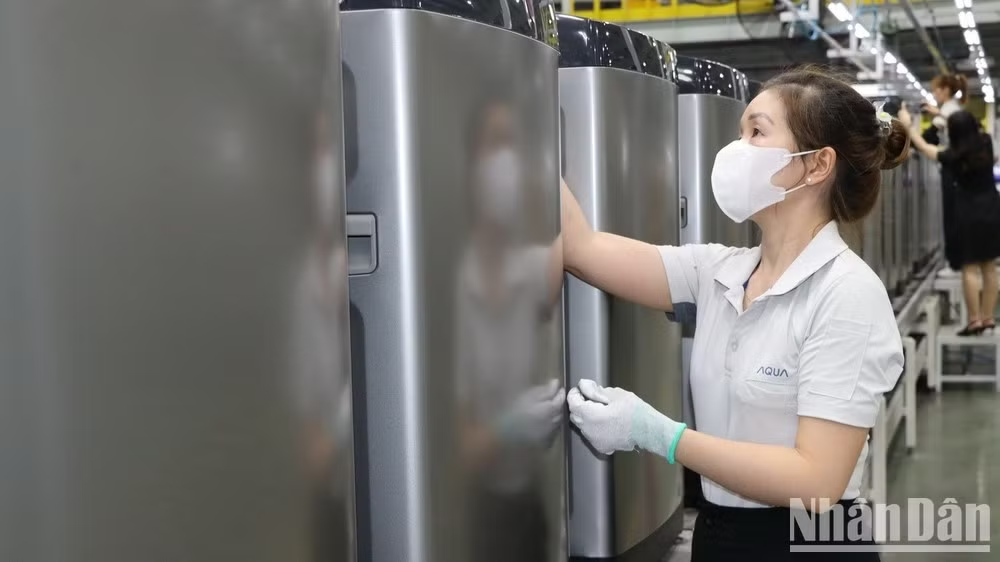
From its initial factory located here, after 30 years of development, the company’s washing machines and refrigerators have become present in households across the country. In the early days, the factory produced only a few units per day, but output has now risen to thousands of products supplied to the market, clearly reflecting the company’s growth in both scale and production capacity.
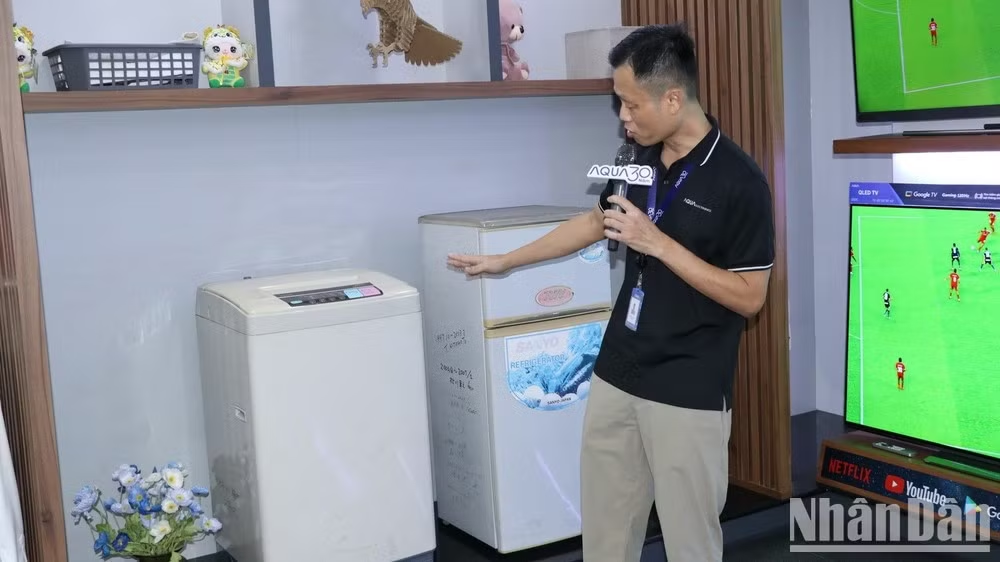
The year 2026 marks the 30th anniversary of AQUA’s presence in Dong Nai, and also the time when the company announced its strategy to develop its factories at Bien Hoa 2 Industrial Park through to 2045, with extended investment capital of nearly 1.54 trillion VND (approximately 75 million USD). This will raise the total capacity of its three factories to nearly 1.6 million products per year, ready to meet increasing domestic demand and export to many countries worldwide.
General Director of AQUA Viet Nam Fan Guofeng shared that Dong Nai has many advantages for industrial development, especially convenient transport, abundant human resources, and a favourable investment environment. “We have now been here for 30 years. The company always places users at the centre, continuously improving and maintaining product quality. To continue this journey, we have decided to extend investment and increase capital with a commitment to building a smart and sustainable future,” he said.
Alongside AQUA’s refrigerators and washing machines, many industrial products manufactured in Dong Nai have been exported worldwide. In the domestic market, products such as Ajinomoto seasoning, Dong Nai batteries, Thibidi transformers, and Vinacafe have been familiar to people nationwide for decades.
With advantages in geographical location, abundant human resources, and a favourable investment environment, along with a government consistently accompanying businesses, many leading global corporations such as Hyosung, Nestlé, C.P., Bosch, Lixil, Formosa, Amata, Pouchen, and Changshin have chosen Dong Nai as a long-term investment destination and continue to expand their operations.
To date, Dong Nai has established 58 industrial parks, of which 43 are in operation with a total area of more than 14,600 hectares, attracting over 2,255 foreign direct investment projects from 51 countries and territories, with total registered capital exceeding 43 billion USD.
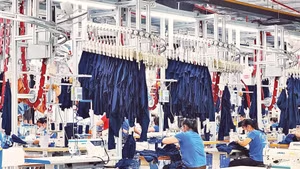
Industry in Dong Nai plays a pillar role and serves as the main driver of local socio-economic development, making significant contributions to the country. The share of industry–construction and services in Dong Nai’s economic structure accounts for more than 81%.
From Dong Nai to many provinces and cities
When discussing industrial park development in Dong Nai, it is impossible not to mention the Corporation for the Development of Industrial Zones (Sonadezi). Since 1990, Sonadezi has been a pioneer in industrial park infrastructure in Viet Nam, and has developed 13 industrial parks in Dong Nai, Ho Chi Minh City, and Lam Dong Province, covering more than 4,600 hectares.
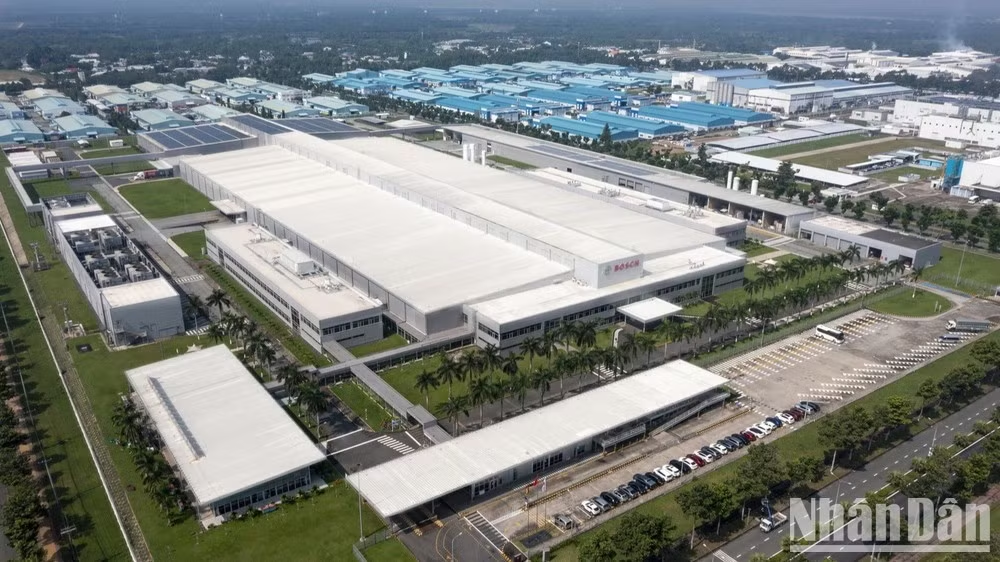
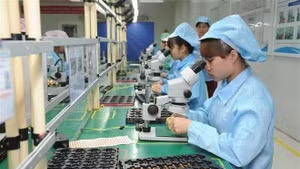
Industrial parks within the Sonadezi system have attracted nearly 1,000 projects with total registered investment capital of around 12 billion USD and more than 30 trillion VND. These include many notable FDI projects from Fujitsu (now Tripod Viet Nam), Bosch, AQUA, Shell, Meggitt, Sony, and Olympus. These projects have contributed significantly to making Dong Nai a supplier of high-tech products such as aircraft components, automobile parts, electronic components, robots, and components for modern machinery of many well-known global brands.
Sonadezi leaders said the company is accelerating the process of greening and smart transformation in the investment and operation of its industrial parks. Its parks aim to integrate green and circular economy principles and Net Zero goals not only within the Sonadezi system but also among secondary investors in its projects.
Amata is known as one of the country’s pioneering industrial parks in transitioning towards green, ecological, and circular development. In 1994, with an initial registered capital of 89 million USD in Dong Nai, Amata Industrial Park has now attracted more than 200 secondary investors with over 3.5 billion USD, creating jobs for tens of thousands of workers.
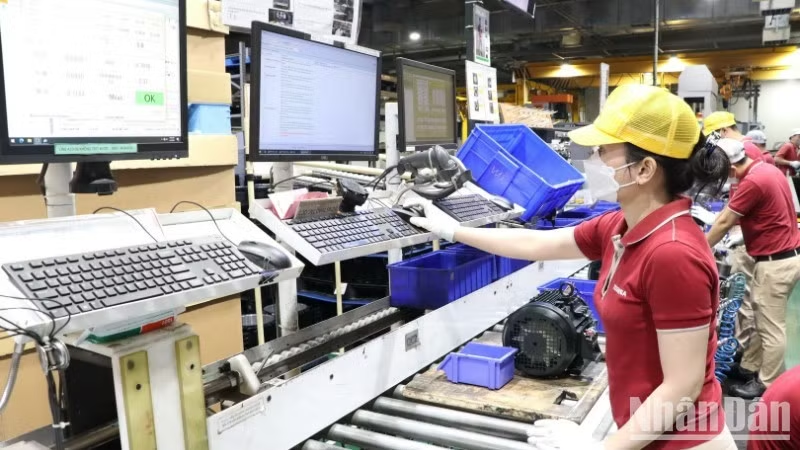
From its success in Dong Nai, the Thai group has invested in the Long Thanh High-Tech Industrial Park, covering 410 hectares with total registered capital of more than 282 million USD. In addition, Amata has also invested in industrial parks in Quang Ninh and Quang Tri Provinces.
Ho Nai Industrial Park was established in 1998 with an area of nearly 500 hectares. After nearly 30 years of development, it has attracted 130 investors, including more than 70 FDI enterprises with total registered capital exceeding 1 billion USD, creating stable jobs for around 18,000 workers. Following its success in Dong Nai, in 2025 Ho Nai Industrial Park Joint Stock Company officially took over and invested in two new industrial parks with a combined area of nearly 1,000 hectares in Lam Dong and Thanh Hoa Provinces.
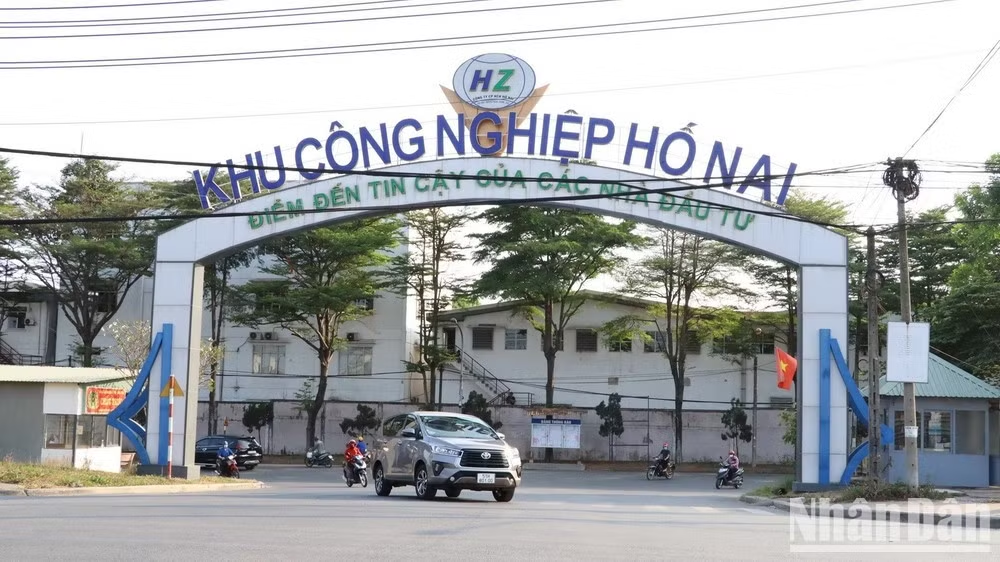
Nguyen Cong Dinh, General Director of Ho Nai Industrial Park Joint Stock Company, said: “We have gradually invested in and completed synchronised, modern infrastructure, improved service quality, and closely coordinated with state management agencies to promptly support and resolve difficulties for investors. The sustainable development of investors is the foundation for the sustainable development of the industrial park.”
Nguyen Kim Long, Standing Vice Chairman of the provincial People’s Committee, said Dong Nai has an early-developed industrial foundation, a large-scale industrial park system with high occupancy rates, a relatively complete supply chain, and an abundant and skilled workforce.
Currently, Dong Nai is focusing on implementing sub-zoning plans, approving detailed planning schemes for industrial parks, and accelerating infrastructure investment to attract projects to parks with completed infrastructure. At the same time, it consistently prioritises the selection of clean, environmentally friendly technology projects, as well as high-tech and renewable energy projects.