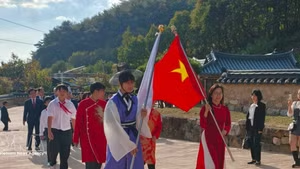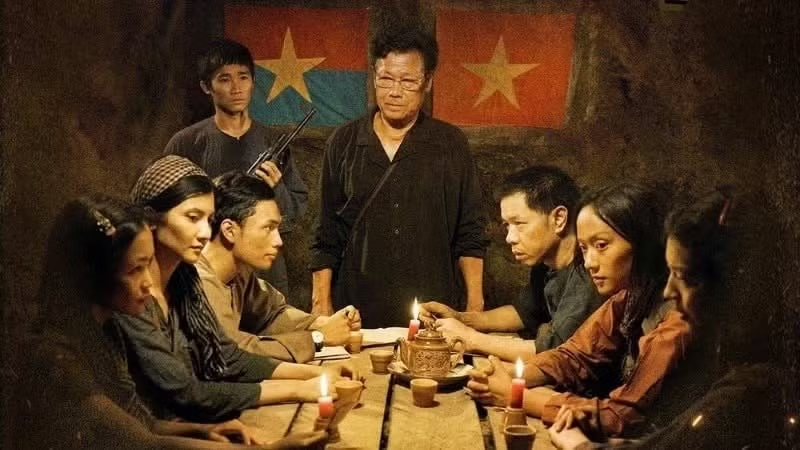
For many years, the State has invested resources in films depicting the nation's history, revolutionary wars, national sovereignty, cultural figures, and significant milestones in the country's development. This genre plays an vital role in preserving national memory, fostering patriotism, strengthening pride in the country's traditions, and nurturing a sense of civic responsibility. However, there often remains a substantial gap between a film’s completion and its meaningful engagement with audiences. Some works premiere during film weeks or thematic programmes before quickly disappearing from the public's cultural life.
Drawing on his professional experience, director Bui Thac Chuyen notes that although films receive substantial investment during production, they often lack sufficient opportunities for distribution and promotion, which highlights a missing link in the cinema value chain. In many cases, while production receives significant resources, distribution lacks adequate investment. As a result, these films fail to realise their full value, limiting their social impact.
At numerous conferences and seminars on cinema, both domestic and international experts note that audiences are by no means indifferent to historical or revolutionary themes. When a film resonates with viewers through the language of cinema, its humanistic depth and the historical and traditional values it embodies can spread naturally and effectively. Conversely, no matter how meaningful a film may be, without an appropriate pathway to reach audiences, it is unlikely to generate widespread influence. Therefore, the increased attention the State is paying to distribution is serves as a positive sign.
Film distribution today extends beyond merely showing films in cinemas or organising mobile screening programmes.
Public information consumption habits have changed rapidly. A large proportion of young people now access knowledge, history, and culture through online platforms. This reality calls for viewing cinema as a cultural resource that can continue to serve the public long after its release. Historical stories portrayed in films can readily become educational materials for schools. Production archives, behind-the-scenes footage, characters, and historical settings can also serve educational, communication, and research purposes. More importantly, the industry should gradually develop a comprehensive film database to provide long-term benefits for the community.
In addition, authorities should digitise, archive, and make films financed by the State budget more readily accessible through schools, libraries, museums, cultural centres, and legitimate digital platforms. Over the long term, these works can become an integral part of the nation's cultural knowledge repository.
Decree No. 189/2026/ND-CP opens an opportunity to address obstacles that have persisted for many years in the distribution of films serving political tasks. However, the policy’s effectiveness must manifest concretely through building a suitable ecosystem so that State-funded films can further contribute to practical value in life.