In practice, as the marine economic space expands, requirements for energy infrastructure are also increasing.
Ensuring essential services
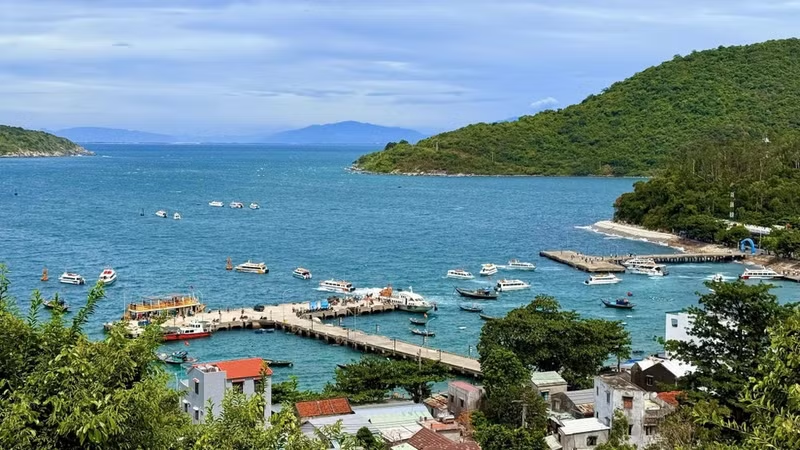
Cu Lao Cham, part of Tan Hiep Island Commune, Da Nang City, is a clear example of the impact of electricity infrastructure on people's lives and the development of the marine economy. Previously, Tan Hiep Island Commune depended on diesel generators, and electricity use remained limited.
In September 2016, the national power grid was connected to the island, opening new conditions for residents' lives and economic activities. Le Moi, Secretary of the Tan Hiep Island Commune Party Committee, said that since the national power grid reached the island, people's lives had changed significantly. Businesses and service providers had conditions to expand, tourism had developed, and the gap in living conditions between the island and the mainland had gradually narrowed. For accommodation establishments, the impact of a stable power supply was even more evident.
According to Le Thi Thu Van, owner of Van Duc Homestay, once the national power grid reached the island, her family was able to invest in and renovate the establishment and purchase equipment to serve visitors. The number of guests staying overnight increased, accommodation services developed, and her family’s income and living conditions became more stable.”
The story of Cu Lao Cham shows that electricity is an essential service and infrastructure that paves the way for the development of coastal and island areas. When power supplies are stable, accommodation, food preservation, production, business, and new economic models have better conditions to operate efficiently.
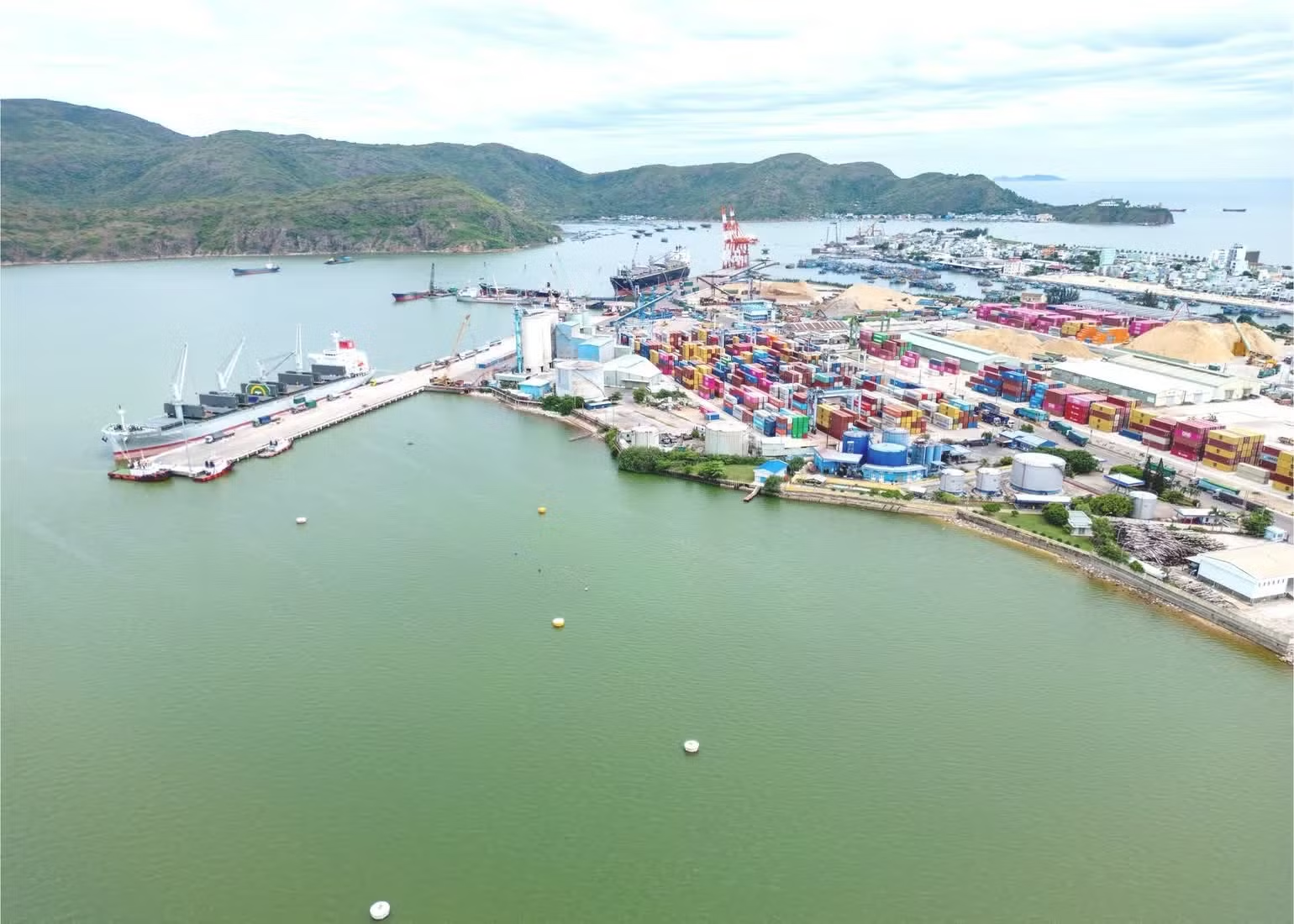
While on islands, electricity infrastructure helps expand the space for services and tourism, along coastal areas power supplies are becoming an important condition for forming new value chains, from aquaculture, fishing, and seafood processing to seaports, logistics, industry, and services.
At Nam Sao Seafood Joint Stock Company in Bac Trach Commune, Quang Tri Province, electricity requirements are clearly reflected in its freezing systems and cold-storage facilities.
The company's Standing Deputy Director Pham Van Quyet said the cold-storage facilities must continuously maintain temperatures of between -18°C and -22°C around the clock, with the company spending an average of about 5 billion VND on electricity each year.
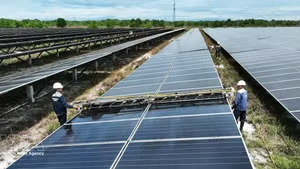
Alongside electricity from the grid, the company has invested in a 450 kVA rooftop solar power system for its main workshop. This power source helps keep equipment operating continuously and ensures the temperature of the cold-storage facilities and product quality, while also reducing heat in the workshop.
Experience from islands and coastal production facilities shows that the role of electricity is shifting from meeting essential needs to providing a foundation for higher-value economic activities. As the marine economy expands, the requirement is not simply to “have electricity”, but for power supplies to have sufficient capacity, be stable and continuous, and become increasingly efficient and “green.”
Electricity infrastructure goes hand in hand with marine economic space
Resolution No. 20-NQ/TW identifies the development of strategic, dual-use, digital, and energy infrastructure as a priority; strengthening connections between the mainland and islands and between coastal growth areas and major economic centres; while forming industrial, service, logistics, energy, and innovation centres linked to the advantages of each region.
These practical requirements in the central region are being incorporated into a new development orientation. The Central Power Corporation (EVNCPC), which manages electricity sales in all seven provinces and cities with a coastline, is responding to these requirements.
According to EVNCPC Deputy General Director Tran Nguyen Bao An, ensuring power supplies for existing loads while preparing infrastructure for new growth drivers of the marine economy is a challenge for the corporation. One of the current challenges is the imbalance between power sources and loads.
Under the revised Power Development Plan VIII, by 2030, around 50,000MW of power generation capacity is expected to be put into operation across the seven provinces and cities managed by EVNCPC, with current demand at around 5,000MW and projected to reach approximately 10,000MW by 2030.
With its geographically extensive area and uneven distribution of electricity loads, the power sector must also calculate reserve capacity and ensure that the system operates safely and flexibly. Electricity infrastructure must not only meet existing loads but also be prepared to accommodate new energy sources.
Tran Nguyen Bao An said that alongside new power sources, including offshore wind power under the revised Power Development Plan VIII, EVNCPC is ready to coordinate with investors, competent agencies, and local authorities to promote the development of energy infrastructure, meet electricity demand, and support the development of the marine economy.
Ensuring electricity supplies for the sea and islands is therefore not merely a production and business task but also has significance for socio-economic development and national defence and security.
Synchronous investment in power generation, grids, digital infrastructure, and new energy sources will contribute to laying the foundation for implementing the objectives of Resolution No. 20-NQ/TW, gradually turning the potential of the sea into a growth driver and working towards building Viet Nam into a strong maritime nation that develops sustainably and prospers from the sea.