Construction and real estate sector leads the green transition
A recent assessment by the Viet Nam Association of Real Estate Brokers highlights that the severe consequences of environmental pollution, accumulated over many years, have become starkly evident, compounded by ever more serious impacts from climate change.
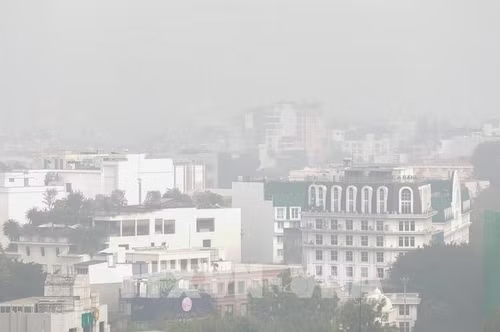
Air quality in major cities has repeatedly dropped to alarming levels, with Ha Noi and Ho Chi Minh City often ranking among the most polluted in the region. At the same time, extreme weather has intensified, with prolonged heavy rainfall causing flooding, flash floods, and widespread landslides in many provinces.
Against this backdrop, although not yet a mandatory requirement, many businesses in Viet Nam have proactively shifted towards green and sustainable practices.
By applying green technologies, adopting sustainability standards, and adjusting production and business processes to reduce emissions, these pioneering steps play a crucial role in realising Viet Nam’s commitment to net zero emissions by 2050.
As a sector with significant environmental impact, construction and real estate have seen a clear shift in recent years. The number of green buildings – those gaining Leadership in Energy and Environmental Design (LEED) certification, the Green Lotus label from the Viet Nam Green Building Council, and Excellence in Design for Greater Efficiencies (EDGE) certification – has risen sharply, reflecting developers’ growing awareness of environmental responsibility and sustainable value.
Some pioneering names in green building development, including large-scale projects, are Vingroup, Sun Group, Eurowindow Holding, and Ecopark.
According to the Ministry of Construction, by the end of the second quarter of 2025, Viet Nam had more than 600 green buildings with a total floor area of nearly 17 million sq.m – about three times the figure at the end of 2022.
On average, more than 100 new green buildings have been added each year, compared with only around 10 annually in previous years.
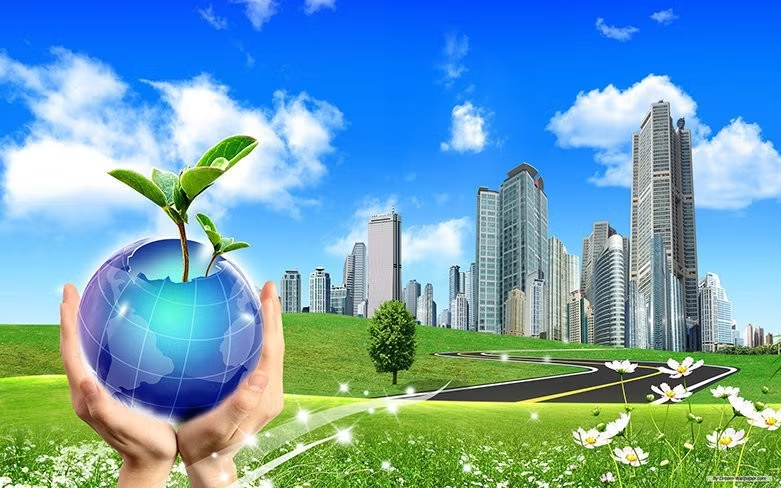
A truly green urban area must have an integrated operating ecosystem: smart energy consumption, water recycling capacity, microclimate optimisation, encouragement of community interaction, and low emissions maintained throughout the project’s lifecycle.
Notably, it is not just the quantity that has increased; the quality of green buildings has also improved markedly. Green urban areas today are not simply about “more trees” or “more parks”, but represent a new development mindset, with comprehensive restructuring from planning, design, materials, infrastructure, and operational technology to residents’ behaviour.
A truly green urban area must have an integrated operating ecosystem: smart energy consumption, water recycling capacity, microclimate optimisation, encouragement of community interaction, and low emissions maintained throughout the project’s lifecycle.
Despite the impressive growth rate, the current number of green buildings remains modest compared to the approximately 60,000 buildings permitted nationwide each year.
Green urbanisation as Viet Nam’s competitive advantage
With the goal of developing the real estate market in a safe, healthy, and sustainable direction, contributing to economic growth, the Viet Nam Real Estate Market Research and Evaluation Institute (VARS IRE) believes that “greening” urban areas will not be a passing trend, but will become the main development axis for Vietnamese cities in the coming period.
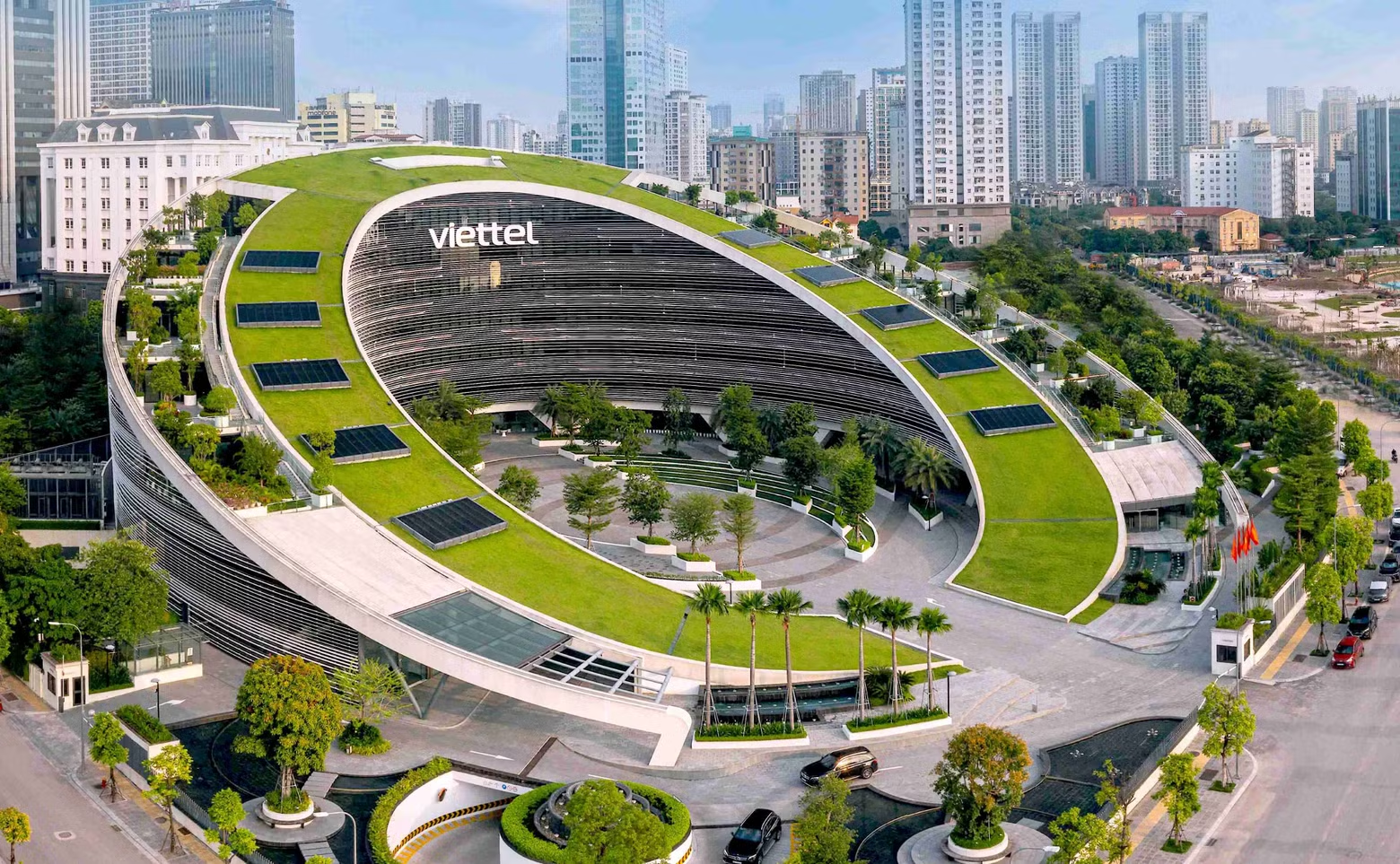
This will be the core competitive advantage for developers and the standard determining the sustainability of the nation’s urbanisation process.
Pham Thi Mien, Deputy Director of VARS IRE, emphasises that developing a green real estate market not only benefits the community, but also businesses, offering superior financial returns compared to traditional buildings.
International studies show that although investment costs rise by 3–8%, green buildings can save 15–30% on energy, reduce carbon emissions by 30–35%, save 30–50% on water usage, and cut waste treatment costs by up to 70%. On the market, projects with green certifications achieve higher absorption rates and faster sales than others.
In addition, developing green buildings is now an essential requirement for businesses to meet new living standards. In recent years, homebuyers’ priorities have shifted markedly.
Developing a green real estate market not only benefits the community, but also businesses, offering superior financial returns compared to traditional buildings.
Pham Thi Mien, Deputy Director of VARS IRE
Younger customers and middle-to-upper segments increasingly focus on living space quality, favouring projects that emphasise health, happiness, and sustainability.
Evidence shows that green real estate products offering humane amenities and high-quality, safe, and healthy living environments also demonstrate stable price growth and stronger exploitation potential compared to traditional projects.
It is clear that green urban areas will dominate Viet Nam’s real estate market in the coming period. To optimise returns, investors should prioritise projects developed by reputable companies with a sustainable mindset.
At the same time, they should select projects in central locations or large-scale mega-urban areas, where infrastructure and amenities are planned and operated in an integrated manner. These will be the market-leading products that maintain long-term sustainable value.