Identifying Bottlenecks
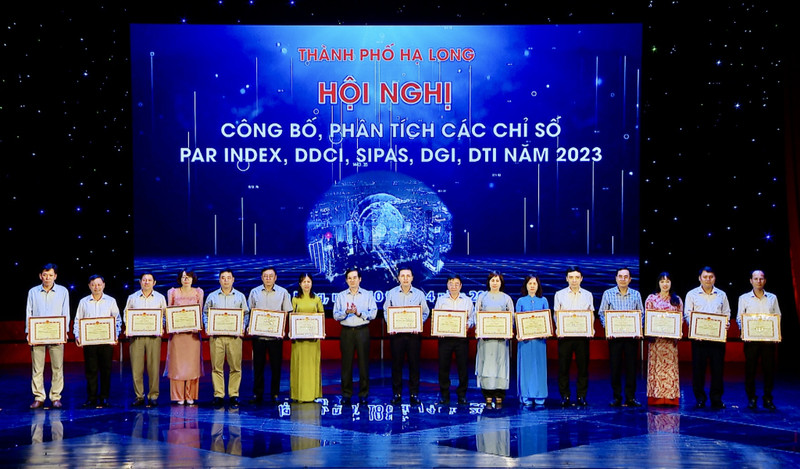
According to the results of the Provincial Digital Transformation Index (DTI) assessment, the city achieved 712 out of 1,000 points (a fairly good level) in 2023, ranking first among the 13 district-level localities, an improvement of one rank compared to 2022. However, the city’s average score at the commune level was only 634 out of 1,000 points (moderate level), placing it fourth among the 13 localities. Some key indicators, such as cybersecurity, digital economy, and digital society, recorded relatively low scores (below average and average levels).
The main reasons identified by Ha Long City include: slow implementation of IT applications to ensure public order and safety, particularly in the land management sector; the lack of extensive telecommunication coverage across Ha Long Bay; insufficient and malfunctioning infrastructure and equipment, especially at commune-level modern public service reception offices and local police stations; and inadequate human resources for digital transformation, with some units lacking dedicated IT personnel for this purpose. Additionally, key provincial projects significantly affecting the city's digital transformation, such as upgrading the provincial electronic one-stop system and public service portal, have yet to be fully implemented.
Nguyen Bao Phuong, Director of the City’s Public Administration Centre, said: "The centre has allocated personnel and equipped modern machinery to ensure the best possible service for processing administrative procedures for citizens. The biggest challenge currently faced by the centre is the telecommunications infrastructure, which impacts digitalisation and the resolution of administrative procedures. Through review, we found that some files uploaded to the electronic one-stop system lack attached documents due to network issues. The limitations in telecommunications infrastructure have also resulted in the city’s digitalisation rate for input documents only reaching 99.8%. This falls short of the 100% target set by Resolution No. 09-NQ/TU for 2024".
 |
| Telecommunications infrastructure limitations cause significant delays for residents in submitting documents and tracking the status of administrative procedures on the National Public Service Portal. |
In today's era of digital technology, promoting goods—especially agricultural products—on e-commerce platforms provides an opportunity to bring products closer to consumers. This approach fosters the development of the digital economy in agriculture, rural areas, and commodity-oriented agricultural production. However, in Ha Long City, this remains underutilised by farmers, OCOP (One Commune One Product) producers, and agricultural and aquatic product vendors. Most of these households rely on traditional sales methods or promote their products via social media. Many report a lack of understanding of digital business processes and have not received adequate training on selling products through e-commerce platforms.
Tourism, a major strength of Ha Long City thanks to the UNESCO World Heritage Site of Ha Long Bay, its stunning landscapes, and diverse cultural relics, attracts millions of visitors annually. However, digital transformation in this sector remains at a basic level. Current efforts include installing surveillance cameras in major caves (Dau Go, Thien Cung), offering 107 free Wi-Fi hotspots, and attaching QR codes at certain tourist sites and cultural relics.
 |
| Many destinations in Ha Long City have yet to adopt digital technology to enhance convenience for international visitors. For instance, the poetic roof area at the Bai Tho Mountain historical and scenic site lacks digital solutions for visitor engagement. |
Gao Ping, a tourist from China, shared her thoughts: "Ha Long Bay's nature is breathtaking and majestic, unmatched anywhere else. However, we regret that the city's tourism activities have not been developed or modernised with advanced technologies. The presentation of tourist sites is simple and lacks professionalism. Dining and service venues also lack comprehensive tools for exploring, booking, and payment services".
Prioritising resources for key sectors
 |
| In October 2024, the Ha Long City Party Standing Committee held an expanded conference to discuss solutions for the city's comprehensive digital transformation. |
Nguyen Tien Minh, Vice Chairman of the City People's Committee, stated: "The city views digital transformation as an inevitable trend with a profound impact on all economic and social sectors. It is a critical solution to accelerate breakthroughs, fast-track progress, and achieve the key goals, targets, and tasks set forth. To resolve the existing bottlenecks in digital transformation, the city will focus on implementing new solutions from now until the end of 2025, prioritising sectors with broad coverage and significant impact on residents and businesses".
 |
| Customers paying for fuel using cashless methods at Petrol Station No. 1 (Hong Ha Ward). |
The city has tasked relevant units to proactively research and digitise data in high-volume, high-impact areas, such as land management, urban planning, and tourism, to drive breakthroughs in digital transformation. For example, in real estate transactions, residents are most concerned about whether a piece of land is within a planned zone or restricted for construction permits, repairs, or renovations. Typically, obtaining this information requires visiting functional offices. However, digitising land-related data would allow residents to access this information online, reducing time and travel costs.
Alongside the digitisation of data with a focus on integration and specialisation, Ha Long City aims to prioritise the development of high-quality broadband telecommunications infrastructure. This will be achieved by establishing 4G as the primary technology and gradually advancing towards 5G network infrastructure. Additionally, the city will promote the development of Internet of Things (IoT) connectivity infrastructure, enabling the integration of sensors and the application of digital technologies across various sectors. Efforts will also focus on accelerating the completion, investment, and upgrading of IP radio transmission systems, as well as maintaining and enhancing high-speed fiber-optic internet and dedicated data transmission networks.
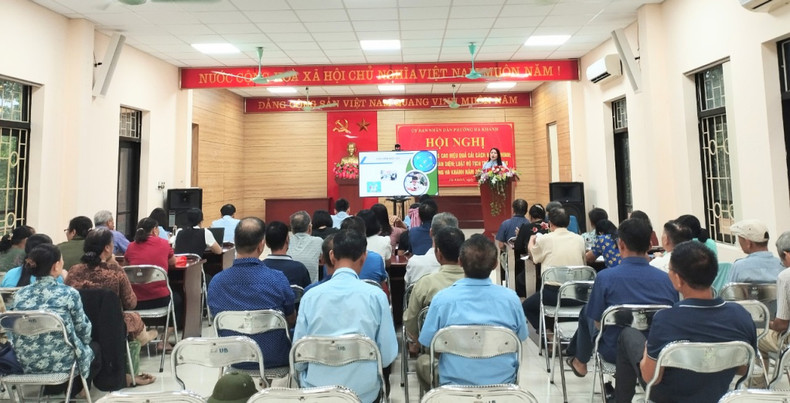 |
| Ha Khanh Ward has been organising training sessions to guide residents in conducting administrative procedures through the National Public Service Portal. |
In building a digital government, Ha Long City will focus on creating a paperless administrative system, with management and operations fully digitised and conducted in a networked environment. Key measures include issuing and approving results with digital signatures, delivering outcomes electronically, providing remote online public services, digitising administrative records and resolutions, implementing intelligent tax collection systems, and enabling payments via the National Public Service Portal. The city also plans to effectively utilise national population data and expand the use of online meetings.
The city is actively implementing programs to support small and medium-sized enterprises (SMEs) in their digital transformation efforts. The support is also granted to agricultural producers, cooperatives, and individual business establishments transition to e-commerce operations through structured plans and specific roadmaps.
To foster a digital society, Ha Long City is collaborating with telecommunications enterprises to invest in and upgrade BTS stations, addressing signal gaps in highland areas. Additionally, the city is rolling out digital services on platforms aligned with e-government and smart city initiatives, accessible through multiple communication channels.