
Outstanding results in transport digitalisation
Ha Noi Metro has officially completed Plan 428, a coordinated programme between the Ministry of Public Security, the Ministry of Construction and the Ha Noi People’s Committee to implement solutions involving digital identification and authentication, and biometric recognition for passengers at the capital’s metro stations.
Upon completing the trial period, Ha Noi Metro has achieved all its targets in terms of progress, quality and practical effectiveness. Currently, the new ticket gate system has been fully upgraded across both metro lines, Line 2A and Line 3, serving more than 5.7 million passenger journeys completed using digital identification and biometrics, with an impressive adoption rate of 85%. Notably, revenue from the two lines has surged by 48%, while passenger volume has increased by 15% year-on-year.
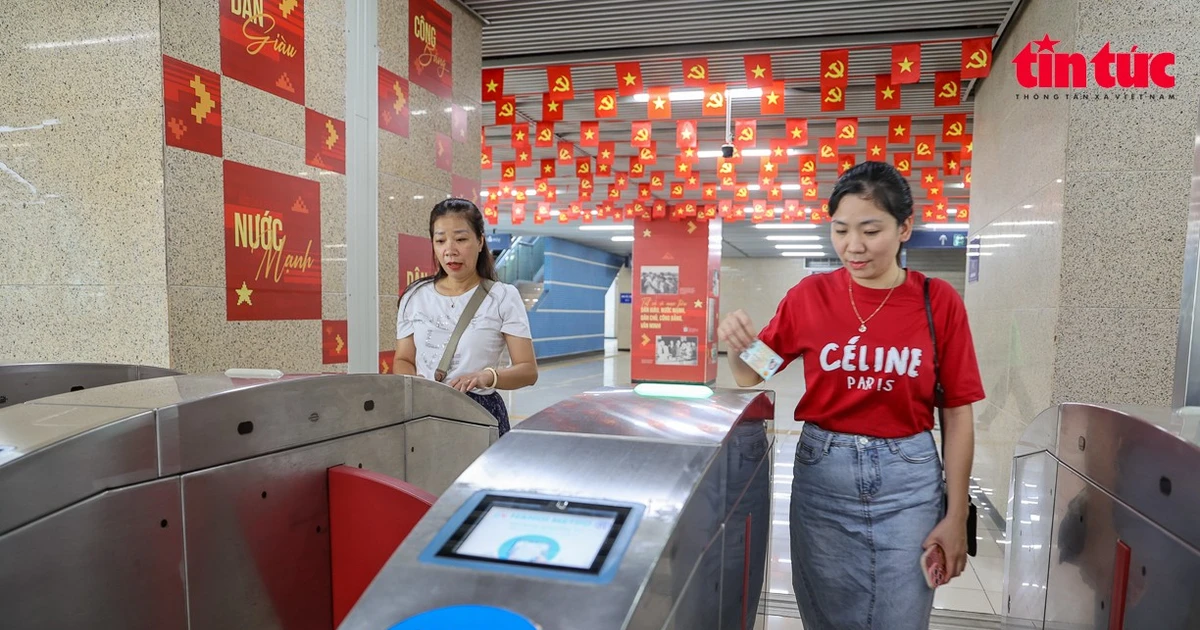
The effective application of digital identification and biometric technologies has not only reduced ticket inspection times and enhanced security and passenger safety, but also enabled a fast, more convenient travel experience without the need for paper tickets or physical cards.
This represents a pioneering step towards developing smart urban transport, contributing to the implementation of Government Project 06 on developing population data applications and the Politburo’s Resolution 57 on national digital transformation.
At the same time, these achievements confirm Ha Noi Metro’s strong management and operational capacity, thereby laying a solid foundation for expanding the model to future metro lines and other forms of public transport, towards a modern and sustainable transport system for the capital.

Public satisfaction as the foremost criterion
Khuat Viet Hung, Chairman of Ha Noi Metro, emphasised that the greatest outcome of Plan 428 is public satisfaction.
He said: “By the end of 2025, our passenger volume had increased by nearly 20%. In the early months of 2026, it continued to grow by 15-17%. Above all, the adoption of this system has made it much easier for people to use our services. This is the most important result we have achieved.”
He also highlighted key milestones, including the completion of technological upgrades, autonomy in the operation of the intelligent automatic fare collection system, and ticket control management through ID cards.
He added: “Under Plan 428, the target is for 70% of passengers on metro lines to be digitally identified. We have now reached 67%, very close to the target. After the end of Visa’s free promotion programme (March 21), all these customers will switch to using the Ha Noi Metro app, thereby being fully identified. We are fully confident of reaching and surpassing 70% immediately thereafter.”
He further highlighted the successful implementation of comprehensive cashless payments, ranging from domestic bank cards and international credit cards to e-wallets such as Viettel Money, MoMo and ShopeePay, as well as Apple Pay, Google Pay and Samsung Pay. Notably, registered tickets have been directly integrated into the VNeID platform, allowing passengers to use VNeID for travel without opening a separate app.
Another highlight is transparent data management across passenger volumes, revenue and ridership demographics, particularly in social welfare policies such as fare exemptions and reductions for the elderly, people with meritorious services, persons with disabilities and students, all of which are accurately recorded.
For example, monthly student ticket holders make an average of 1.89 trips per day, while passengers using citizen ID cards average 1.56 trips per day. This information is transmitted digitally to the Department of Construction and the city’s Transport Management and Operations Centre, thereby supporting more effective state management.
A foundational shift in public service management
Major General Vu Van Tan, Director of the Department of Administrative Management of Social Order under the Ministry of Public Security, affirmed that the two solutions, digital identification and biometric recognition, have shown clear early success when deployed at airports and within the Ha Noi Metro system.
According to him, deploying these solutions for passengers should effectively fulfil three core tasks: driving revenue growth for operators, delivering tangible benefits to citizens, and supporting better social governance by the state.
In particular, the solution makes a significant contribution to building a smart city, in which an integrated transport model is deployed in a coordinated manner, creating seamless connectivity between different modes of public transport, towards a modern, efficient and sustainable urban transport system in Ha Noi.
At the closing ceremony of Plan 428, Senior Colonel Tran Hong Phu, Deputy Director of the Department of Administrative Management of Social Order, stressed that the system is not merely a technical solution but a fundamental shift in how public services are organised and operated.
He described it as a transition from fragmented management to a unified, end-to-end digital experience centred on citizens. The solution delivers clear benefits: faster travel without cash or paperwork, more transparent operations with reduced revenue leakage, and comprehensive data for the city to support planning and investment in transport infrastructure.
Towards integrated transport and a sustainable smart city
Building on the success of Plan 428, Ha Noi Metro will continue to expand its efforts by standardising technology for new lines, moving towards a citywide unified system, upgrading software and integrating payments; and rolling out an integrated transport model.
Currently, Ha Noi Metro is also coordinating with Viet Nam Railways Corporation and Visa to pilot interoperable ticketing at Ha Noi Station, scheduled for the second quarter of 2026.
It is also working to connect with the BRT system, and partnering with Grab, GSM and Be Group to establish links with taxis, ride-hailing motorbikes and public bicycles, while preparing to integrate the Tramoc electronic ticketing system.
The successful operation of the new ticket control system marks a significant transformation, unifying both lines on a common technological platform, enhancing passenger experience, optimising management and advancing digital transformation in urban transport.
This provides a solid foundation for implementing interoperable electronic ticketing across the entire network, supporting the vision of building a modern and sustainable Ha Noi.