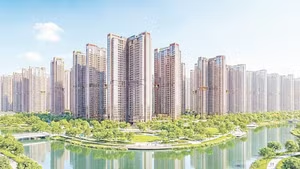
Ha Noi has set the goal of building a smart city that is modern, green, clean, beautiful, secure and safe; one that develops rapidly and sustainably, with a spillover effect across the Red River Delta, the Northern Key Economic Region and the entire nation. This vision has been institutionalised through the Capital Master Plan for the 2021–2030 period, with a vision to 2050; the adjusted General Planning to 2045, with a vision to 2065; and the Capital Law. Together, these frameworks reflect the aspirations of the political system and the people to build a sustainably developed capital that serves as a model within the region.
Ha Noi possesses a unique advantage as it is both a city of heritage and a city of the future. The interplay between tradition and modernity provides a foundation for the capital to develop along the lines of culture, civilisation and modernity, becoming one of the most liveable cities in the country. However, these advantages come with the challenges of a megacity, including population pressure, overloaded infrastructure, environmental pollution, climate change, and the imperative to preserve the identity of Thang Long – Ha Noi. For this reason, the strategy of “creating a green, modern and civilised capital” has been positioned as a long-term and overarching priority.
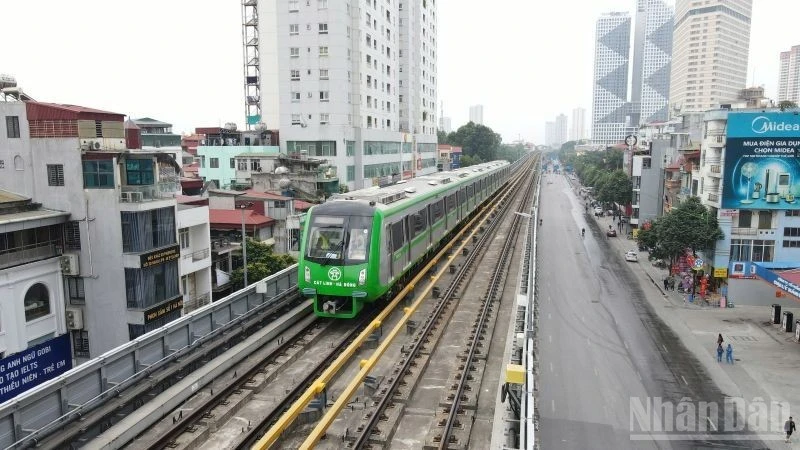
To realise its sustainable development goals, Ha Noi is promoting green growth and a circular economy in key sectors. Public transport development programmes have been being implemented vigorously, including urban railways, electric buses and public bicycle systems, aimed at reducing air pollution and traffic congestion—two major challenges for a city of nearly 10 million residents.
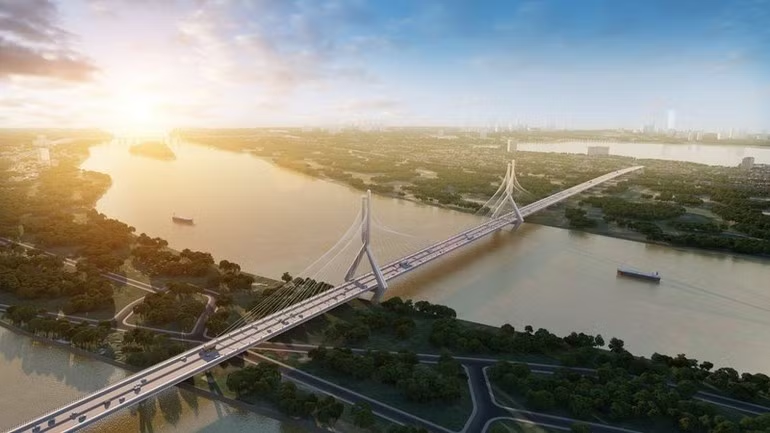
Major transport projects continue to leave a new imprint on the city’s urban landscape. The Cat Linh–Ha Dong metro line, the Nhon–Ha Noi Railway Station project, and the bridges spanning the Red River currently under construction demonstrate Ha Noi’s steady progress in modernising its infrastructure. The simultaneous commencement of three major bridges, including Tu Lien, Tran Hung Dao and Ngoc Hoi, is of particular significance, not only enhancing connectivity but also symbolising the capital’s aspiration to break through development constraints as it expands north and south of the Red River.
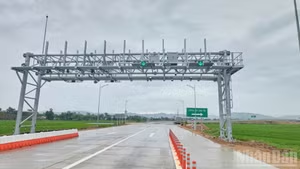
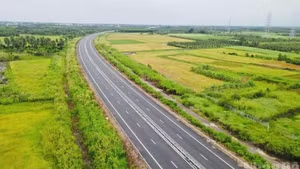
At the same time, a series of projects to complete ring roads and expand airport links and inter-regional gateways are being fast-tracked. These works are creating an integrated transport system, strengthening connectivity between the capital and surrounding areas, and providing momentum for Ha Noi to become a major economic, commercial and industrial service hub with strong regional competitiveness.
With clear direction, a long-term vision and concrete actions, Ha Noi is gradually shaping a green and smart urban model, maintaining a leading role in sustainable development and deep integration, while meeting the expectations of its people and the demands of development in the new era.