The result once again affirms the appeal of Vietnamese cuisine, while opening opportunities to harness food as a vibrant cultural strength of different regions and enrich visitors’ experiences as they explore Viet Nam.
Vietnamese cuisine confidently affirms its unique identity
Vietnamese cuisine is increasingly recognised and highly regarded by international audiences. At the World Culinary Awards, Viet Nam was named Asia’s Best Culinary Destination in 2022 and 2025.
In 2025, travel website CNN Travel included the Vietnamese banh mi on its list of the world’s 25 best sandwiches; Ha Noi was voted Asia’s Best Emerging Culinary City Destination; while Viet Nam ranked 16th on the list of the world’s 100 best cuisines published by TasteAtlas, known as a global food map.
Gwendal Poullennec, International Director of the Michelin Guide, said Vietnamese cuisine is growing increasingly confident in asserting its own identity, with a generation of young chefs trained overseas choosing to return home to create dishes based on local ingredients, cultural memories, and national pride.
Although each award has different criteria, Viet Nam’s frequent presence on the international culinary map demonstrates a significant competitive advantage.
Master Le Quang Tuan, Secretary of the Editorial Board of Viet Nam Travel Magazine, said that Viet Nam being voted the world’s leading culinary destination for 2026 by readers of NZ Herald Travel was very encouraging. More important than the top ranking, however, is the recognition of cuisine as a cultural asset and a competitive advantage for the country’s tourism industry.
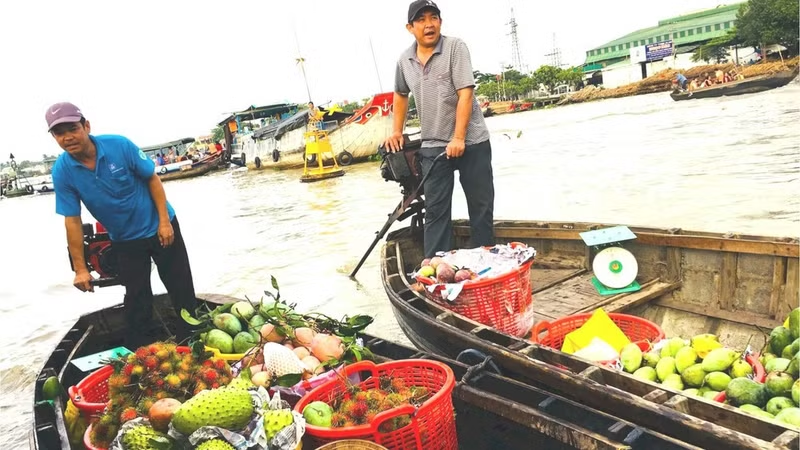
According to him, the strength of Vietnamese cuisine lies in its local character and close connection with everyday life. Visitors can experience everything from traditional markets, street food stalls, and local eateries to high-end restaurants.
Each region has its own flavours, ingredients, cooking methods, and cultural stories. This diversity and authenticity create an appeal that few countries can easily replicate.
Current tourism trends further highlight the appeal of cuisine. The US TravelBoom’s 2026 Leisure Travel Study showed that 79.8% of respondents considered cuisine an important or very important factor when choosing a destination, while 65.8% were interested in street food experiences.
Research by the UN Tourism and the World Food Travel Association also shows that spending on food accounts for 25-35% of total travel expenditure.
This spending not only generates direct revenue for the tourism industry but also creates spillover effects for the night-time economy, cultural industries, and regional linkages, while encouraging visitors to make longer stays.
This advantage is particularly noteworthy as the number of international visitors to Viet Nam continues to rise. In the first seven months of 2026, Viet Nam welcomed 13.9 million international visitors, an increase of 13.8% compared with the same period in 2025.
According to the Statistics Office under the Ministry of Finance, natural landscapes, culture, cuisine, diverse tourism products, favourable visa policies, and reasonable costs are among the factors making Viet Nam an attractive destination.
Joining together into an attractive journey
Viet Nam has great potential, however, having many delicious and famous dishes does not mean that it has a strong culinary tourism product.
According to Le Quang Tuan, Viet Nam needs to shift from the mindset of “promoting dishes” to “building destinations through culinary culture”. The experience would be more memorable if tourists could go to a market with residents, visit ingredient-producing areas, explore craft villages, meet the people who prepare the food, try their hand at one stage of the process, and then enjoy the dish.
At that time, the value of a meal is expanded into the value of an entire journey, while tourists’ spending has greater potential to benefit craft households, tour guides, accommodation facilities, and many other local services.
Tourism products should be developed with quality, sustainability, and visitor experience at the centre. Restaurants, markets, craft villages, ingredient-producing areas, heritage sites, and community activities cannot operate in isolation but need to be connected into an appealing journey that encourages visitors to spend more time and money.
Nguyen Thi Hoa Mai, Deputy Head of the Viet Nam National Authority of Tourism, said the authority had advised the Ministry of Culture, Sports and Tourism to submit a scheme to the government on promoting and marketing Viet Nam’s tourism and cuisine overseas for the 2026-2030 period, with cuisine as a core element in positioning the national tourism brand and enhancing the competitiveness of Viet Nam as a destination.
Many experts believe that Viet Nam needs a systematic approach: localities should select distinctive values that can be developed into stories about their regions and turned into experiences; travel businesses should connect these places into marketable products; restaurants and service providers should ensure quality; communities should preserve their crafts, dishes, and indigenous knowledge; while media and digital platforms should help culinary stories reach visitors at the right time when they are searching for information and planning their trips.
The development of culinary tourism should also avoid destroying the environment that has shaped and sustained the distinctive dishes of each locality. A market should first and foremost remain a place where local people live their daily lives; craft villages need to be able to make a living from their traditional crafts; and regional dishes should not be altered simply to cater to visitors’ short-term tastes.
When ingredient producers, cooks, and traditional craft practitioners receive fair benefits from tourism, they will have greater motivation to preserve the values that make destinations attractive.
In addition to the appeal of food, there are requirements regarding food hygiene and safety, ingredient sourcing, transparent pricing, service quality, foreign-language skills, payment methods, and convenient access to information.
An attractive promotional image may bring visitors for the first time, but the actual experience determines whether they will recommend the destination to others or want to return. Only then can the strength of cuisine truly become the strength of the destination and bring sustainable tourism development.