By bringing heritage into contemporary life through cultural and tourism products and large-scale events, Quang Ninh Province has turned its natural advantages and cultural identity into a driver of development.
In the first six months of 2026, the province welcomed more than 12.4 million visitors, with total tourism revenue reaching 35.198 trillion VND. During this period, Quang Ninh organised 30 cultural and sporting events at provincial, national and international level, alongside 152 tourism promotion and stimulus activities.
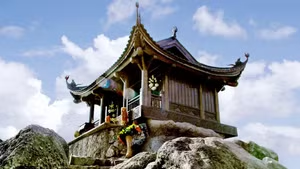
Home to 609 relics, including eight Special National Relics, 19 national intangible cultural heritage items and two world heritage sites — Ha Long Bay and the Yen Tu-Vinh Nghiem-Con Son-Kiep Bac Complex of Monuments and Landscapes — Quang Ninh has chosen to draw on these values to create a distinctive mark for its events.
Home to 609 relics, including eight Special National Relics, 19 national intangible cultural heritage items and two world heritage sites, Quang Ninh has chosen to draw on these values to create a distinctive mark for its events.
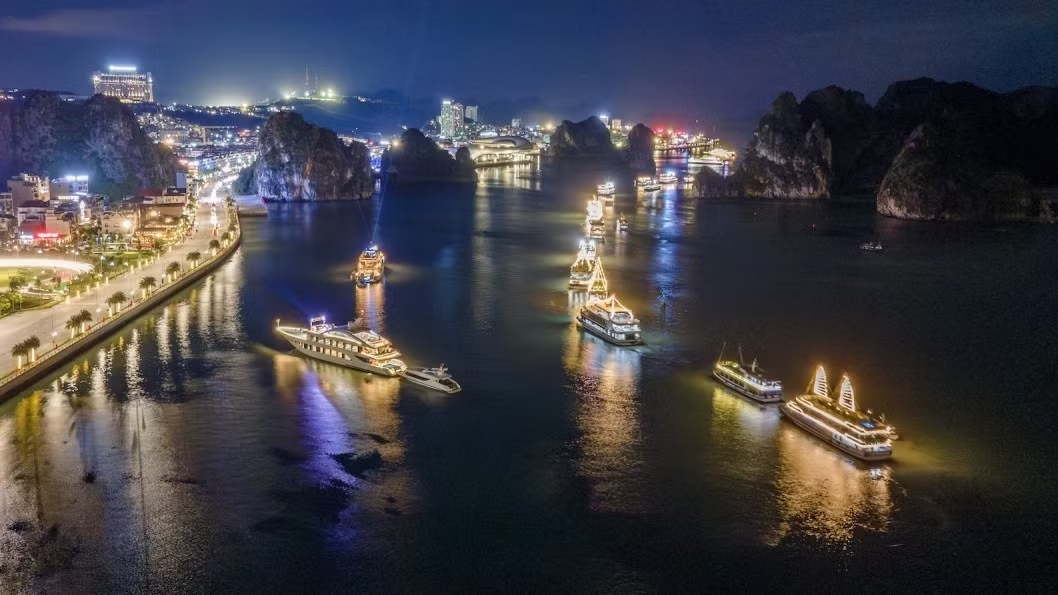
Carnaval Ha Long 2026 took place against the backdrop of the world natural heritage site of Ha Long Bay, combining a live stage performance with the “Wave of Light” show featuring more than 70 tourist boats. The arts programme "Sacred Yen Tu – A Millennium of Heroic Spirit" was linked to the cultural, historical and Truc Lam Buddhist space of Yen Tu.
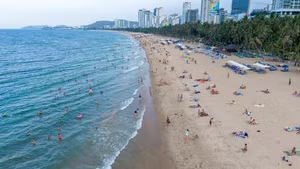
The province has determined that each event must be imbued with the distinct imprint of the land. National and international sporting events such as Aqua Warriors Ha Long Bay, the international sports dance championship and the open international chess tournament were also staged in the province’s coastal spaces and scenic sites.
Cultural, sporting and tourism activities are not merely promotional tools; they have become part of the strategy for developing cultural industries and the heritage economy. Each year, the province hosts 50 to 70 large-scale events; many arts programmes attract between 30,000 and 50,000 spectators.
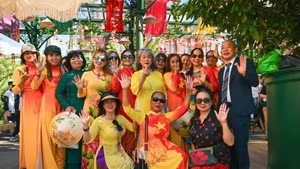
In particular, the 2026 summer cultural, sporting and tourism week drew more than 400,000 people in person and more than 100 million views and interactions on digital platforms.
Le Ngoc Thanh, Director of the provincial Department of Culture, Sports and Tourism, said Quang Ninh has chosen heritage, landscapes and local culture themselves as the stage. Identity has created a unique brand for events and helped each programme become a promotional product, enhancing the appeal of the destination and fostering pride and a sense of responsibility for preserving cultural values in the community. Through these events, Quang Ninh’s image is recognised through distinctive cultural values, gradually building a destination brand.
Choosing heritage, cultural identity and the land’s inherent values as distinguishing highlights is the direction many localities are taking when building destination brands. It is also a process of transforming local values into experiences that visitors can enjoy and share.
Nguyen Quoc Hoan, Chairman of Senses Group, said international visitors are not looking for a mere service; most want to understand the place they visit through its stories. Viet Nam has many distinctive cultural resources that need to be promoted and harnessed in a systematic way. To bring Viet Nam’s image to the world, it is necessary to tell the stories of its own cultural values so that visitors can connect with them.
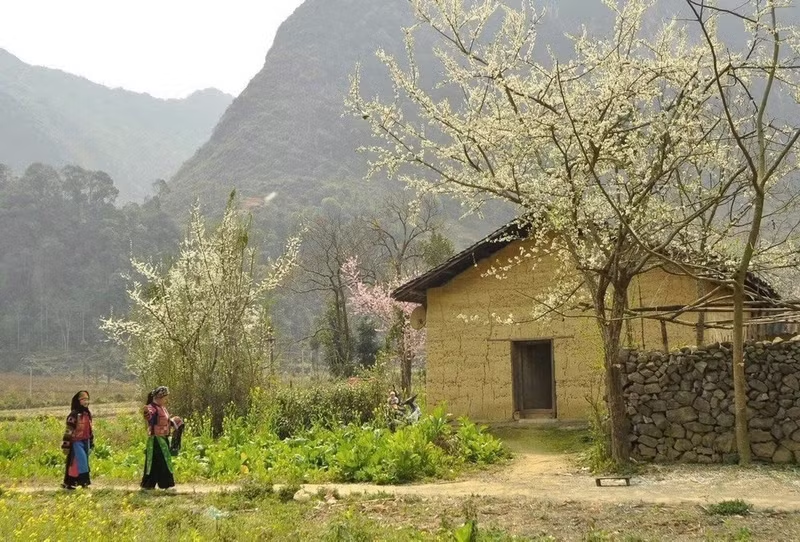
Using the trinh tuong (earthen) houses of the Mong ethnic people in the mountainous areas of Tuyen Quang Province as an example, Hoan explained that building one such house requires the whole community to contribute, layering earth over many months.
Behind the thick earthen walls that keep the house warm in winter and cool in summer lies a spirit of community, sharing and mutual support preserved through generations. Once these values are understood, visitors no longer see the earthen house as a mere architectural structure, but as a symbol of highland cultural identity.
Telling the story of a country and its people is a global trend. Each nation can only create its mark and affirm its identity when it knows how to build a story from the cultural foundations of its own people.
Associate Professor Dr Bui Hoai Son
From the earthen houses in Tuyen Quang, it can be seen that the appeal of tourism also lies in the ability to discover and convey the inherent values of each place. When local values are transformed into tourism products, visitors have more opportunities to experience and better understand Vietnamese identity.
From the perspective of destination branding, Associate Professor Dr Bui Hoai Son, a full-time member of the National Assembly’s Committee for Culture and Social Affairs, said that telling the story of a country and its people is a global trend. Each nation can only create its mark and affirm its identity when it knows how to build a story from the cultural foundations of its own people.
By shifting from a mindset of exploiting resources to one of promoting cultural value, and by bringing heritage into contemporary life, each locality is gradually creating its own distinctive imprint, helping to shape the image of a culturally rich Viet Nam on the world tourism map.

![[Video] Viet Nam among Top three Asian destinations for return visitors](https://en-cdn.nhandan.vn/images/nyM650OGFWrOVWc-xajqN-rTZ68Rlmc1fiGJOhBRYHErj-E25MBpvJqrpphXazfrpe9t-fYCGuQU4CN0yXo3Rg/du-lich-vietnam.jpg.avif)