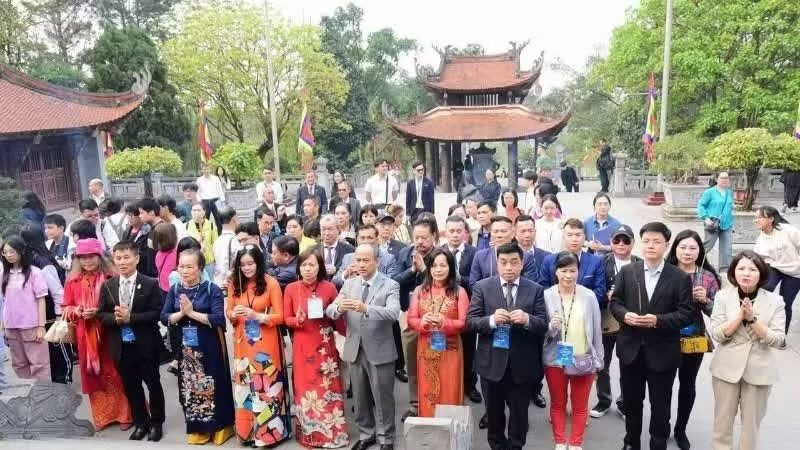
The legend of Lac Long Quan and Au Co has been passed down for thousands of years, becoming a symbol of the nation’s origins. Since the Hung Vuong era, when the country was founded, the Vietnamese people have been conscious of their roots, shaping a communal lifestyle through production, wartime, national construction, and defence.
From daily life with flood control to protect fields and villages, through the tale of Son Tinh–Thuy Tinh, to cultural traditions such as sticky rice cakes and rice dumplings, boat races, ‘Xoan’ (Spring) singing, or the legend of Saint Giong, who rode an iron horse and wielded thorny bamboo to repel foreign invaders in the nation’s distant mythical past — all highlight collective strength.
The word “compatriot” originates from the legend of Mother Au Co giving birth to a pouch of one hundred eggs, which hatched into a hundred sons; from the notion of a shared Lac Hong bloodline and common ancestors; and from the practice of ancestor worship in every Vietnamese family.
President Ho Chi Minh repeatedly used the word “compatriots” in his speeches and writings about the people, the spirit of great national unity, compassion, mutual support, and solidarity. While delivering the Declaration of Independence on September 2, 1945, President Ho Chi Minh paused midway to ask: “Can you hear me clearly, dear compatriots?”
The word “compatriots” resounded most movingly and warmly, encompassing a tight-knit bond and the spirit of great national unity, creating the immense strength of the nation.
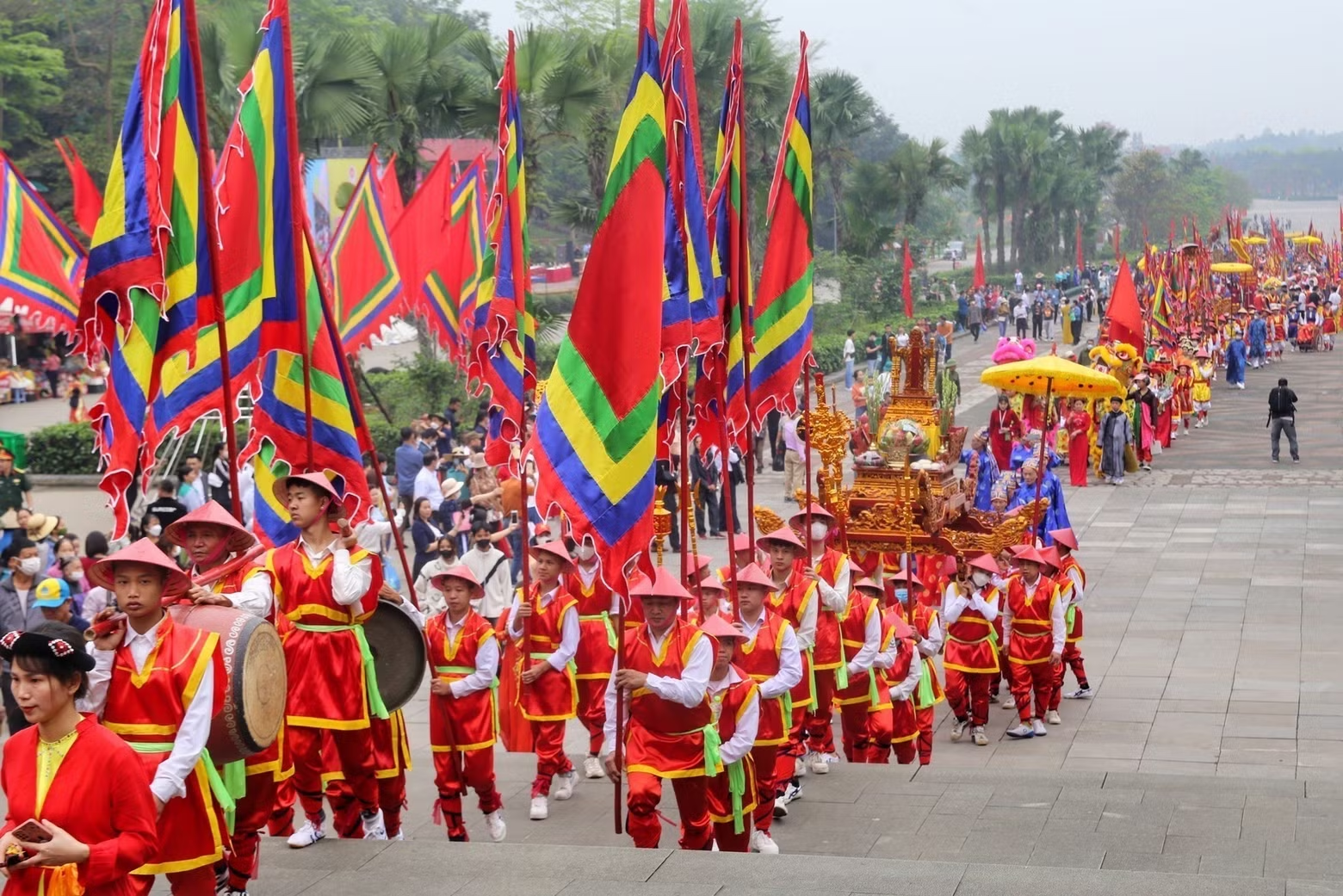
That immense strength played a decisive role in the resounding success of the August Revolution in 1945, the globe-shaking Dien Bien Phu Victory, and the great triumph of the historic Ho Chi Minh Campaign. It enabled our nation to overcome all hardships and challenges to achieve prosperity, potential, and stature as it does today.
This strength stems from the national wellspring, from patriotism, from communal spirit, and from the bonds between people across generations. It will also remain the source of strength for us to stride confidently into a new era — the era of the nation’s rise.
Over thousands of years of history, that national wellspring has been continuously nurtured and fervently forged. No matter how far they travel, in any corner of the earth, deep in the heart of every Vietnamese person still echoes the sacred word “compatriots,” turning their hearts towards their roots and joining hands to contribute to the motherland.
Thus, the annual Commemoration of the Hung Kings and the Hung Kings Temple Festival on the 10th day of the third lunar month are not only occasions to honour our ancestors but also reminders for every Vietnamese of the national roots and the spiritual strength that has sustained the country’s development. It is also an event that fosters generational connection, raises responsibility and civic consciousness, and contributes to consolidating national inner strength.