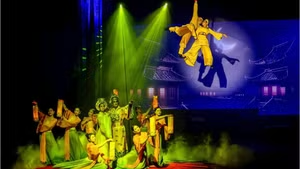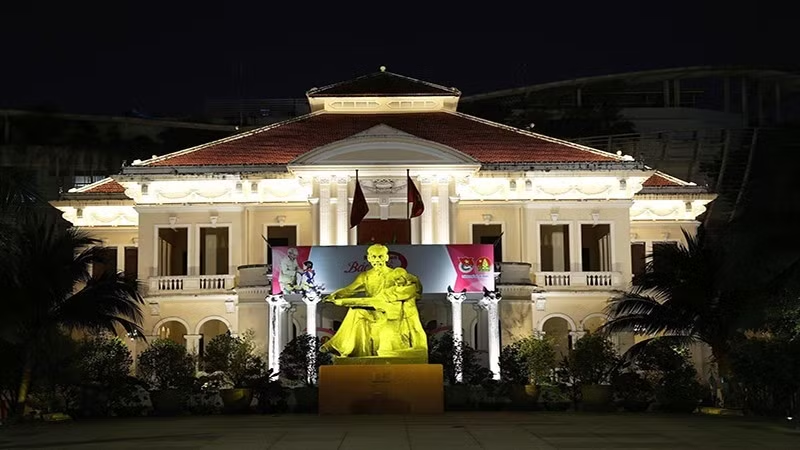
The project covers six heritage-listed structures, namely the Thu Ngu Flagpole, Mong Bridge, the City Children’s House, Ben Thanh Market, the Ho Chi Minh City Museum, and the Ton Duc Thang Museum.
According to the Urban Infrastructure Construction Investment Project Management Board, the project aims to honour the cultural, historical, and architectural values of these heritage sites while refreshing the night-time landscape of the city centre.
Furthermore, once fitted with the new artistic lighting systems, these cultural heritage structures are expected to become more attractive destinations for visitors, helping to promote tourism in the city centre.
Mong Bridge, which spans the Ben Nghe Canal, is one of the oldest bridges in the city.
The bridge was funded by the French shipping company Messageries Maritimes and constructed by the French firm Levallois Perret between 1893 and 1894.
It is 128 metres long and 5.2 metres wide, and primarily built of solid steel.
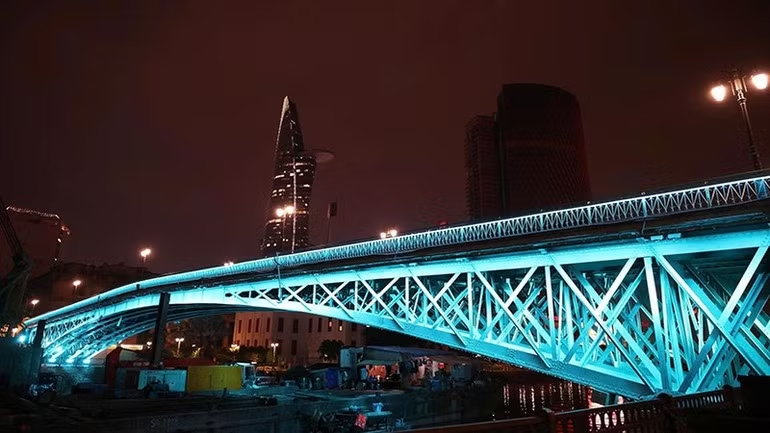
Mong Bridge features numerous architectural highlights, including its turquoise steel structure, approach railings, bridge railings, and abutments.
The installation of artistic lighting will enhance the experience for pedestrians at night.
For many years, Mong Bridge has also been a popular photo spot, attracting large numbers of city residents and tourists alike.
Meanwhile, the Ho Chi Minh City Museum sits on a nearly two-hectare plot, surrounded by the Ly Tu Trong, Pasteur, Le Thanh Ton, and Nam Ky Khoi Nghia streets.
Construction of the museum began in 1885 and was completed in 1890, based on a design by French architect Alfred Foulhoux. It was originally used as a commercial museum to display products from southern Viet Nam.