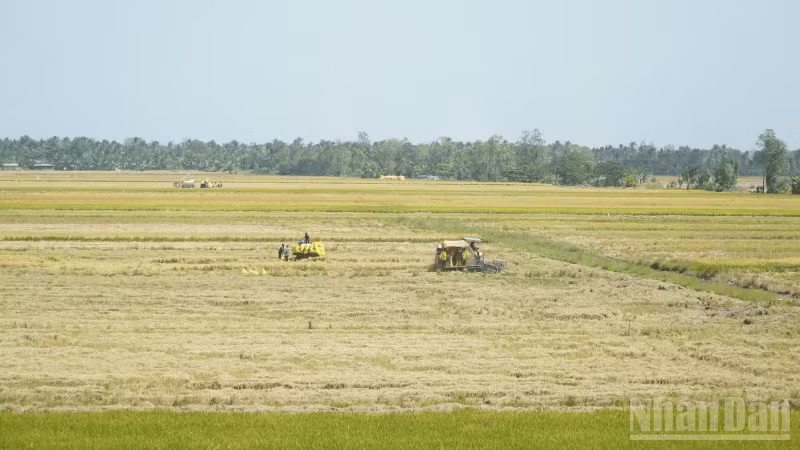
In Can Tho City, one of the key rice-producing localities in the region, the implementation of the project is gradually showing its effectiveness.
According to the Department of Agriculture and Environment of Can Tho City, to date, 64 communes and wards have registered to participate with a total area of nearly 171,000 hectares, along with 170 cooperatives and cooperative groups. Notably, the city aims to establish a specialised rice cultivation area of 76,000 hectares for high-quality, low-emission rice.
A highlight comes from models applying advanced technical processes. A prime example is the model at Thuan Loi Cooperative (Xa Phien Commune), implemented in the 2025-2026 winter-spring season on an area of 5.5 hectares, with a control group of 2.2 hectares. Farmers were guided to apply a comprehensive set of solutions, including using certified seeds, machine-based row sowing combined with burying fertiliser, alternating wet-dry irrigation, and the “four correct” fertilisation principles.
The results showed outstanding effectiveness. Seed usage was reduced by 50% (equivalent to 60 kg/ha), reducing costs by approximately 1.56 million VND/ha. The number of pesticide applications was also reduced by 10-20%, contributing to lower costs and reduced environmental impact. Significantly, yield increased by 0.89 tons/ha, resulting in a profit increase of approximately 5.5 million VND/ha compared to areas outside the model.
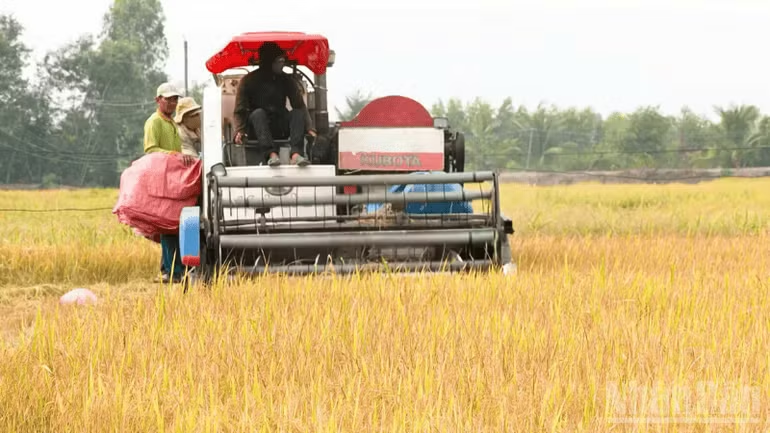
According to IRRI consultants, the application of integrated farming methods not only optimises inputs but also improves production efficiency and significantly reduces greenhouse gas emissions. In fact, emission reductions reached 8.7 to 9.7 tons of CO₂/ha, and there is still room for improvement in the future.
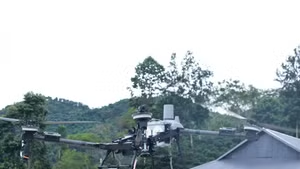
A noteworthy point is that farmers have begun to adopt digital technology in production management. Fertiliser monitoring is carried out according to specific criteria: the right source, the right dosage, the right time, the right location, and the right method. Simultaneously, the model integrates a greenhouse gas emission measurement system, creating a transparent database for management and efficiency evaluation.
Pham Thi Minh Hieu, Head of the Crop Production and Plant Protection Department of Can Tho City, affirmed that the synchronised implementation of technical solutions has yielded clear results from the very first crop. In addition to reducing costs and increasing productivity, the model also plays a crucial role in achieving the rice industry’s emission reduction goals.
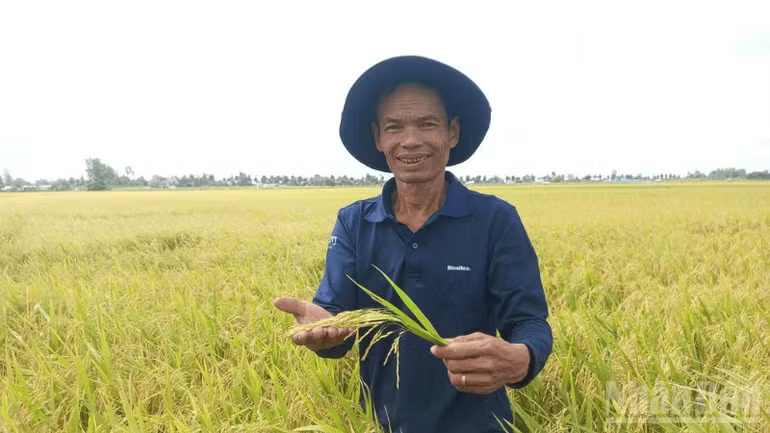
From a management perspective, Nguyen Thi Giang, Deputy Director of the Department of Agriculture and Environment of Can Tho City, assessed that the model has provided practical evidence showing that integrating techniques and technologies can improve production efficiency while controlling emissions through water regulation and IoT application.
Despite achieving many positive results in production, the consumption stage remains a weakness. Currently, only 46 cooperatives/associations in the area have links with businesses to consume rice, covering an area of nearly 9,500 hectares, a rather modest number compared to the total registered scale.
The majority of rice is still sold through traders, leading to volatile and unstable prices. This creates a large gap between production and the market, directly affecting farmers' income.
Tran Trung Hieu, Director of Trung Hieu Phat Cooperative (Hoa An Commune), said that although the cooperative has complied with clean production processes, the output remains unstable. In many cases, farmers are forced to sell to traders when they cannot reach an agreement with businesses.
This reality shows that if the linkage problem is not properly addressed, the full effectiveness of the project will be difficult to realise.
Many opinions suggest that the linkages in the project need to be expanded both vertically and horizontally. It should not only be limited to the relationship between businesses and cooperatives, but should form a network of linkages between cooperatives and processing and exporting businesses to create synergy for the entire industry.
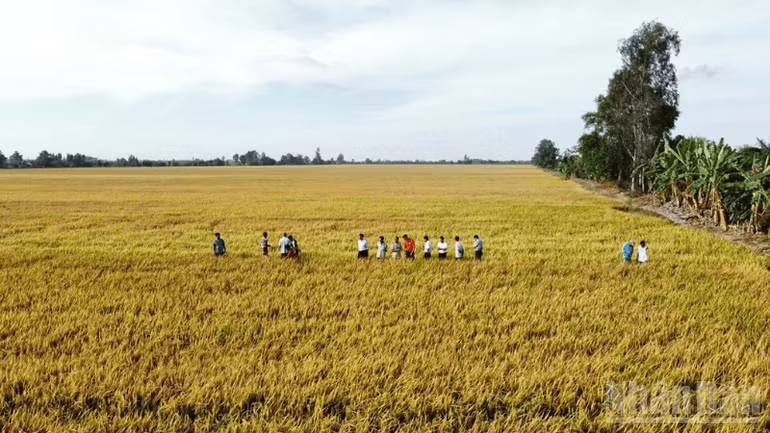
According to Nguyen Thi Giang, to achieve the target of 76,000 hectares by 2026, Can Tho City is reviewing the area in a concentrated, inter-regional manner to facilitate infrastructure investment and large-scale production. At the same time, the city will finalise the planting area map, support cooperatives and businesses in accessing capital, and strengthen technology transfer.
Besides market linkages, production management also needs improvement. Currently, farmers' record-keeping of production logs, water management, and input material management are still limited, affecting transparency and traceability.
In the coming time, the Department of Agriculture and Environment of Can Tho City will cooperate with Can Tho University and research institutes to standardise data and improve the reliability of management. At the same time, we will continue to refine farming practices to suit each locality, especially in water and nutrient management.
Simultaneously, training and capacity building for cooperatives on the application of digital technology will be intensified to enhance management capabilities and adapt to new market demands.
Overall, the project to cultivate 1 million hectares of high-quality, low-emission rice is on the right track, simultaneously improving economic efficiency and reducing environmental impact. However, to achieve sustainable development goals, a comprehensive approach is needed to address issues from production to consumption.
In this context, value chain linkages play a crucial role. When output is guaranteed and stable, farmers will have the motivation to maintain and expand advanced production models. This is also the foundation for Vietnam's rice industry to enhance its competitiveness and develop in a green and sustainable direction in the future.