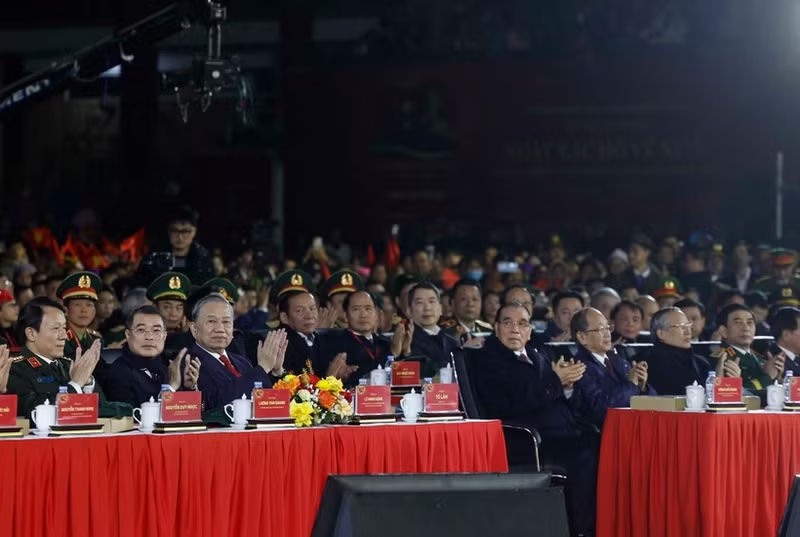
The programme featured more than 800 professional and amateur performers, including over 350 at the Cao Bang site.
Present in Cao Bang, General Secretary Lam stressed that the event carries political, historical and cultural significance for the entire Party, people and army, offering an opportunity to honour and pay tribute to the immense contributions of beloved President Ho Chi Minh, while also encouraging each individual to reflect on their responsibilities to the Party, the people and the nation’s future in the new era.
He said that the life and career of President Ho Chi Minh are inseparable from key regions and milestones that together form a unified historical, revolutionary and cultural heritage of Viet Nam. From his homeland of Nghe An, to Ho Chi Minh City where he set out to seek ways for national salvation, and later to Cao Bang where he returned after 30 years abroad to build revolutionary bases, these milestones marked a decisive turning point in the nation’s destiny.
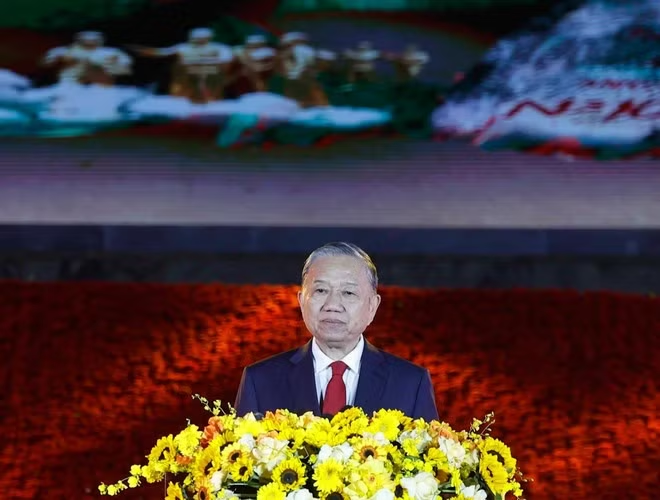
The Party chief affirmed the enduring value of President Ho Chi Minh’s return lies less in its historical moment than in its lasting lessons, notably self-reliance and resilience as the foundation of national independence, the people as the revolution’s most enduring source of strength, and the combination of national strength with the strength of the times—independence without isolation and integration without loss of identity.
In the context of a rapidly changing world and intense strategic competition, these lessons underscore a fundamental principle: safeguarding independence requires strong internal capacity; achieving sustainable development requires social consensus; and advancing far demands steadfast self-reliance, discipline, and a focus on efficiency, he stated.
The 14th National Party Congress has set a clear vision and development goals for the country in the new period, with the priority now is to translate political determination into concrete actions and turn strategic directions into tangible results, he added.
By 2030, the ultimate goal is not formal statistics, but tangible improvements in people’s lives - more stable incomes, sustainable jobs, better access to education, healthcare, housing and essential services; and a gradual narrowing of development gaps between regions, particularly revolutionary base areas, borderlands, and ethnic minority communities.
By 2045, Viet Nam aims to become a developed, self-reliant, safe and prosperous nation, where people are truly at the centre of development, with every citizen respected, assured of social welfare, and given opportunities for comprehensive development , the Party chief noted, adding that these goals should not be measured by slogans, but by the quality of daily life and their trust in the Party and the State.
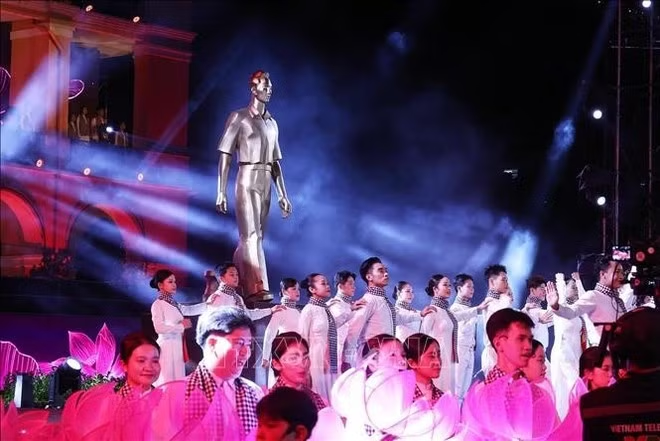
The General Secretary recalled President Ho Chi Minh’s instruction that Cao Bang should strive to match or surpass the best provinces. He stressed that today, this means excelling in self-reliance, public trust, and development quality, while supporting revolutionary heartlands, ethnic minority communities, and border regions as an investment in national security and the country’s long-term future.
He asked for decisive actions and efficient work, urging every sector and Party member to uphold their responsibility to the people and remain committed to building a peaceful, independent, self-reliant, strong, and prosperous Viet Nam that actively contributes to peace and development in the region and the world.
The same day afternoon, the Party chief paid tribute to President Ho Chi Minh at his temple in the Pac Bo special national relic site and visited Coc Po cave, where the late President returned to lead the nation’s revolution.