In the drive to strengthen and rectify the Party, alongside enhancing the quality of the existing membership, the proactive preparation of a successor generation — possessing political steadfastness, moral integrity, and a dedication to service — is a crucial task. Consequently, Quang Tri has identified the admission of new Party members as a key priority in its Party building.
Monitoring and evaluating new Party member admissions
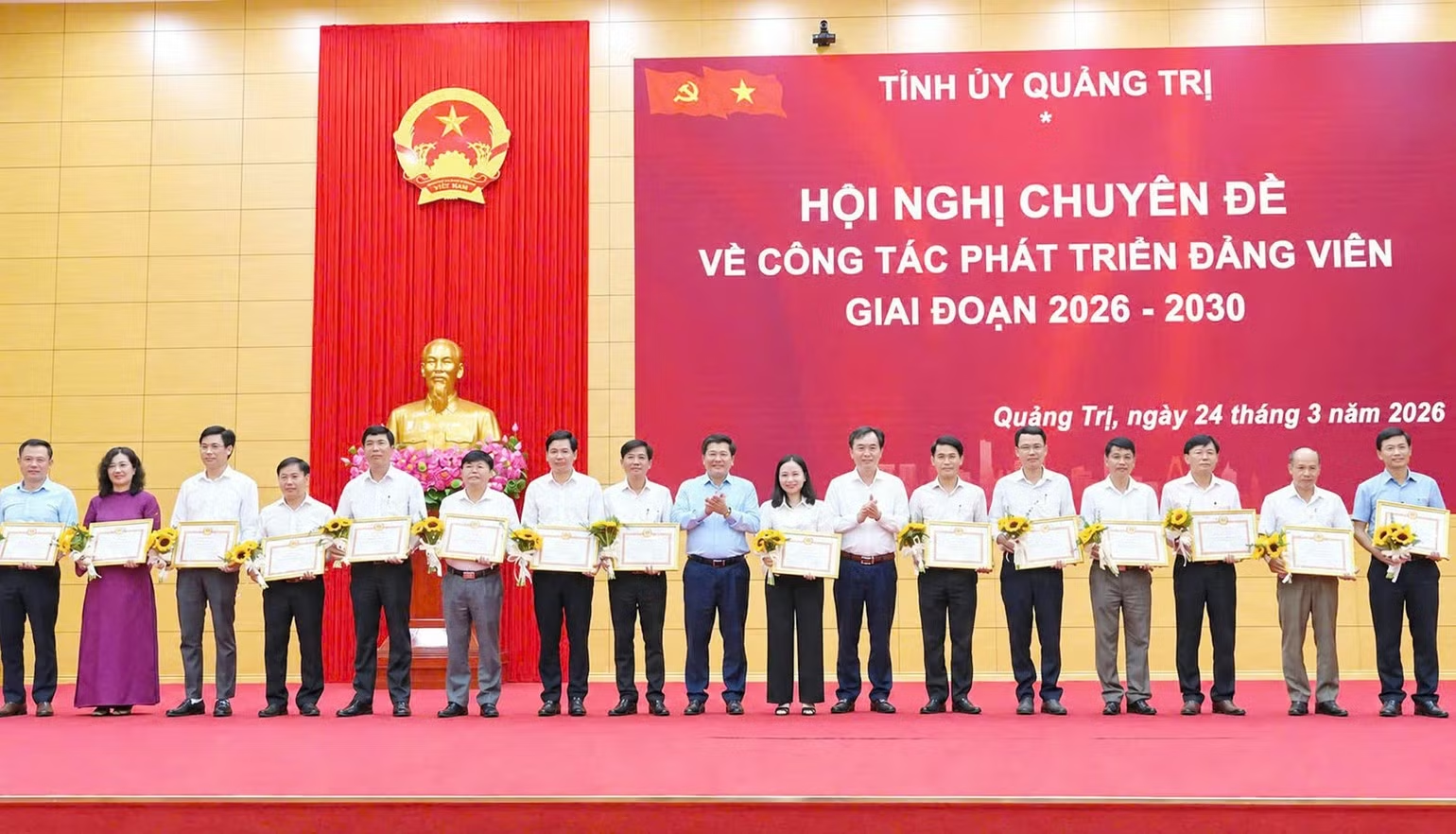
Immediately following the Quang Tri Provincial Party Congress for the 2025–2030 term, the Provincial Party Committee's Organisation Commission advised the Provincial Party Committee’s Standing Board to issue a plan on Party membership admissions, a scheme for implementing new Party member admissions, and a directive on strengthening Party member admissions in the new period. It also advised the Provincial Party Committee’s Standing Board to organise a specialised conference on Party member admissions for the 2026–2030 period.
Nguyen Luong Binh, Head of the Provincial Party Committee's Organisation Commission, said the commission had assigned officials and civil servants to monitor localities and provide guidance to subordinate Party committees on cultivating potential candidates, expanding Party membership, the process and procedures for admitting new members, and recognising official Party members. Party cells and committees submit monthly, quarterly, six-monthly, and annual reports to facilitate timely evaluation and commendation. Thanks to the implementation of comprehensive measures to cultivate potential candidates and provide training for outstanding individuals, the quality of new Party members has improved, contributing to strengthening the leadership capacity and operational strength of Party organisations.
By the end of August, the Provincial Party Committee had admitted 2,535 new Party members, achieving more than 82% of the annual target. Of these, 164 were from ethnic minorities, 28 were religious followers, 78 were business owners and employees of enterprises, and 574 were students; 1,392 were women. Many Party committees achieved more than 100% of the targets assigned by the province.
The results demonstrate the determination of Party committees at all levels, particularly the role of their leaders in cultivating and admitting new Party members, creating a foundation for achieving the 2026 targets set out in the Resolution of the Provincial Party Congress.
Ho Sy Trung, Secretary of the Party Committee of Nam Dong Ha Ward, said that the Party Committee had assigned targets of admitting new Party members to each Party cell, tying the cultivation of potential candidates to the responsibilities of Party committees and their leaders, as well as with assessments of the quality of Party organisations, cadres, and Party members. The ward worked with the Political Training Centre to organise three Party awareness courses for 213 outstanding individuals. So far, the ward has admitted 93 new Party members, reaching 101% of its annual target.
In the border commune of Lao Bao, Tran Binh Thuan, Secretary of the Party Committee of the commune, said that by focusing on implementing comprehensive measures to cultivate a pool of prospective candidates in border villages and hamlets, the commune Party organisation had so far admitted 39 new Party members, against a target of 21, reaching 185.7%.
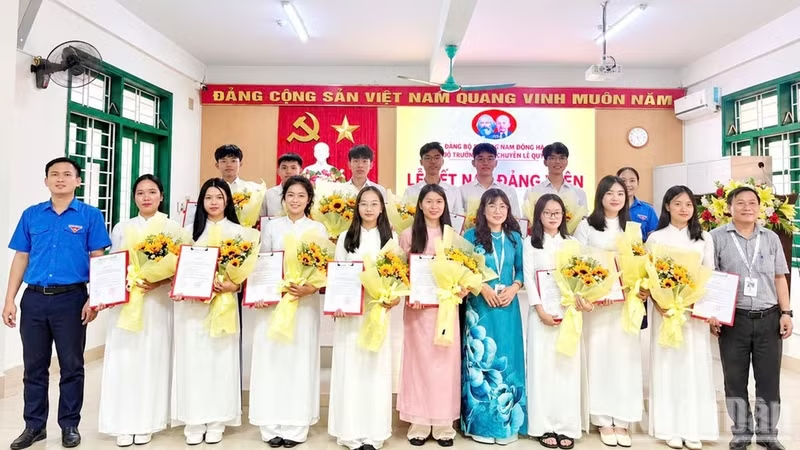
According to Nguyen Thi Hai Yen, Secretary of the Party Committee and Principal of Vo Nguyen Giap Gifted High School, so far this year, the school's Party Committee has admitted 26 outstanding individuals to the Party, including one teacher and 25 students, reaching 260% of the annual target.
The results reflect the resolute leadership and direction of the school's Party Committee and seamless coordination among mass organisations, while demonstrating the effectiveness of political and ideological education and the cultivation of potential Party members among students and teachers. Party cells and committees have completed the transfer of records for students admitted to the Party who passed university entrance examinations to the Party organisations of their universities so that they can continue participating in Party activities.
Meanwhile, the Con Tien Commune Party Committee, which serves a particularly disadvantaged area, has 32 subordinate Party cells and committees with a total of 1,191 Party members. Nguyen Thanh Ty, Secretary of the Commune Party Committee, said that from the beginning of the term, the Party Committee’s Executive Board had issued a plan assigning Party membership admission targets to subordinate Party cells and committees, with a total annual target of 30 new members. Mass organisations have intensified communication efforts and encouraged their members to actively participate in movements in residential areas, thereby identifying outstanding individuals to be recommended to Party cells for cultivation and consideration for Party admission. During the first eight months of the year, the Party Committee admitted 23 outstanding individuals to the Party, achieving nearly 80% of the plan, and officially recognised 12 Party members.
Proactively creating an environment for people to develop
Pham Tien Nam, Deputy Secretary of the Party Committee of the Quang Tri Province’s Party agencies, shared that one of the lessons learned was not to wait until potential candidates emerged before providing training, but to proactively create an environment where individuals could hone their skills and contribute through patriotic emulation movements. Through practical activities, outstanding individuals are identified, cultivated, and considered for Party admission. In particular, commune-level Party committees where commune-level political training centres are based have taken the lead in coordinating with commune Party committees in the surrounding area to build annual and full-term training plans for Party admission candidates and new Party members. Political training centres organise training courses and arrange suitable schedules and content for outstanding individuals, ensuring a steady supply of quality candidates.
According to Nguyen Luong Binh, although positive results have been achieved, new Party member admissions remain uneven among localities overall. Some grassroots Party organisations continue to face difficulties in identifying potential candidates, particularly in non-state enterprises and specific areas.
The admission of new Party members is an important task to which the Party pays particular attention, with the aim of building a contingent of Party members with sufficient qualities, capabilities, and prestige to meet the requirements of the revolutionary cause. The Resolution of the Quang Tri Provincial Party Congress for the 2025–2030 period prioritises the proactive development of a pool of potential candidates, expanding the available pool and setting specific annual targets. During the 2026–2030 period, the Provincial Party Committee aims to admit more than 15,000 new Party members, averaging more than 3,000 per year. Party Committees directly under the Provincial Party Committee aim to admit new Party members each year at an average rate of at least 3% of the total number of Party members at the beginning of the year.
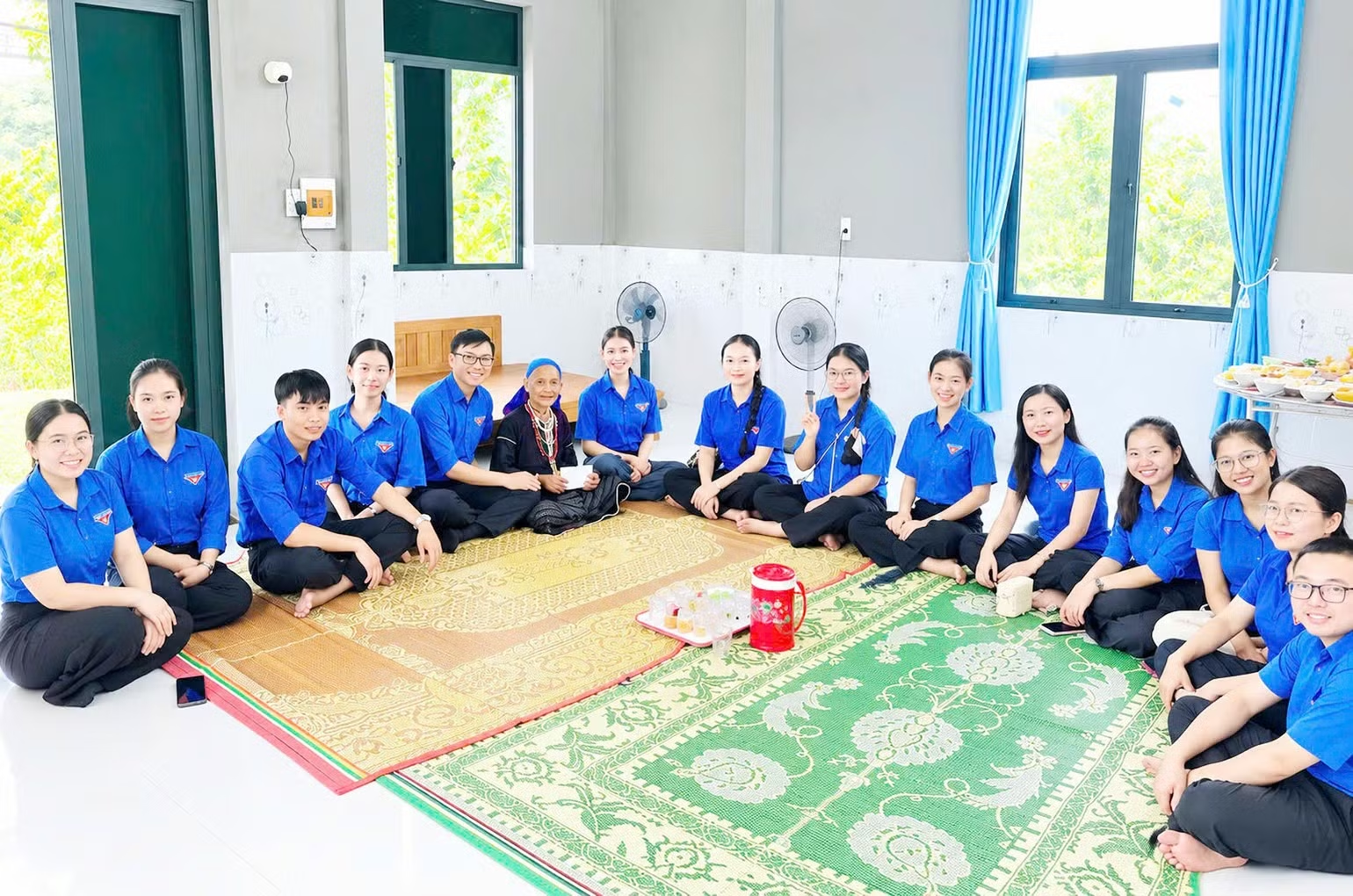
To achieve these targets, the Quang Tri Provincial Party Committee’s Standing Board has called for the continuous strengthening of the Party's leadership and the promotion of the role of the entire political system in admitting new Party members. At the same time, the responsibilities of collective leadership and heads of localities, agencies, and units should be linked to the identification and development of potential Party members; this should be regarded as one of the criteria for evaluating and classifying the quality of Party organisations, cadres, and Party members, as well as for annual emulation reviews and commendations.
In addition, effective models and creative approaches should be promoted and replicated, while localities, agencies, and units should regularly exchange and learn from one another's experience in order to achieve Party membership admission targets according to the plan of the Standing Board of the Provincial Party Committee. Appropriate policies should be studied to support the activities of Party organisations and the political system in areas facing particularly difficult socio-economic conditions; funding should be provided for training and developing outstanding individuals in ethnic minority areas, areas with religious followers, border areas, and among workers and employees of enterprises to attend Party awareness courses. New Party membership admissions should be linked to the development of a contingent of cadres, core forces, and the strengthening of clean and robust Party organisations.