A pillar of social welfare policy
With the goal of making rental housing a “strategic pillar of social welfare from now until 2030”, Party General Secretary and State President To Lam, together with Prime Minister Le Minh Hung, have outlined new directions for housing development.
Rental housing is positioned as a long-term, strategic segment serving a broad spectrum of society—particularly workers, employees, civil servants, public sector staff, and members of the armed forces. Alongside homes for sale, priority is being placed on rental housing, especially apartment models in major cities, industrial zones, economic hubs, and key economic corridors.
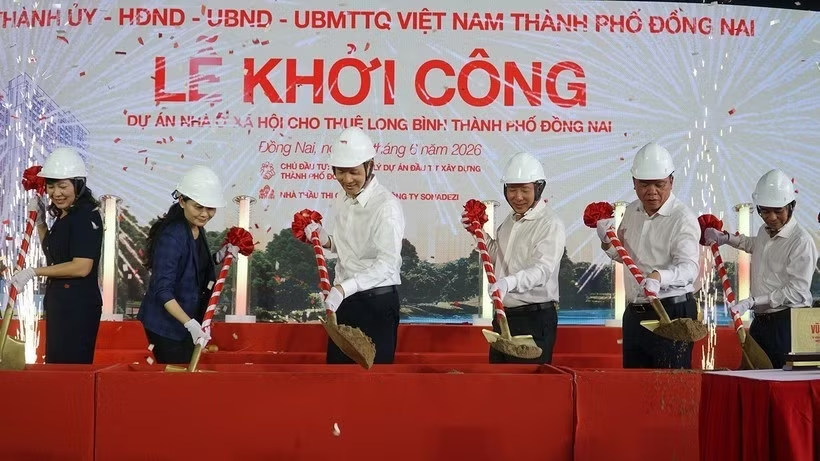
In response to Party and State guidance, localities have launched ambitious rental housing schemes. Dong Nai City has taken the lead, implementing a model of rental apartments to meet the needs of workers, labourers, and low-income groups.
The project spans more than 12 hectares in Long Binh ward, delivering around 10,000 social housing apartments for rent with integrated social infrastructure. With a total investment of approximately 1.36 trillion VND from the city’s budget, the project is scheduled for completion within a year of capital allocation.
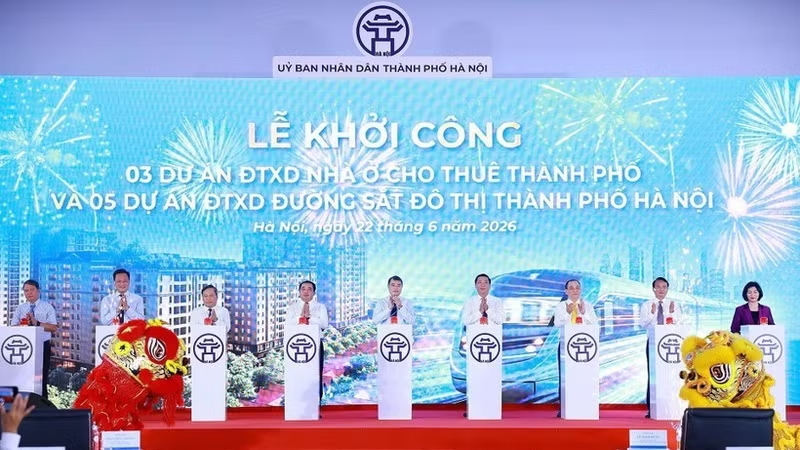
Meanwhile, Ha Noi has broken ground on three rental housing projects simultaneously, comprising more than 8,000 apartments with a combined investment exceeding 30 trillion VND. These include the Phap Van–Tu Hiep new urban area in Yen So ward, the Viet Hung rental housing project, and the Him Lam Long Bien mixed-use complex.
Among them, the Phap Van–Tu Hiep urban area will comprise three apartment blocks built on nearly 19,000 sq.m of land with an investment of almost 1.4 trillion VND. The Viet Hung project, covering approximately 2.46 hectares, carries an investment of more than 3.56 trillion VND and is expected to deliver 1,166 apartments between 2026 and 2028.
Meanwhile, Him Lam Group plans to invest around 29 trillion VND to develop approximately 6,000 apartments in Long Bien, including about 4,000 units designated for long-term rental.
Policy support still required
Le Huu Nghia, Vice Chairman of the Ho Chi Minh City Business Association and Chairman of Le Thanh Company, noted that the model remains unattractive to many property developers due to limited policy support, long payback periods, and a prevailing preference for home ownership.
Developing housing in this segment requires determination and patience, accepting low profit margins and slow cash flow. In return, however, businesses gain a stable and long-term customer base.
Le Huu Nghia, Vice Chairman of the Ho Chi Minh City Business Association
He proposed raising the benchmark profit margin for social rental housing to 15%, while reducing corporate income tax and VAT by 70% to enhance investment viability.
“Our company has pursued this path for many years, primarily out of responsibility to workers, the city, and the sustainable growth of the business itself. Developing housing in this segment requires determination and patience, accepting low profit margins and slow cash flow. In return, however, businesses gain a stable and long-term customer base,” Nghia explained.
Standing Deputy Secretary of the Ho Chi Minh City Party Committee, Le Quoc Phong, suggested allowing the city to appoint investors directly for State-managed land, public land, or land aligned with planning, without auctions or tenders for social and rental housing projects.
He urged the Government to introduce policies on exemptions and reductions in land-use fees and taxes, alongside interest-rate support for bank loans.
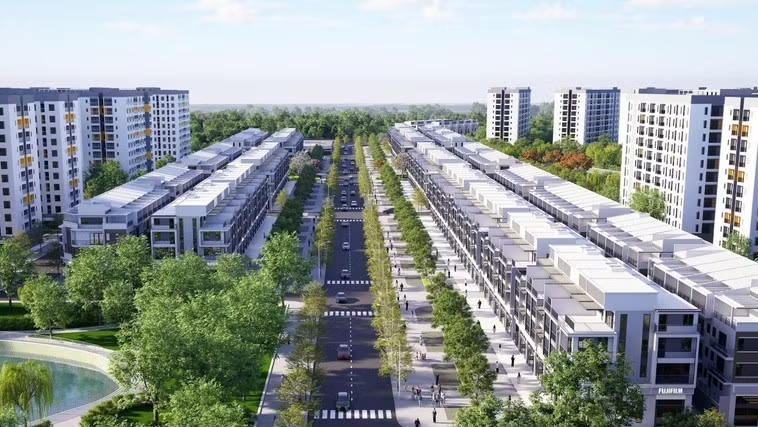
The city also plans to apply “green lane” and “priority lane” mechanisms to social and rental housing projects, convert part of the underutilised resettlement housing fund into social housing, and consolidate the Housing Development Fund to focus on rental housing investment.
The Ho Chi Minh City Department of Construction has proposed a preferential credit package with interest rates of 3–4% per year, loan terms of 15–20 years, and a three-year grace period. It also recommends supporting 70–80% of commercial loan interest during the investment and operational phases, particularly in the first decade.
Loan limits eligible for interest support should be raised from 200 billion VND to 300 billion VND per project, with full support for technical infrastructure costs up to 10 billion VND per project.
Local authorities should promptly assess housing demand, particularly for rental and official housing, and to identify models suited to local conditions. Urban land resources, especially in economic zones, industrial parks, high-tech parks, and rapidly urbanising areas, should be reviewed to prepare clean land reserves and ensure connectivity for rental housing development.
Ha Quang Hung, Deputy Director of the Housing and Real Estate Market Management Department under the Ministry of Construction, said the Ministry is working to complete a system of legal documents on social housing.
The focus is on amending and supplementing the Housing Law, the Law on Real Estate Business, and related legislation, to be submitted to the National Assembly at its October 2026 session.
This will institutionalise the Party’s policy of classifying housing development into four groups: commercial housing, rental housing, official housing, and policy housing. Standards and regulations for each group are also being drafted.
He urged local authorities to promptly assess housing demand, particularly for rental and official housing, and to identify models suited to local conditions. Urban land resources, especially in economic zones, industrial parks, high-tech parks, and rapidly urbanising areas, should be reviewed to prepare clean land reserves and ensure connectivity for rental housing development.
Authorities are encouraged to proactively invest in rental housing using local budget capital, ensuring quality and long-term affordability. The national housing fund in each locality should be utilised effectively to build a sustainable stock of rental housing.