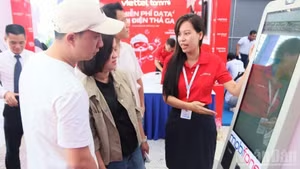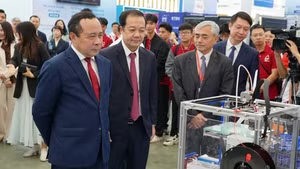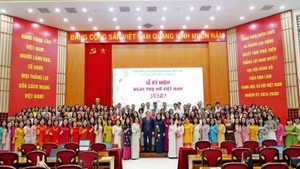
Throughout the reform process, the Party has consistently upheld the view that science and technology, together with education and training, constitute a top national policy and a key driving force for modernising productive forces, renewing the growth model, and enhancing national competitiveness. Important documents, from the 2011 Platform and the 2013 Constitution to the documents of the 12th and 13th National Party Congresses, have consistently affirmed the central role of science, technology, and innovation in the cause of national construction and defence.
The draft documents of the 14th National Party Congress continue to stress the requirement to build a science and technology development strategy aligned with global trends and Viet Nam’s practical conditions, so as to meet the demands of rapid and sustainable development in the context of the Fourth Industrial Revolution. Accordingly, the natural sciences, engineering and technology, social sciences and humanities, and political theory should be developed in a coordinated manner, creating a comprehensive knowledge base and methodological foundation for the country. Investment in science and technology human resources is identified as being investment in sustainable development, directly enhancing national intellect and strength.
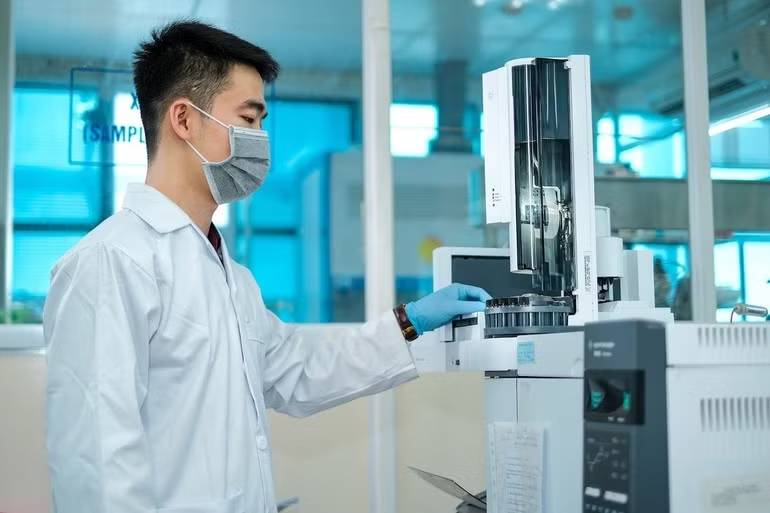
After 40 years of reform, Viet Nam has achieved major accomplishments of historical significance. From a poor country suffering food shortages, it has risen to the group of developing countries with middle incomes, with its international standing and prestige increasingly enhanced. A key contribution to these achievements has been the pivotal role of science, technology, and innovation in improving labour productivity, driving growth, and strengthening competitiveness.
The national innovation system has gradually taken shape; Viet Nam’s Global Innovation Index ranking has remained high among lower-middle-income countries; the start-up and innovation ecosystem has developed dynamically; and the science and technology market has become increasingly connected with the region and the world. However, the draft documents also frankly point out institutional bottlenecks, management mechanisms, and financial constraints that continue to need to be addressed.
Entering a new stage of development, the draft documents of the 14th National Party Congress clearly define the objective of building a growth model based on science, technology, innovation, and digital transformation; promoting the digital economy, the green economy, and the circular economy; and creating a foundation for rapid and sustainable national development, moving towards higher development milestones in the decades to come.