Brand development
According to Than Duc Viet, General Director of Garment 10 Corporation, the company has used clean, organic and recycled materials, renewable energy sources such as rooftop solar power, fuels that emit less carbon into the environment, and modern equipment and technology that consume the least possible fuel. The company has also stepped up its communication efforts to raise workers’ awareness of green production, moving towards implementing a circular economy when conditions allow.
In model and product development, the company has shifted to 3D design to increase productivity, reduce material consumption, and shorten model development time for customers.
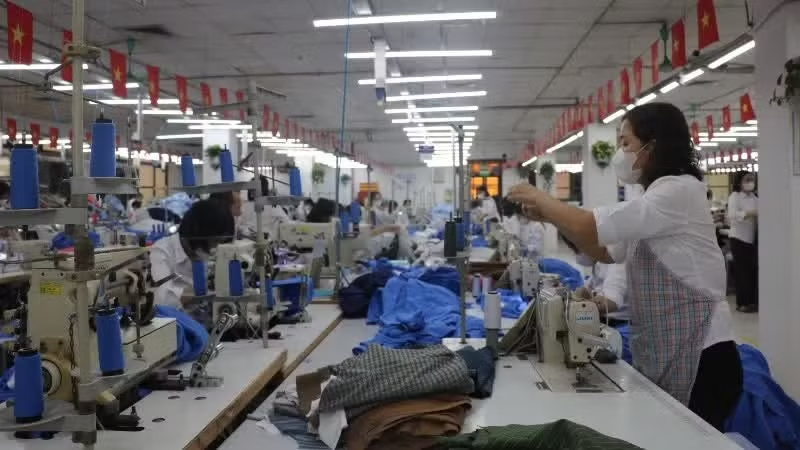
The enterprise is gradually moving towards a small-scale smart factory model, which will be expanded after successful application, effectively combining machinery and modern technology to reduce dependence on manual labour, increase labour productivity, and raise the automation rate in production lines.
With its specialisation in FOB (buying materials, manufacturing, and selling finished products) and ODM (designing, manufacturing, and selling finished products), Garment 10 has affirmed itself as an important link in the supply chain.
In addition to labels that have built domestic brands since the 1990s, over the past four years, the enterprise has developed several labels serving export goals.
Examples include DeTheia, a premium product line for women, and Generos, a product line for young people. Maximising the use of social networks and e-commerce has brought impressive results in the first half of this year, as Garment 10-branded products were sold to 19 countries, including demanding markets such as the US, the UK, and Europe.
“Competition in the fashion retail sector is extremely fierce. Choosing the wrong direction may leave insufficient resources for long-term investment in a brand. Therefore, Garment 10 proactively invests step by step with the motto of long-term product development. Other brands such as the Eternity GrusZ line and Garment 10 M series are still following traditional methods to increase designs, output, and brand recognition, with growth of around 15% per year,” Viet emphasised.
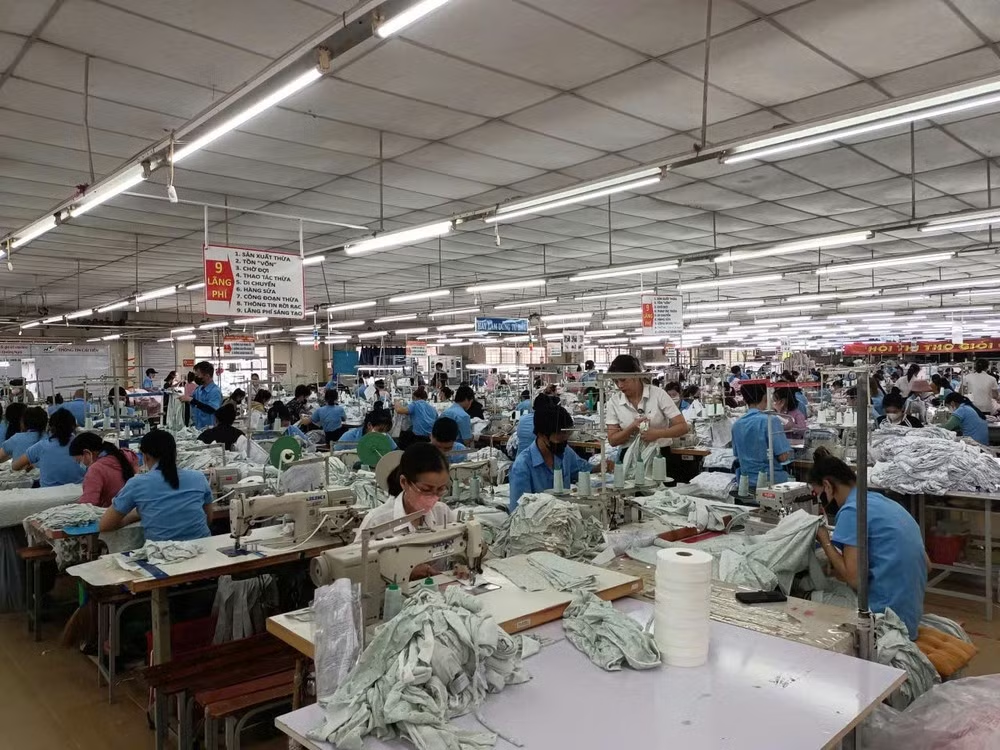
Many other garment enterprises such as Viet Tien, Nha Be, and Duc Giang are also focusing on developing domestic brands with a view to export. However, due to the lack of supporting industries and distribution systems, many domestic labels that are well known in the domestic market struggle to export to the world under their own brands.
Looking at this issue, Dr Nguyen Van Duc, Vice Rector of Hanoi University of Industry and Trade, affirmed that Viet Nam’s design and brand development stages remain very weak. It is necessary to form fashion industry centres to conduct research and combine creative thinking with practicality.
Towards sustainable growth
Dr Nguyen Van Duc added that the supply chain is divided into many stages, such as design, sample delivery, raw and auxiliary materials, garment processing, product distribution, and marketing.
At present, around 65% of enterprises are focusing on garment processing. This is a stage that brings very low value, accounting for less than 5% of the final selling price. Therefore, Viet Nam needs to form concentrated industrial parks and clusters with clear preferential mechanisms and policies to attract enterprises to invest in production.
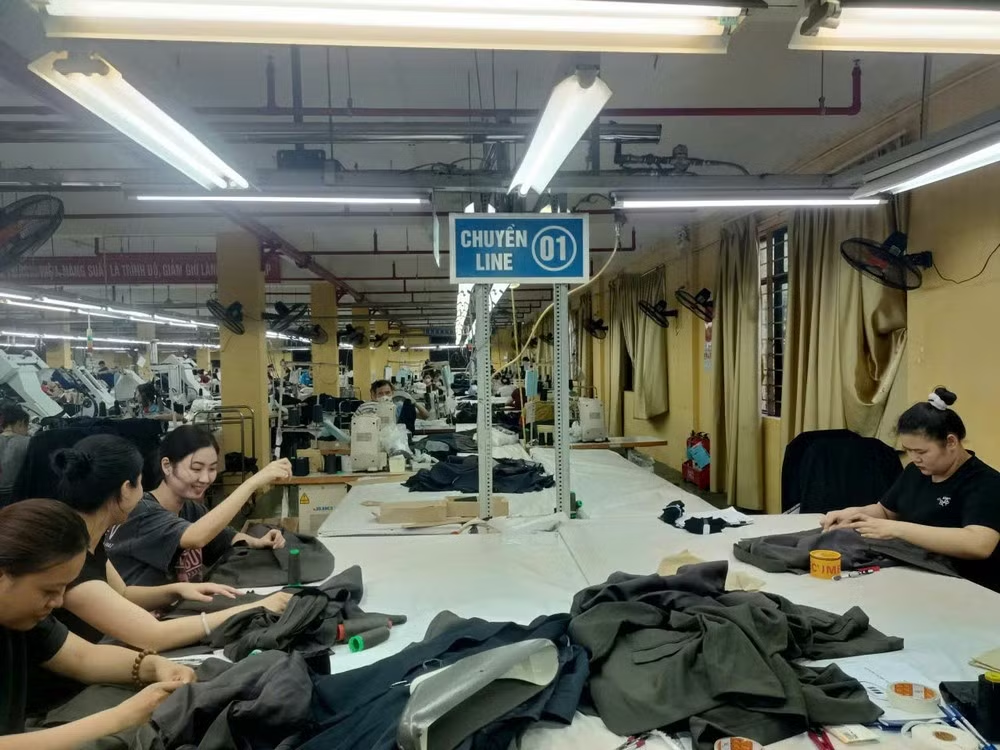
According to Cao Huu Hieu, General Director of the Viet Nam National Textile and Garment Group (Vinatex), amid weakening global demand, increasing competition, and growing pressure from tariffs and selling prices, textile and garment export turnover in the first five months reached 18.8 billion USD, up 5.6% over the same period last year. This is a particularly notable result, clearly demonstrating the competitiveness, rapid adaptability, and capacity of textile and garment enterprises to seize market opportunities.
In the time ahead, the textile and garment sector will continue to face many challenges. To complete the export target of 48-49 billion USD in 2026, monthly export turnover in the final months of the year must reach around 4.31–4.46 billion USD.
This is a very high target, as export turnover in May reached nearly 4 billion USD, while developments in the global market, tariff policies, and global consumption trends still contain many unpredictable factors.
Viet Nam’s textile and garment sector needs to continue focusing on improving competitiveness, accelerating green transformation, diversifying export markets, optimising production costs, and strengthening adaptability to new market requirements.
To achieve the export turnover target of 68-70 billion USD by 2030, Vu Duc Giang, Chairman of the Viet Nam Textile and Apparel Association (VITAS), said enterprises need to continue stepping up strategies to diversify markets, customers, and products; strengthen the ability to call for investment in missing supply segments; and build a strategic vision for resources in parallel with science and technology. In particular, they must build the aspiration to bring Vietnamese brands to the global market.
To realise this dream and participate more deeply in global supply chains, enterprises must increase investment in modern equipment and machinery to improve productivity and product quality as well as enhance competitiveness in the market.


![[Infographic] Viet Nam's 16 Comprehensive Strategic Partners](https://en-cdn.nhandan.vn/images/nyM650OGFWrOVWc-xajqN-rTZ68Rlmc1fiGJOhBRYHHdkBILL2hAdMw_FHcqH-128bTaQBSOAMd0_NcTypwz7H-j_NBZzuSdgF8ETMmVl1xLtdcCjym8rCUyKZqQgOZtC4ouMEzxlJoQ-MllehtjehDxIkn58uqaoaCRy4fSY54/1792513260540-1528117236743671738-1528117236743671738-9e797c256fe32c7c7b9c1cc03b0ca64e.jpg.avif)