Meanwhile, technical standards and regulations for electric vehicle charging stations in apartment buildings, including both existing buildings and new construction projects, have yet to be issued. This has left investors, building management operators and residents confused and anxious.
In recent days, the issue of managing and arranging infrastructure for electric vehicles in apartment buildings has become particularly heated after the Management Board of the HH Linh Dam apartment complex in Hoang Liet Ward (Ha Noi) announced that it would stop accepting electric motorbikes and electric bicycles for parking from December 2025, and move towards completely terminating electric vehicle parking services in basement areas from February 1, 2026. The decision was made due to overload and concerns over fire and explosion risks, and it immediately triggered considerable controversy, with the potential to disrupt the lives of many residents.
The People’s Committee of Hoang Liet Ward quickly held a working session with the HH Linh Dam apartment management board and requested that the management board must not refuse to provide parking services for residents’ electric vehicles, in accordance with the provisions of the 2023 Housing Law.
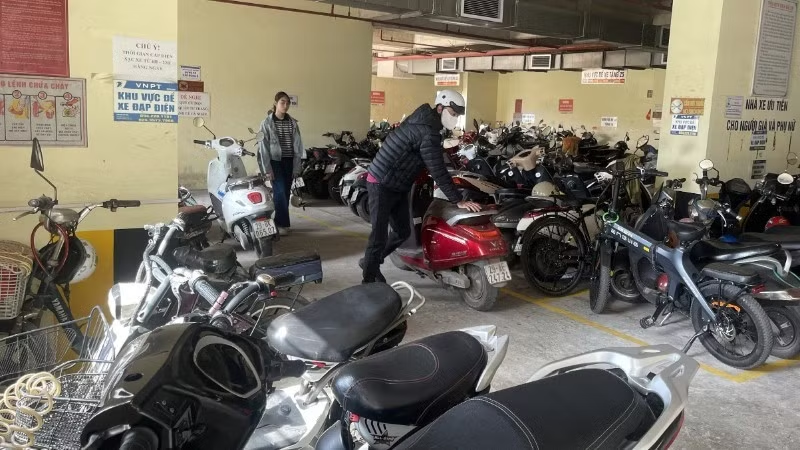
According to our observations, parking areas in the buildings within the HH Linh Dam complex are currently operating beyond capacity. In the electric vehicle parking zones, the building management has installed power sockets for charging, accompanied by warnings urging residents to use safe charging devices, charge only during designated hours and avoid overnight charging. However, concerns over safety remain constant among residents, building managers and investors alike.
Nguyen Van Tam, a resident of building HH2A, said that several small fires have occurred in apartments within the HH Linh Dam complex. Although these incidents were promptly brought under control, residents remain deeply worried, especially in the event that a fire were to originate from the building’s parking area. Nevertheless, Tam expressed frustration at the management board’s decision to cite safety concerns as grounds for refusing to park residents’ vehicles.
Taking the opposite view, Nguyen Thi Hoai, a tenant in the HH apartment complex, said that the density of vehicles parked in the building is excessive. Although petrol-powered vehicles and electric vehicles are supposed to be spaced about one metre apart, the sheer number of vehicles means they are parked tightly together. The strong smell of petrol, combined with the presence of old and worn electric vehicles whose batteries may malfunction, makes fires and explosions highly likely, posing serious danger to residents.
According to a representative of the HH Linh Dam apartment complex management board, the unit has made efforts to install a dedicated electrical system for parking and charging areas, along with automatic cut-off devices for charging zones. However, these measures are merely temporary solutions in the absence of official technical safety guidelines. The management board is eager for competent authorities to issue technical standards as soon as possible, so they can be promptly applied to ensure safe parking and charging of electric vehicles. Additional charging stations have also been installed outside the buildings, though on a limited scale.
At CT1 Thach Ban apartment building in Long Bien Ward, an area with a relatively low population density, the management has also announced that it will suspend the acceptance and parking of additional electric vehicles from 20 December 2025, due to parking capacity being exceeded and potential fire and explosion risks during parking and charging.
On-site observations show that the electric vehicle parking area on the first floor of CT1, which according to the original plan was designed for around 25 vehicles, now accommodates more than 60 electric vehicles, making vehicle arrangement extremely difficult. The parking area lacks designated zones for electric vehicle parking and charging, as well as specialised fire-fighting equipment for lithium-ion battery-powered vehicles. According to Ngo Truong Tao, Head of the CT1 Thach Ban Building Management Board, the unit has reported the situation to the building’s management committee and the fire prevention and fighting police, and is awaiting specific guidance from specialised authorities.
Similarly concerned about safety risks during parking and charging within the building, CT2 Thach Ban has arranged additional parking and charging locations for electric vehicles outside the building. The management board consulted residents on erecting temporary shelters outside the building to relocate all electric vehicles out of the premises. This proposal quickly received broad support from the majority of residents.
In addition, most multi-apartment rental buildings that are privately built by residents across Ha Noi have said “no” to electric vehicles, especially after the tragic fire at a mini apartment building on Khuong Ha Street, Khuong Dinh Ward, Thanh Xuan District (former), on the night of September 12, 2023, which claimed 56 lives. Many landlords have even included explicit clauses banning electric vehicles from being brought into the building at the time of signing rental contracts.
To address the legal gap relating to electric vehicle safety in apartment buildings, the Ministry of Construction recently coordinated with the Ha Noi Department of Construction and other relevant departments to conduct surveys at the HH Linh Dam apartment complex (Hoang Liet Ward), the Times City urban area (Vinh Tuy Ward), and the CT1 Thach Ban apartment building (Long Bien Ward). Through discussions with management committees, building operators, investors and residents, the working delegation identified key challenges such as a shortage of parking spaces in apartment buildings, particularly when allocating areas for electric vehicle parking and charging; building designs approved in the past failing to meet the rapidly growing demand for electric vehicle parking and charging; and the absence of unified standards and guidelines on charging as well as responsibilities for renovating and supplementing electric vehicle parking areas in apartment buildings that have already been handed over by investors.
According to the plan, from July 1, 2026, Ha Noi will prohibit fossil fuel-powered vehicles operating app-based transport services from circulating within low-emission zones on certain streets inside Ring Road 1. Petrol- and diesel-powered motorbikes will also be banned during specific hours within these low-emission zones. As a result, it is essential for regulatory authorities to soon establish a technical standards framework to ensure safety in electric vehicle charging areas, especially in high-rise apartment buildings.
In the meantime, apartment management boards need to regularly inspect fire prevention and fighting equipment in parking areas, particularly zones for electric vehicle parking and charging, and expand or prioritise the arrangement of dedicated electric vehicle areas outside buildings. Apartment parking facilities may also introduce technical measures such as accepting only vehicles with standardised batteries that still carry inspection seals, refusing modified vehicles or those using unverified, untraceable batteries, in order to ensure fire and explosion safety in apartment buildings.

![[Video] Renewal and growth milestones of Ha Noi through the lens](https://en-cdn.nhandan.vn/images/1XgBTSIw0KyfD4abQsg-hd4ly6fBUHXC7_OAKyN4YwPfAhBw0Xs6rVX3rF0up9Tr6rLNn30Muc4bzp90E7yOqg/10-10-hanoi-cover.jpg.avif)