At the same time, unpredictable disruptions in the global technology supply chain, from geopolitical tensions to pandemics, have clearly exposed the risks of over-reliance on external suppliers.
This reality requires Vietnamese enterprises to embrace the spirit of self-reliance, proactively mastering core technologies and developing their own products to ensure the autonomy and resilience of the nation's digital economy.
Self-reliance as the foundation for higher-level integration
According to Dr Tran Van Khai, Deputy Head of the National Assembly's Committee for Science, Technology and Environment, the spirit of self-reliance and self-strengthening in digital technology is demonstrated by the determination to master core technologies, continuously researching and creating “Make in Viet Nam” solutions and products.
This is entirely in line with the Politburo’s Resolution No. 57-NQ/TW, which has identified the development of science, technology, innovation, and digital transformation as the decisive factor and prerequisite for the country to become stronger and more prosperous.
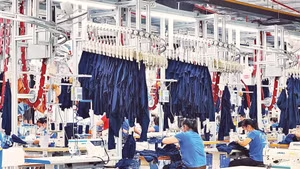
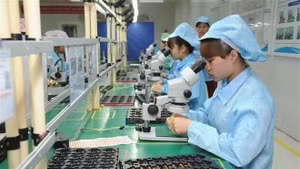
Therefore, Vietnamese technology enterprises need to boldly shift from processing and assembly to self-research and production, transforming from the position of “followers” to “creators” of technology.
In addition, the Party’s Resolution No. 68-NQ/TW on private sector economic development has set out strong policies to encourage and create breakthroughs for innovative enterprises. This provides the foundation for domestic digital technology enterprises to gain more motivation and favourable conditions to rise and master high technologies, contributing to building an autonomous and sustainable digital industry.

“Self-reliance and self-strengthening do not mean passive isolation or ‘self-sufficiency’ in a detached way. On the contrary, it is proactive advancement and integration at a higher level on the foundation of solid internal strength. When domestic enterprises master core technologies, we will avoid the risk of falling behind and reduce external dependence,” Dr Tran Van Khai emphasised.
Leaders of top corporations have warned that nations that do not master core technologies risk falling into the trap of low-value processing, facing threats of data and talent loss, and gradually losing economic and national security autonomy. Conversely, mastering technology will enable Vietnamese enterprises to participate more deeply in global value chains, enhance competitiveness, and gradually lead in certain strategic fields.
Dr Tran Van Khai affirmed that “self-reliance and self-strengthening” in technology at the current stage is a matter of survival for digital technology enterprises. It is both an urgent task and a precious opportunity to assert Viet Nam's intellect and mettle on the international stage.
Mastering technology and developing Make-in-Viet Nam products not only helps minimise import risks but also ignites national pride, creating strong momentum for the business community to join hands in realising the aspiration to make Viet Nam a self-reliant, prosperous digital nation.
Leading enterprises power the national digital ecosystem
Referring to the role of large technology enterprises in leading and promoting the development of the national startup ecosystem, innovation, and digital transformation, Dr Tran Van Khai said that currently, several outstanding digital technology enterprises are rising to take the leading and pioneering role in the national digital technology industry.
Prominent among them are the Viettel Military Industry and Telecoms Group (Viettel), FPT Corporation, Viet Nam Posts and Telecommunications Group (VNPT), and CMC Corporation – pioneering corporations sharing the aspiration to elevate Vietnamese technology regionally. For instance, Viettel has made bold investments in researching and developing 5G equipment, unmanned aerial vehicles (UAVs), and cybersecurity solutions. FPT has expanded globally in software and IT service exports, while pioneering applications of artificial intelligence and cloud computing.
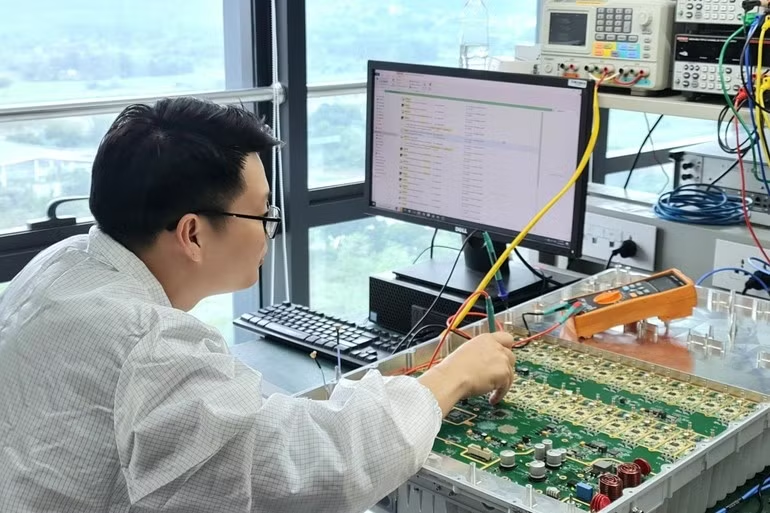
“The achievements and efforts of these enterprises not only affirm the capabilities of Vietnamese people but also create important digital infrastructure foundations and build a technology ecosystem mastered by Vietnamese,” Dr Tran Van Khai pointed out.
Large digital technology enterprises truly act as the “locomotives” pulling the entire train of development. They lead the market by pioneering entry into new technology fields, allowing smaller enterprises to follow, participating in supplying supporting products and services.
For example, when a telecommunications corporation develops 5G networks or Internet of Things (IoT) platforms, many small and medium-sized enterprises have opportunities to develop applications on this infrastructure. On the other hand, these corporations can establish investment funds, incubators, or collaborate with institutes and universities, thereby directly supporting promising startup projects.
It can be said that the success of pioneering enterprises will create a spillover effect, inspiring the next generation of entrepreneurs and affirming that Viet Nam can fully produce world-class technology products and services.
The success of pioneering enterprises will create a spillover effect, inspiring the next generation of entrepreneurs and affirming that Viet Nam can fully produce world-class technology products and services.
Besides directly supporting the startup ecosystem, large digital technology enterprises are also the core force driving national digital transformation. They are both developers of key digital platforms and solutions, and partners advising and implementing digital transformation for the Government and economic sectors. For instance, Viettel and VNPT participate in building e-government, developing next-generation telecommunications infrastructure (5G/6G), while corporations like FPT and CMC promote cloud computing and AI services for businesses and society.
Many “Make in Viet Nam” digital platforms developed by large companies have helped numerous small and medium enterprises transition their operations to the digital environment conveniently and cost-effectively. “These technology giants are the architects of the digital ecosystem, creating tools and new playgrounds for the whole society to participate in the digital transformation process,” Dr Tran Van Khai affirmed.
According to him, large technology enterprises are both products of the Doi Moi (Renewal) process and the decisive factor in realising the aspiration to make Viet Nam a developed nation by 2045. They bear the mission not only to operate effectively but also to lead the market and support other sectors to advance together.
Dr Tran Van Khai expressed confidence that with the pioneering spirit and responsibility of leading enterprises like Viettel and FPT, Viet Nam's innovation and startup ecosystem will grow stronger, the national digital transformation will yield many achievements, elevating the country’s digital technology position to new heights on the world map.