Following the devastating floods of 2025, landslides and prolonged inundation struck many parts of Thai Nguyen Province, leaving hundreds of families in hardship, unable to secure new homes on their own, and reliant on resettlement for safety.
Building safe homes with essential infrastructure
Ethnic minority communities in the mountainous areas of Thai Nguyen often live on hillsides near streams. In recent years, climate change and relentless extreme rainfall have triggered unusual landslides and flash floods, threatening lives and property.
In response, provincial authorities invested nearly 15 billion VND to establish a resettlement area for Mong ethnic residents in Lien Phuong Hamlet, Van Lang Commune. Spanning more than two hectares, the site provides essential infrastructure including roads, electricity, and water supply for 29 households.
Completed in 2025, the Lien Phuong Hamlet Resettlement Area welcomed several families who managed to finish building their new homes and move in before the 2026 Lunar New Year. The remaining households are expected to complete construction and relocate before the next rainy season.
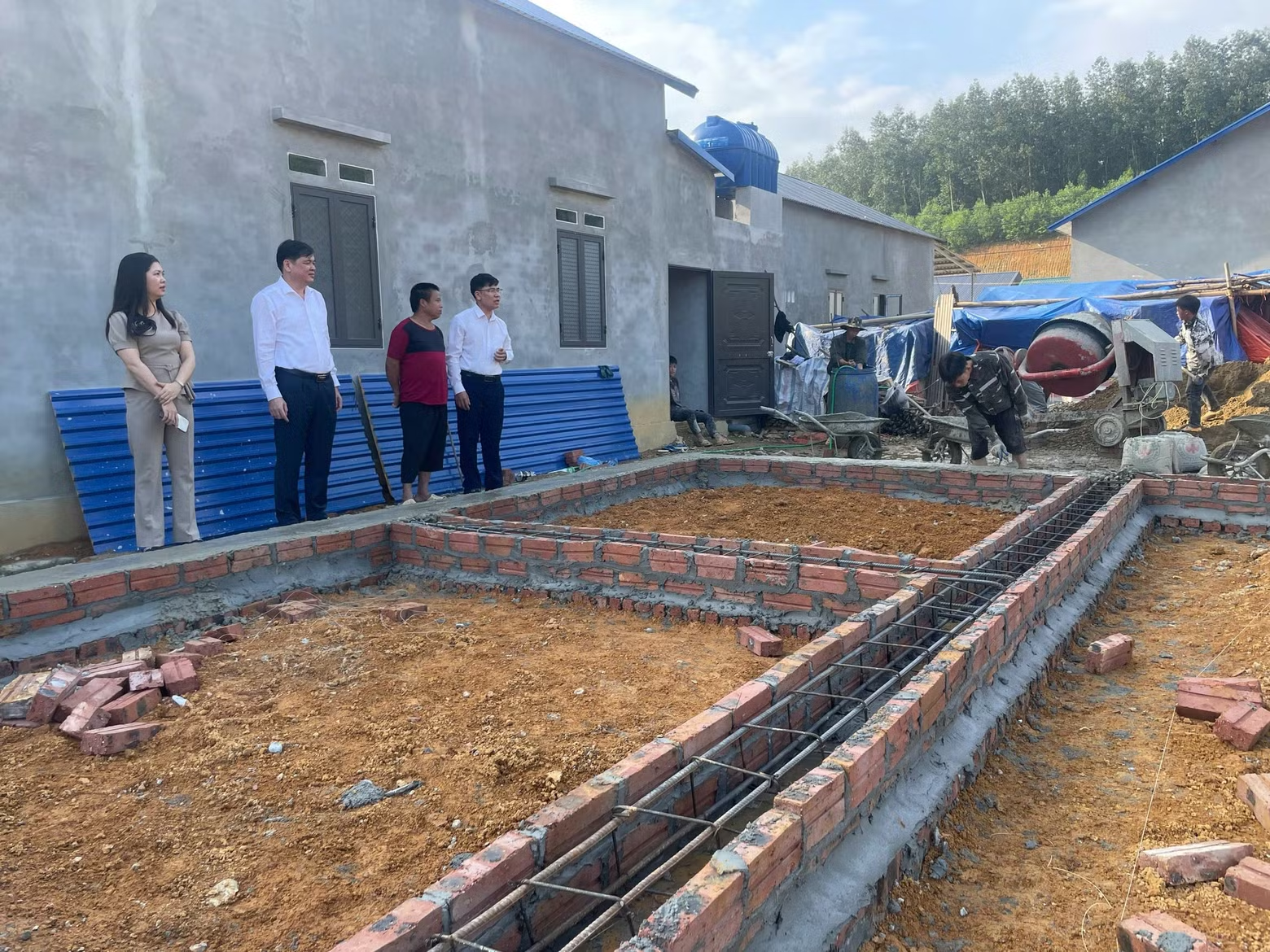
Resident Ngo Van Phung expressed his relief after moving from the high mountains to the resettlement area, where his family now lives in a solid 60 sq.m house with electricity, water, and convenient road access.
“Our children have a safe place to live and study, and our lives are now stable. During heavy rain, we no longer have to anxiously watch for landslides or evacuate as before,” he said. “We are deeply grateful for the province’s and commune’s care and support.”
Previously, residents of Tan Kim Hamlet, Than Sa Commune built homes along both sides of a stream at the mountain foothills, using the stream bed as a pathway. This exposed them to flash floods, debris flows, and landslides.
Thai Nguyen Province has implemented 16 projects to stabilise residents in landslide, flash flood, and debris flow zones. These comprise nine centralised resettlement projects with full infrastructure for 295 households, and seven in-situ projects benefiting nearly 1,000 households.
To address this, the province invested nearly 60 billion VND in the Tan Kim Hamlet Resettlement Area, including site levelling and essential infrastructure such as internal roads, electricity, water, and green spaces. Completed in 2025, the project relocated 84 Dao ethnic households to safer homes.
Thai Nguyen Province, formerly including Bac Kan, has implemented 16 projects to stabilise residents in landslide, flash flood, and debris flow zones. These comprise nine centralised resettlement projects with full infrastructure for 295 households, and seven in-situ projects benefiting nearly 1,000 households.
Deputy Director of the Provincial Department of Agriculture and Environment, Trieu Duc Van, noted that rugged terrain, numerous rivers and streams, and scattered hillside settlements, combined with complex climate change and extreme rainfall, make landslide and flash flood risks particularly severe in Thai Nguyen.
In recent years, the province has prioritised resettlement and relocation to protect residents from natural disasters, while enabling efficient investment in synchronised transport, electricity, and water infrastructure, thereby reducing budget costs.
Strengthening riverbanks to shield vulnerable communities
In southern Thai Nguyen, riverbank flooding and erosion have become increasingly severe, heavily affecting residents along both sides of the Cau River.
Without prior investment in anti-erosion embankments, casualties, home losses, property damage, infrastructure destruction, and farmland loss would have been unavoidable.
For instance, 18 households in Thanh Dam Hamlet, Phu Binh Commune, living near the Riverbank Bridge where landslides encroached dangerously close to their homes, faced the risk of being swept away by floods. The province invested 25 billion VND in an embankment project, completed in 2025, to protect them.
Had this structure not been built in time, Typhoon Matmo in October 2025, with its unprecedented rains and raging floods, would have “wiped out” the residential cluster.
Similarly, an emergency embankment project along the Cau River to protect Tan Phu Residential Area, Trung Thanh Ward, received 110 billion VND in funding. Completed just in time, it stabilised the right bank of the River Bridge and safeguarded 450 households during the massive floods caused by Typhoon Yagi in September 2024 and Typhoon Matmo in October 2025.
Alongside the embankment, the province invested in the Tan Phu Resettlement Area, Tan Phu Ward (now Trung Thanh Ward), relocating 55 households previously living outside the Cau River dike, where they were regularly hit by deep flooding and fast-flowing waters.
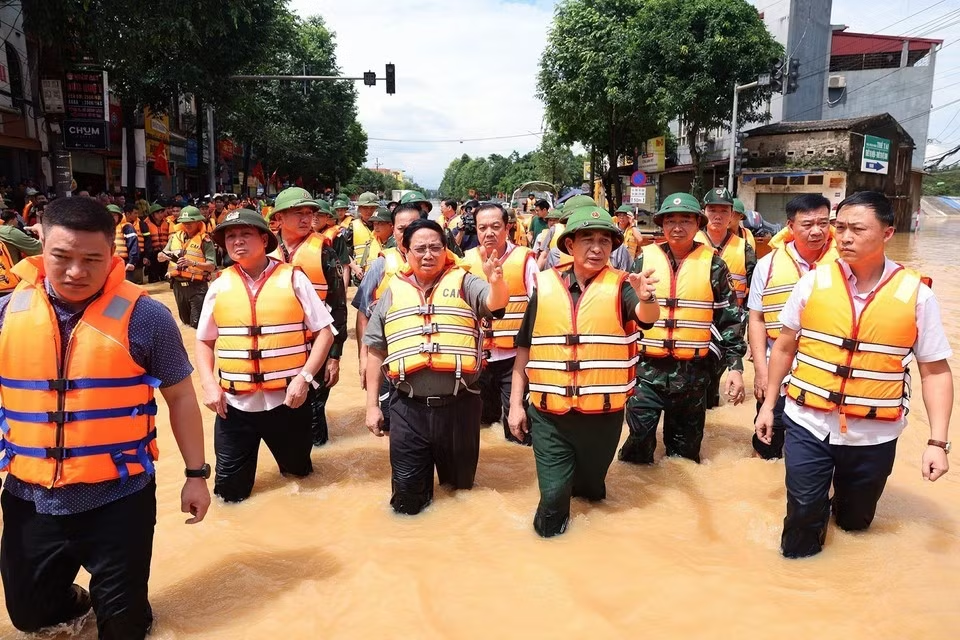
Successive storms brought torrential rains and floods. Riverbank landslides, residential collapses, and prolonged flooding emerged across the province, making life extremely difficult for residents.
In 2025, successive storms brought torrential rains and floods, with Typhoon Matmo causing widespread devastation. Riverbank landslides, residential collapses, and prolonged flooding emerged across the province, making life extremely difficult for residents.
A stark example was Kim Van Village, Van Lang Commune, where extreme rains after Typhoon Matmo left 40 households deeply flooded. Nearly 30 homes were submerged up to their roofs for an entire month, forcing families into temporary shelters amid blocked access and dire living conditions, underscoring the urgent need for resettlement.
Deputy Director Trieu Duc Van stated that, following provincial directives, the Department of Agriculture and Environment has conducted on-site inspections and compiled plans for ten urgent resettlement projects to relocate around 315 households from flood-prone, landslide, and debris flow areas. These projects require total funding of about 280 billion VND.
However, with limited local budgets, the province has requested central government support to ensure timely relocation, safeguard lives, and stabilise long-term living conditions for residents facing landslides, flooding, flash floods, and debris flows.