Exquisite from the visual experience
Packaging these profound values onto a round platter required exceptional culinary skills from the homemaker. This is what the distinguished artisan Pham Thi Anh Tuyet, owner of Anh Tuyet restaurant (No. 25 Ma May, Ha Noi), considers her most precious asset when she married into the family.
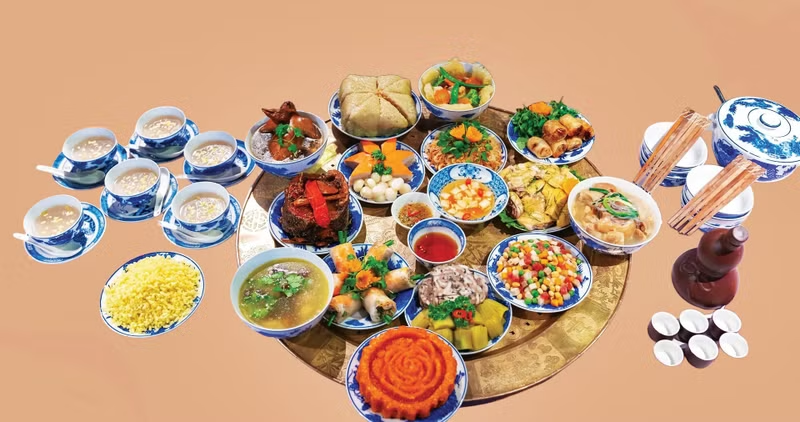
As a daughter-in-law in a high-ranking official’s household under the Nguyen Dynasty, Tuyet shared that the lacquered platter offered to the ancestral altar never contained fewer than 10 dishes. However, these delicious dishes were never displayed ostentatiously on large plates or bowls. Dry and stir-fried dishes were neatly arranged on small plates (about 14–15 cm in diameter). The soup was served in a delicate, humble bowl.
The more elaborate the feast, the more meticulous the food selection. At least a week before Tet, Tuyet’s sisters-in-law would go to the market to find not only the freshest and most delicious food, but also the most “graceful”.
Even National Artisan Le Cong Yen, owner of the Phu Le Gia sticky rice cake brand, shared that some families started preparing as early as the 15th day of the 12th lunar month. The cool weather of early spring, a blessing from nature, helped preserve food, especially before refrigerators were common.
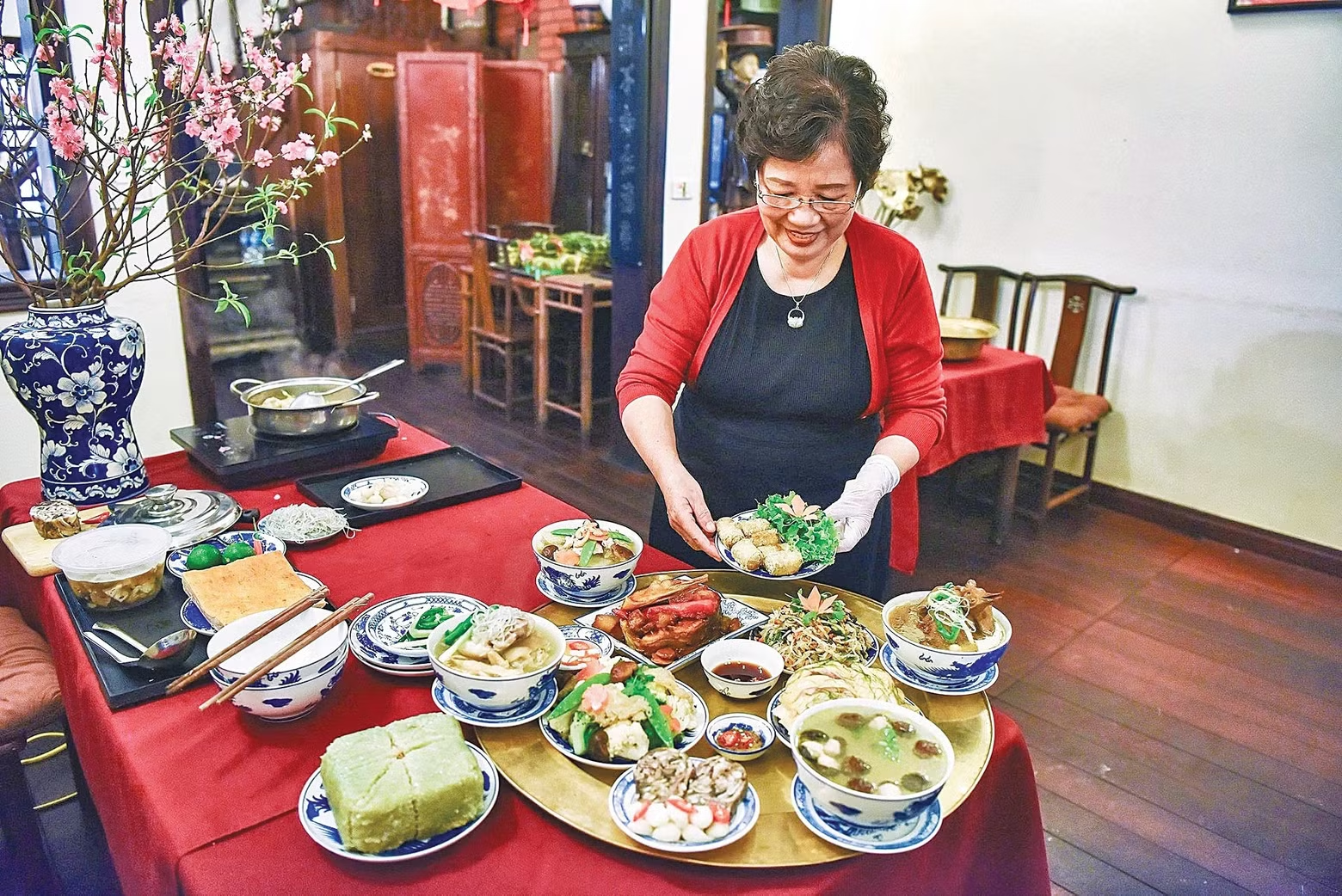
For wealthy families like Tuyet’s husband’s, before the flavours could awaken the taste buds, the dishes had to captivate with their visual appeal. Vegetables, when prepared without being cut or sliced, had to be of uniform size. There were the round, button-like shiitake mushrooms, and the small, plump, slightly curved peas. When arranged in the soup bowl, they resemble flowers in full bloom.
As for stir-fried vegetables, Yen shared that homemakers often prefer root vegetables and fruits instead of leafy greens. This is because leafy greens sold at the beginning of the new year often do not retain their freshness in the cold northeast winds. Not to mention, after cooking, they shrink or become mushy, losing their vibrant appearance compared to root vegetables and fruits.
The skill of the cook is also demonstrated in transforming each feast during Tet into a vibrant and unique culinary experience. Each feast has a fresh new character, like the changing seasons. After three weeks of incense burning, the warmth of the spirit permeates each dish. That’s when the meal is served for the children and grandchildren to enjoy in joyful reunion.
Refined until it reaches the palate
First, each ingredient must be meticulously prepared to ensure the finished product is pure in flavour. According to Yen’s secret, freshly picked green papayas still have white sap, so you need to gently prick the surface of the peel to let some of the sap drain out. Then, the papaya, kohlrabi, and carrots are shredded, squeezed with salt, and the excess liquid is drained off, carrying away the original pungent and astringent taste. Thanks to this, each strand of vegetables and fruit is crunchy when chewed, and evenly infused with the salty flavour of fish sauce and the sweetness of sugar when mixed in the salad.
For a fragrant boiled chicken, add a few slices of ginger and some dried onions to the water. Pigeon meat is cleaned of impurities with coarse salt before being stewed with lotus seeds. The most meticulous part is removing the unpleasant odour from the pork skin with ginger wine, which must be done quickly. Because of its porous and light nature, soaking it for too long will cause the heat of the wine and ginger to break it apart.
Yen observed that a Tet feast absolutely cannot be without the delicate flavours of soup, vegetables, and even a plate of pickled onions, cucumbers, and other rustic pickled vegetables to balance the richness of the meat. Nutritional balance is not enough; the feast also serves as proof of the moderate lifestyle and emphasis on moderation of the people of Ha Noi. Deliciousness always goes hand in hand with health, creating a fulfilling feast on the first day of the new year.
Tuyet further emphasised the ingenuity of the people of Ha Noi through their ability to adapt when ingredients are scarce. The stir-fried almond dish, with kohlrabi, carrots, shiitake mushrooms, chicken gizzards, and diced almonds, is a delightful treat. Back then, almonds were a luxurious imported item, not always readily available at the market. Some families with limited means, or when unable to buy them, would substitute them with roasted peanuts, shelled. Peanuts, also rich in oil, add a nutty, creamy flavour when stir-fried.
From arranging the offerings on the altar to enjoying them, it’s a whole process full of artistry. Waiting for the incense to burn out, and for the ancestors to have finished enjoying the offerings from their descendants, the cook sprinkles some chopped garlic on the salad as a final touch before partaking of the meal. The pungent spiciness of the garlic not only enhances the flavour of the salad but is also a natural remedy, boosting immunity against the flu that lurks during the changing seasons. Tuyet’s family usually concludes the feast with a plate of golden, fragrant mung bean sweet soup, sipped with a cup of hot tea. The sweet soup, with its gentle sweetness, aids digestion, and the slightly bitter green tea cleanses the soul.
Subtlety in cleverly integrated concepts
Yen recalled that during the difficult subsidy period, when food had to be purchased with ration coupons in limited quantities, his family still maintained the tradition of cooking pork skin soup. However, the amount of pork skin was reduced. The bowl combined the elements: white (metal) of the pork skin, green (wood) of peas, red (fire) of dried shrimp and carrots, and black (earth) of shiitake mushrooms, all topped with a sweet and clear broth (water) without any greasy film.
There is a harmony between rich and delicate flavours, and also a balance of yin and yang, reflected in the colours of each dish.
Tuyet shared that on the feast table, dishes that are both cold meats, such as red-orange cinnamon sausage, are placed symmetrically with pristine white pork sausage, or dishes that are both sticky rice dishes, such as vibrant green sticky rice cakes, are paired with bright red gac fruit sticky rice.
Besides that, Yen has a broader concept of yin and yang in food. Accordingly, dishes considered “yang” (masculine) are usually meat or dishes with red or dark colours. Dishes considered “yin” (feminine) are usually cold dishes, vegetables, served with broth, or dishes with green, white, or light colours.
However, Tuyet always remembered the elders’ teaching: “Prepare offerings according to your means.” The essence of the feast lies in sincerity and respect. Therefore, if circumstances are limited, instead of an elaborate soup, a simple pumpkin and bone broth is sufficient.
In recent years, many people have shifted from celebrating Tet to enjoying it, dedicating time to rest after a long year of hard work. Therefore, the feast has been simplified to some extent. However, the sacred meanings are always preserved and passed down through generations of families in Ha Noi in particular and Viet Nam in general.
Having endured the frugal years of the subsidy era, Yen said that no matter how difficult things were, the square-shaped banh chung (sticky rice cake) was indispensable, symbolising the earth containing all things, along with the round, full slices of pork sausage representing the sky. The banh chung itself, with its many layers of banana leaves wrapping the rice, pork fat, and beans, embodied the spirit of family reunion.
Even poor working-class families tried to prepare a feast with four bowls and four plates, or even six or eight plates depending on their means.
Offered to the altar, the even number on the feast table was considered auspicious, creating a harmonious balance with the odd number of fruits on the five-fruit platter. Yen believed that the fullness of the Tet feast table represents the fruits of a year's labour and effort, while also conveying the hope for a more prosperous new year.
In recent years, many people have shifted from celebrating Tet to enjoying it, dedicating time to rest after a long year of hard work. Therefore, the feast has been simplified to some extent. However, the sacred meanings are always preserved and passed down through generations of families in Ha Noi in particular and Viet Nam in general.