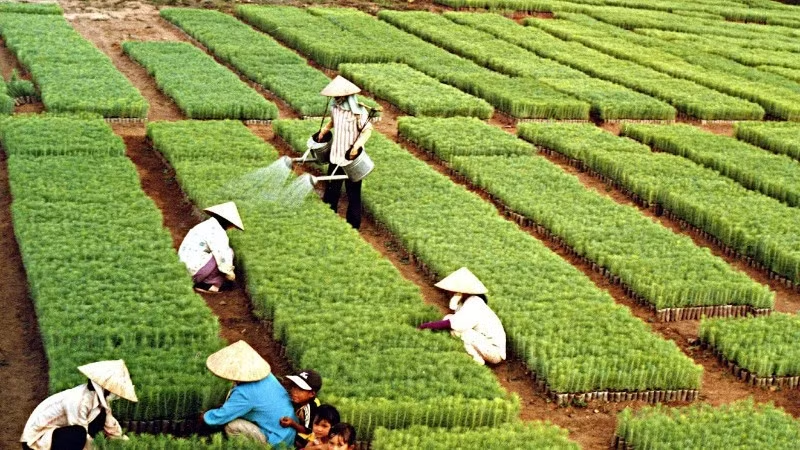
Green lungs in the face of climate challenges
In recent years, climate change and natural disasters have grown more complex, extreme, and unpredictable, exerting wide-ranging impacts on socio-economic life, the environment, and ecosystems as well as threatening sustainable development goals. At the same time, rapid industrialisation and urbanisation have placed mounting pressure on the living environment.
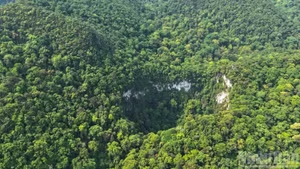
In this context, forests and trees are likened to the “green lungs” of the earth. Forests help improve the climate, regulate the air, reduce the greenhouse effect, prevent erosion, and regulate water resources; they play an important role in climate change response and disaster risk reduction. At the same time, forests provide timber and non-timber forest products, medicinal materials, livelihoods, and sustainable ecological landscapes.
More than 66 years ago, President Ho Chi Minh initiated the tree planting festival on November 28, 1959. Since then, every Spring, people nationwide have enthusiastically taken part in the Planting Festival in eternal gratitude to President Ho Chi Minh, turning the movement into a traditional cultural practice.
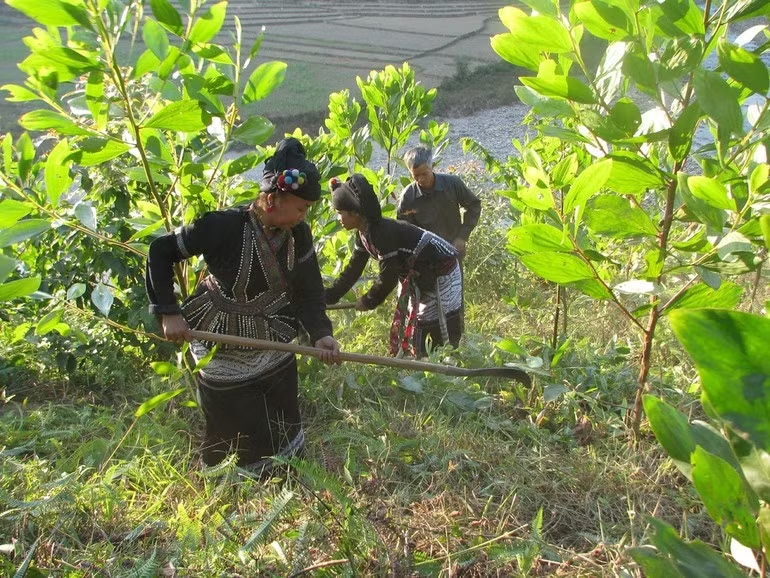
In 2025, despite numerous challenges stemming from climate change and global economic fluctuations, the country planted 285,000 hectares of concentrated forests, surpassing the target by 9%; wood and forest product exports reached 18.3 billion USD; revenue from forest environmental services exceeded 3.9 trillion VND; and forest coverage remained stable at over 42%.
Assessing the significance of the tree planting festival in the current period, Deputy Minister of Agriculture and Environment Nguyen Quoc Tri affirmed: “The tree planting festival in the Year of the Horse 2026 continues the tradition and contributes significantly to achieving the goal of sustainable forestry development and adaptation to increasingly severe and extreme climate change.” He emphasised that the movement has helped in protecting the ecological environment; building a green, clean, and beautiful Viet Nam; and demonstrating Viet Nam’s strong international responsibility in responding to climate change.
From a Spring movement to a long-term development strategy
Implementing the Prime Minister’s Decision No. 524/QD-TTg (dated April 1, 2021) on the project “Planting one billion trees in the 2021–2025 period”, the country planted 1.45 billion trees, exceeding the target by 45%. Of the total, 873.7 million trees were planted in concentrated forests, equivalent to more than 434,000 hectares of forest. Socialised funding exceeded 11.7 trillion VND, accounting for 77% of total capital.
Many localities recorded notable results, including Phu Tho, Lao Cai, An Giang, Lang Son, and Lam Dong. The active response from ministries, sectors, armed forces, and mass organisations has created widespread momentum.
To ensure that “every tree planted grows well”, careful species selection is particularly emphasised. According to the forestry sector’s orientation, localities should base their selection on the issued list of key forestry species, choosing trees suitable to ecological conditions, planting seasons, and each region’s forestry economic development goals. Directive No. 22/CT-BNNMT dated January 5, 2026, requires strengthened control of seedling quality; encourages the application of advanced technologies in nurseries, planting, and care; promotes large-timber forests and native species; and clearly assigns responsibility for post-planting management and protection.
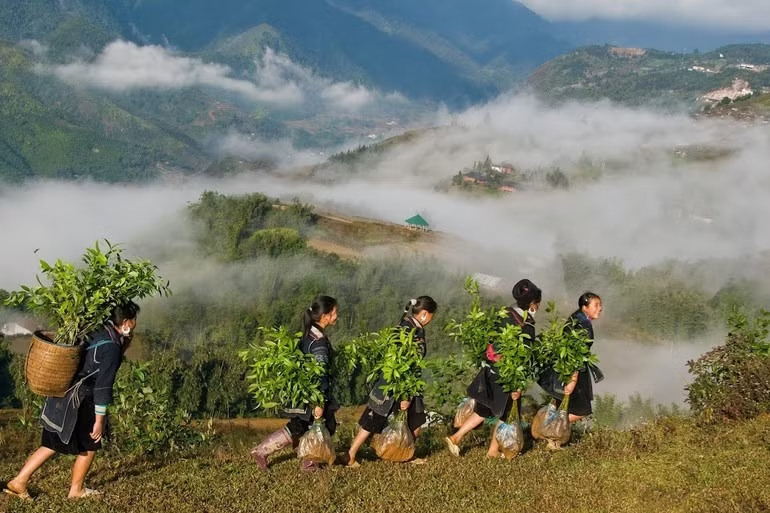
The forestry sector also identifies the crucial role of local authorities and residential communities in post-planting care and protection. The concerted engagement of Party committees, authorities, organisations, and citizens will determine the movement’s success in ensuring healthy tree growth and contributing to the implementation of the National Forestry Development Strategy.
Notably, today’s tree-planting movement goes beyond environmental objectives and is closely linked with sustainable livelihoods. Payments for forest environmental services, certification of sustainable forest management, implementation of forest carbon absorption and storage services, and the development of non-timber forest products, medicinal plants under forest canopies, and eco-tourism are opening new directions, increasing incomes, and linking community responsibility with forest protection.
“On the occasion of the Year of the Horse 2026, the Department of Forestry and Forest Protection calls on ministries, sectors, localities, enterprises, and citizens to actively respond to the movement; plant trees with love and responsibility; and join hands to maintain forest coverage at around 42%, contributing to realising President Ho Chi Minh’s teaching: ‘Forests are gold. If we know how to protect and build them, forests are extremely valuable,’” said Trieu Van Luc, Deputy Director of the Department of Forestry and Forest Protection under the Ministry of Agriculture and Environment.
From the green shoots planted this Spring, a greener future is being built for today and for generations to come.