![[Video] Ha Noi opens new development space, aiming for breakthrough growth](https://en-cdn.nhandan.vn/images/100836e055a126ea2117bc0fe8680dbafb1310c7f3d44d0ce47beff3f58889a077f5bed52edcd25aec0af894394dd858/hanoiideo.jpg.avif)
![[Video] Ha Noi: Production rebounds strongly after Lunar New Year holiday](https://en-cdn.nhandan.vn/images/5f89fa0a470aacf73054b62f21f9dfab71c536ce02c4e1e6da33acaf92fac03de9d5439826278d05cd96ddb7da138389/cover.png.avif)
After the Lunar New Year holiday, production and business activities in Ha Noi quickly regained momentum. Most enterprises resumed operations from the very first days of the new year. Workers returned to work in high spirits, determined to fulfil their production targets.
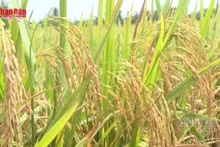
Following turbulence in the global rice market, 2026 presents both opportunities and challenges for Viet Nam’s rice sector.
![[Video] The Temple of Literature in season of Spring calligraphy](https://en-cdn.nhandan.vn/images/3819b44210863ddaaff46ad20bccf78484b2128ffb7f762cc3d3184bf5e40ffa3ce0ce9bb6cfe277a7cf4a4df791da51b210979a02378495c655160931f18fcc/anh-dai-dien.jpg.avif)
The 2026 Spring Calligraphy Festival at the Temple of Literature is held under the theme “National Learning”, marking the 950th anniversary of Quoc Tu Giam, the first national university of Dai Viet. The event features 35 calligraphy tents, with scholars selected through a rigorous process to ensure quality and credibility.
![[Video] The soldiers guarding spring over the seas and skies of Central Viet Nam](https://en-cdn.nhandan.vn/images/cdc88f21e08519ca8f7e1b935da92a99af4b2793ae33add6629dca483a97e11f38f216df1b91a7d31c946dd5b2ce24df/720.jpg.avif)
The Lunar New Year (Tet) 2026 is approaching. While families across the country busily prepare to welcome spring, at the Naval Port of Region 3, officers and sailors of Ship 628, Squadron 311, Brigade 161, are working urgently to complete preparations for an extended Tet duty mission at sea.

As tradition goes, ahead of the 2026 Lunar New Year (Tet) of Horse, the G4 Ambassadors to Viet Nam (New Zealand, Canada, Norway, and Switzerland) have once again joined hands to produce a short video clip, sending New Year wishes to the Vietnamese people.
![[Video] Average Tet bonus increases by 13% in 2026](https://en-cdn.nhandan.vn/images/8c3be5b5d2e7b42b4a63548577cf646d82e0cc1a9bd3b1512f7696b0c21313fa50c63c1a828bbe246d682968f2cbf5737e73e1f3c83809429191b95da12a6364/anh-cover.png.avif)
According to the Department of Salary and Social Insurance under the Ministry of Home Affairs, Lunar New Year (Tet) bonuses for 2026 continue to rise.
![[Video] Ministry of Home Affairs announces adjustments to administrative procedures in the overseas labour sector](https://en-cdn.nhandan.vn/images/cdc88f21e08519ca8f7e1b935da92a99ad3b6b404c48a397cc87e177345029923ea1bb2308cefdb486ee68140e946236/video311.jpg.avif)
The Ministry of Home Affairs has issued Decision No. 116, introducing new administrative procedures while amending, supplementing, and abolishing several existing ones in the management of Vietnamese workers employed abroad under contracts.
![[Video] 14th National Party Congress: Workers’ confidence and expectations for jobs and incomes](https://en-cdn.nhandan.vn/images/8c3be5b5d2e7b42b4a63548577cf646d82e0cc1a9bd3b1512f7696b0c21313fa9e272d95a54fdb3a1a9febc5d71b90947e73e1f3c83809429191b95da12a6364/anh-video.png.avif)
The 14th National Party Congress has set development orientations for 2026–2030 while strengthening workers’ confidence in a new phase of growth marked by stable jobs and rising incomes.
![[Video] The 11th National Party Congress: Overcoming hardships to renew in period of multiple challenges](https://en-cdn.nhandan.vn/images/5f89fa0a470aacf73054b62f21f9dfab62808edd638b200bf7e65376802f709fec9ba6c53c5463f5e4f27274c3e9d75ce5fa6e1bda5ea45ebfc127eb76edc880c5b1d5dad3f875db065789852e3daa2d/screenshot-2026-01-25-211217.png.avif)
On January 12, 2011, the 11th National Congress of the Communist Party of Viet Nam officially opened. This was an event that left a strong imprint on the Party’s efforts to renew its leadership style during a period of profound challenges.
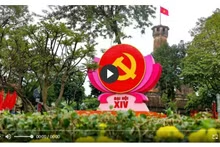
In these days, from cities to countryside, mountains to far-flung islands, Viet Nam abounds with national flags and a vibrant faith. Millions of Vietnamese at home and abroad pay great attention to the 14th National Party Congress. Sensing its momentum, Vietnamese people’s confidence in its success strengthens.

In the course of national development, each National Party Congress carries special significance. It is not only a major political event of the Party, but also a milestone of strategic importance for the future of the country and the nation.

In the framework of the special art programme “Under the Glorious Flag of the Party,” Ha Noi residents will witness a large-scale high-altitude artistic fireworks display for the first time, featuring nearly 10,000 fireworks units—comparable to major international cultural and sporting events.

In the draft Political Report to be submitted to the 14th National Party Congress, the Communist Party of Viet Nam reaffirms its determination to refine the institutions of a socialist-oriented market economy.
![[Video] International community praises Viet Nam for steadfast commitment to National Development Goals](https://en-cdn.nhandan.vn/images/5f89fa0a470aacf73054b62f21f9dfaba5a68812df5d8f369818efb6da3b77c79f2bc85fd94a3ce59749a96fee4da844/720.jpg.avif)
International friends have been deeply impressed by a Viet Nam that remains steadfast, resolute and driven by a strong aspiration to rise. These achievements are attributable to the leadership role of the Party and the State.
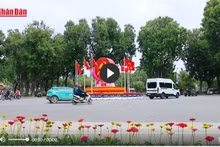
The 14th National Party Congress will take place from January 19 to 25, 2026, in Ha Noi. Against the backdrop of 40 years of Doi Moi (Renewal) process with their historical achievements, the nation is facing even greater challenges to avoid falling behind, escape the middle-income trap, and adapt to profound regional and global changes. Therefore, the Congress bears the responsibility of outlining a strategic vision for the country's development in the new era.
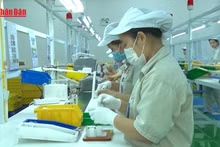
As 2026 gets under way, many enterprises, particularly foreign-invested ones, have stepped up recruitment, offering competitive wages, enhanced benefits and flexible hiring conditions to secure labour.
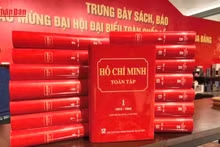
To mark the 14th National Party Congress, the Su That National Political Publishing House has reissued several major works, including Ho Chi Minh: Complete Works (fifteen volumes), Ho Chi Minh: A Chronological Biography (ten volumes), and President Ho Chi Minh: This Day in History (two volumes).
![[Video] Seven inspection teams formed to stabilise market during peak Tet period](https://en-cdn.nhandan.vn/images/b5fb89d268b54146e00cb575e2a6915229e1a75622bc3c5228bdfad6763a1d5f80ca38c0d7a8130d987b84e2c15db2752e86402d22a8943f15d1d9646c86c83be9025c2d7944d75148de8ee1664be9e4/anhminhhoavideo-110126-2.jpg.avif)
The Department of Domestic Market Management and Development under the Ministry of Industry and Trade, said it has set up seven working teams to inspect, urge and provide guidance on the prevention of smuggling, trade fraud and counterfeit goods, and to help keep supply and demand in balance and stabilise the market in many provinces and cities.
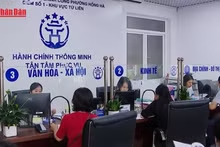
The Ministry of Home Affairs is submitting a decree to the Government amending a decree on the salary regime for civil servants, aiming to gradually improve the salary policy in line with job positions and organisational restructuring requirements.

From March 1, 2026, each real estate asset, including individual houses, apartment units and products within property development projects, will be assigned a unique digital ID code. The regulation is stipulated in Government Decree No. 357 on the construction and management of the housing and real estate market information system and database.
![[Video] Tax incentives help drive innovative start-ups](https://en-cdn.nhandan.vn/images/b5fb89d268b54146e00cb575e2a69152e6ef1dee583c512e22232bc588dee416e9ee14bfe4d602e4e9ac9457f9718e44774f36da51234825c4ee99d1f6daad863db92bf985887af770ef7521fa575a2c/video-tphcm-tieng-anh-anh-dai-dien.jpg.avif)
![[Video] Key economic policies take effect from April 2026](https://en-cdn.nhandan.vn/images/b5fb89d268b54146e00cb575e2a69152e6ef1dee583c512e22232bc588dee416b9983f3f25aa8ecef176083d03876088b13efad86a34e446e8a2787a468ee3d1e9025c2d7944d75148de8ee1664be9e4/chinh-sach-kinh-te-31326.jpg.avif)