The Prime Minister recently approved the establishment of the National Satellite Centre to run the space centre project, which is designed to take advantage of space technology in socio-economic development and put Vietnam on par with other countries in the region and the world.
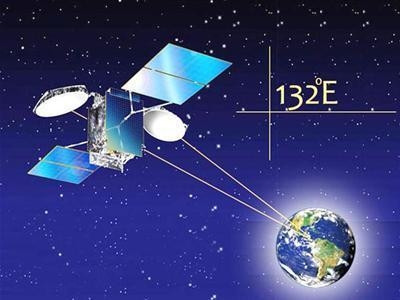
When the space centre is put into operation, Vietnam will be able to manufacture small satellites to be used in weather forecasting, Earth monitoring, and radio and television broadcasting, as well as for search and rescue missions.
Small satellites weighing less than 500 kilograms are capable of capturing images of the Earth in any weather conditions through the use of modern imaging technology.
The US$350 million Japanese-funded installation, located on nine hectares at the Hoa Lac High-tech Park, will consist of 14 specialised areas dedicated to satellite manufacturing and testing and magnetic field testing, as well as a satellite control and application centre and an observatory.
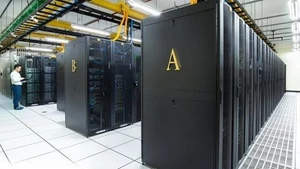
Vice Director of the Space Technology Institute Dr Pham Anh Tuan said the Hoa Lac space centre will be equipped with state-of-the-art facilities like those in major space centres in Japan and Europe.
He added that possessing a dedicated space centre will benefit Vietnam both in the short term and in the long run. He expects Vietnam will master the technology for manufacturing small satellites in the next few years.
Specialists say, given Vietnam’s current technological and economic development, the country has chosen small satellites because they are much easier and cheaper to make than larger ones.
A small satellite usually costs around US$20-30 million, some may be just US$7-8 million.
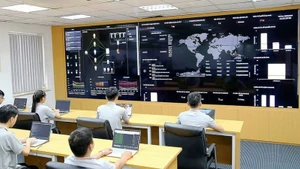
In addition to producing aerial images of Vietnamese territory in any weather conditions, the space centre will analyse data collected by small satellites for various other purposes.
The processed data will be used to monitor the environment and issue timely disaster warnings, predict agricultural output and aquatic resources, and update electronic land surveying and navigation systems, in addition to offering a solution for distance education.
The primary concern, however, is that Vietnam still lacks qualified personnel for this high-tech industry. Therefore, it needs to focus on training high quality staff so the country can break through into the space industry.
Dr Pham Anh Tuan said the University of Engineering and Technology will recruit 15 students each year to major in space technology. Vietnamese engineers will also be sent to Japan to gain practical experience from that country’s high-tech industry.