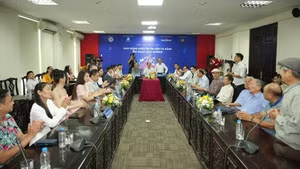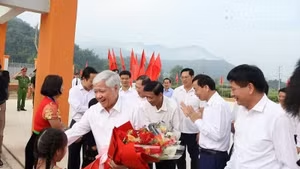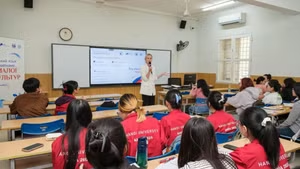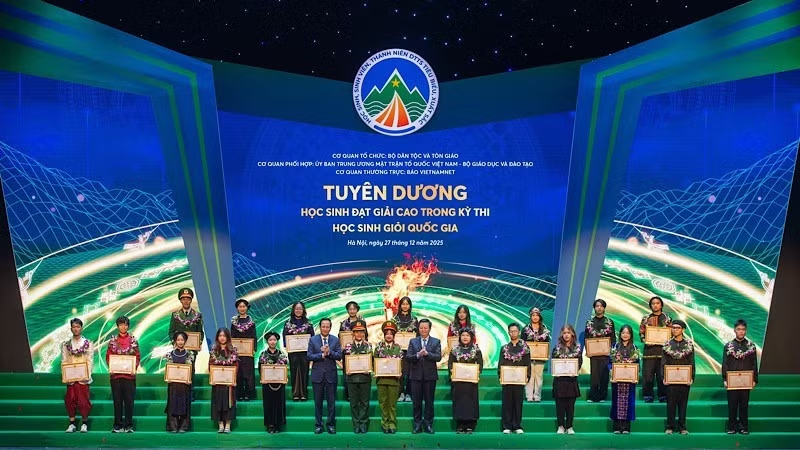
The awards ceremony aims to honour the tradition of studiousness of the Vietnamese people in general and ethnic minorities in particular. At the same time, it commends and encourages the spirit of striving, overcoming difficulties to achieve outstanding and exemplary achievements in learning, training, and participating in social activities of ethnic minority students and young people; creating a ripple effect and inspiring the younger generation to overcome difficulties and challenges on the path to their dreams.
The 2025 ceremony honoured 150 outstanding pupils, students and young people selected from nearly 900 applications. They represent 53 ethnic minority groups from 30 provinces and cities nationwide. Many of them are not only academically excellent and skilled workers, but also actively involved in scientific research, entrepreneurship, innovation, and contributing to the community.
In his opening remarks, Deputy Minister of Ethnic and Religious Affairs Y Thong emphasised that the ceremony conveys a profound message, affirming the Party’s and State’s consistent and long-term attention to ethnic minority young generations, future owners of ethnic minority-inhabited and mountainous regions in Viet Nam.
Implementing the direction of the Party General Secretary at his meeting with the honourees on December 26, the Ministry of Ethnic and Religious Affairs will continue to improve policies for ethnic minority pupils, students and youth; build mechanisms for long-term monitoring, connection and support; closely coordinate with the Ministry of Education and Training and relevant ministries, sectors and localities to develop education in ethnic minority-inhabited areas; and focus on training and nurturing a contingent of ethnic minority cadres from today’s outstanding pupils and students.
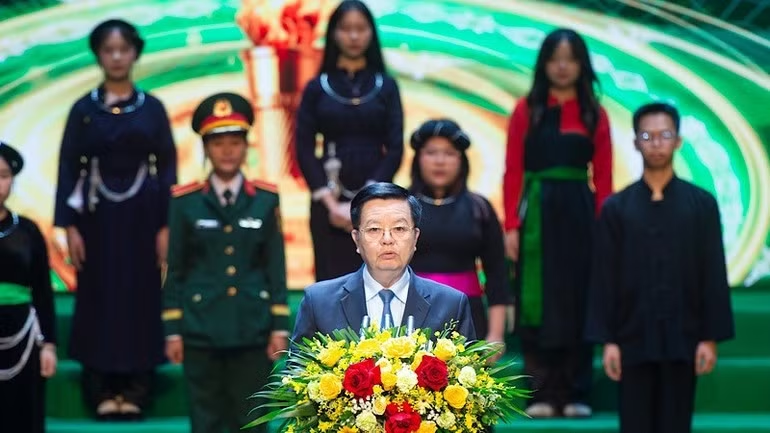
Delivering a speech at the ceremony, he stressed that the Government’s strategy on ethnic affairs for the 2021–2030 period identifies the need for comprehensive development in political, economic, cultural, social and national defence and security aspects; linking economic growth with addressing social issues in ethnic minority-inhabited and mountainous areas; effectively implementing ethnic policies; focusing on human resource development and training; building a contingent of ethnic minority cadres; and preserving and promoting the good traditional cultural values and identities of ethnic minority groups.
In recent years, education in ethnic minority-inhabited areas has received special attention. The system of schools from preschool to general education has continued to expand; boarding and semi-boarding schools have been strengthened; and policies supporting school lunches, tuition fee reductions and exemptions, study cost assistance, scholarships, targeted enrolment and student credit have been implemented vigorously. Most recently, 100 inter-level boarding schools for primary and secondary education in border communes have been started to build in order to soon complete schools in all 248 border communes on land nationwide.
In the coming time, to continue effectively implementing the Party’s guidelines and resolutions on ethnic affairs and the training and development of generations of ethnic minority young people, the Deputy Prime Minister called on Party committees, authorities, ministries, sectors and central and local agencies, within their assigned functions, tasks and authority, to focus on concretising the Party’s guidelines and the State’s policies and laws on ethnic affairs in the spirit of: “clear people, clear tasks, clear timelines, clear responsibilities, clear products and clear authority,” ensuring effectiveness and feasibility; and providing increasingly better care for the lives of ethnic minority people in general and ethnic minority children and youth in particular.
Localities were urged to study and adopt incentive mechanisms and policies, and to pay greater attention to developing, recruiting and using high-quality ethnic minority human resources from mountainous, border and island areas; and to focus on completing the construction of the 100 inter-level ethnic minority boarding schools in land border communes that have recently begun, ensuring progress and quality in line with the direction of the Politburo and the Secretariat at the Conclusion No. 81-KL/TW on July 18, 2025.
The Ministry of Ethnic and Religious Affairs was assigned to take the lead and coordinate with relevant ministries and agencies to effectively implement policies on the development of ethnic minority and mountainous areas passed by the National Assembly, as well as national target programmes and projects approved by the Prime Minister. Particular attention should be paid to training and fostering ethnic minority cadres from outstanding ethnic minority pupils and students, and selecting and awarding scholarships to some of the honoured students this year for overseas study.
Deputy Prime Minister Mai Van Chinh also conveyed a message to the honourees, encouraging them to strive to overcome difficulties and challenges, nurture the will to rise, ambitions, dreams and aspirations to contribute, maintain their achievements and the precious qualities and virtues of ethnic minority people, and become good, useful citizens to contribute to their hamlets, their ethnic communities, society and the nation.
Over the 12 editions since 2013, more than 2,000 ethnic minority pupils, students and young people from 53 ethnic groups nationwide have been honoured. Many honourees have continued to grow and make significant contributions to their hometowns and the country. Many of them have become doctors, engineers, teachers, commune cadres and military officers and returned to their hamlets, where they were born, to directly contribute to local development.