Digital art is a rapidly expanding field in contemporary culture. New forms of expression have emerged, enhancing audience experience and accessibility within the digital environment.
Tran Hau Yen The, Head of the Visual Arts Department, Faculty of Arts and Design, School of Interdisciplinary Science and Arts (Viet Nam National University – Ha Noi), noted that digital art is extending the boundaries of creative activity, reshaping how works of art are conceived and received.
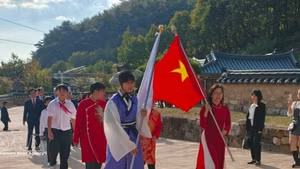
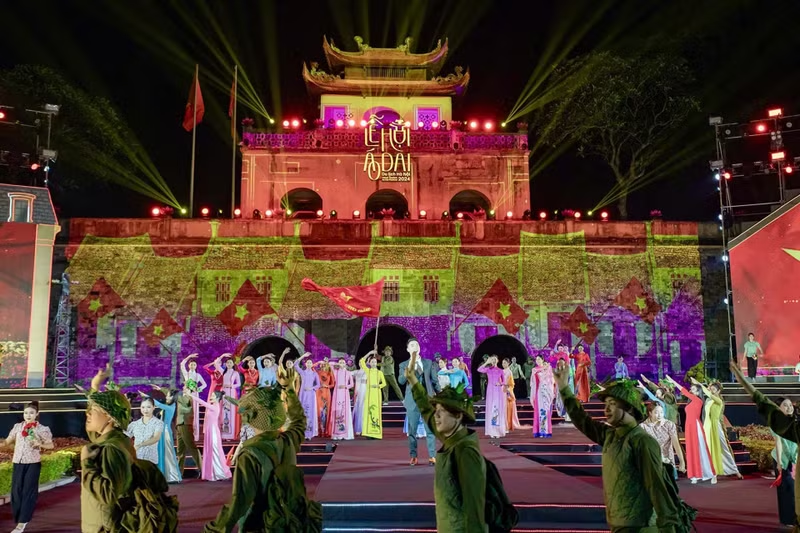
At the recent exhibition “120 Years of Viet Nam National University – Ha Noi: A Tradition of Elite and Liberal Education”, organisers curated a multisensory journey linking history, heritage architecture and technological innovation.
Multimaterial practices, inventive installations and light art combined with 3D mapping projections across façades and lecture halls created layered interactions between artworks, digital data and audiences.
Beyond opening new methods for conserving, exploiting and promoting heritage, AI has also permeated diverse artistic fields. With its ability to process vast datasets, AI can suggest ideas, generate sketches, model forms or simulate multiple options in a fraction of the time.
These emotionally resonant presentations highlighted the effectiveness of merging art and technology, as well as the growing trend of AI-assisted digital art practices.
Beyond opening new methods for conserving, exploiting and promoting heritage, AI has also permeated diverse artistic fields. With its ability to process vast datasets, AI can suggest ideas, generate sketches, model forms or simulate multiple options in a fraction of the time. The rise of generative art, algorithmic art and VR/AR/MR experiential spaces has broadened the expressive range of contemporary creativity.
Nguyen Quoc Hoang Anh, founder of the cultural and arts platform Len Ngan, shared that several of Len Ngan’s community and commercial projects have integrated AI in management and production.
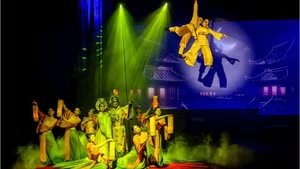
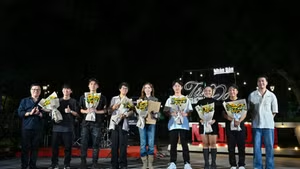
With the dance project “Doi Dien Voi Vo Cung” (Facing the Infinite), staged at the Hong Ha Theatre in Ha Noi, digitisation and scanning of movement modules enabled the research team to restructure approaches to performance, staging and aesthetics. Digitised data on movement, form and technique now provides material for creative experimentation.
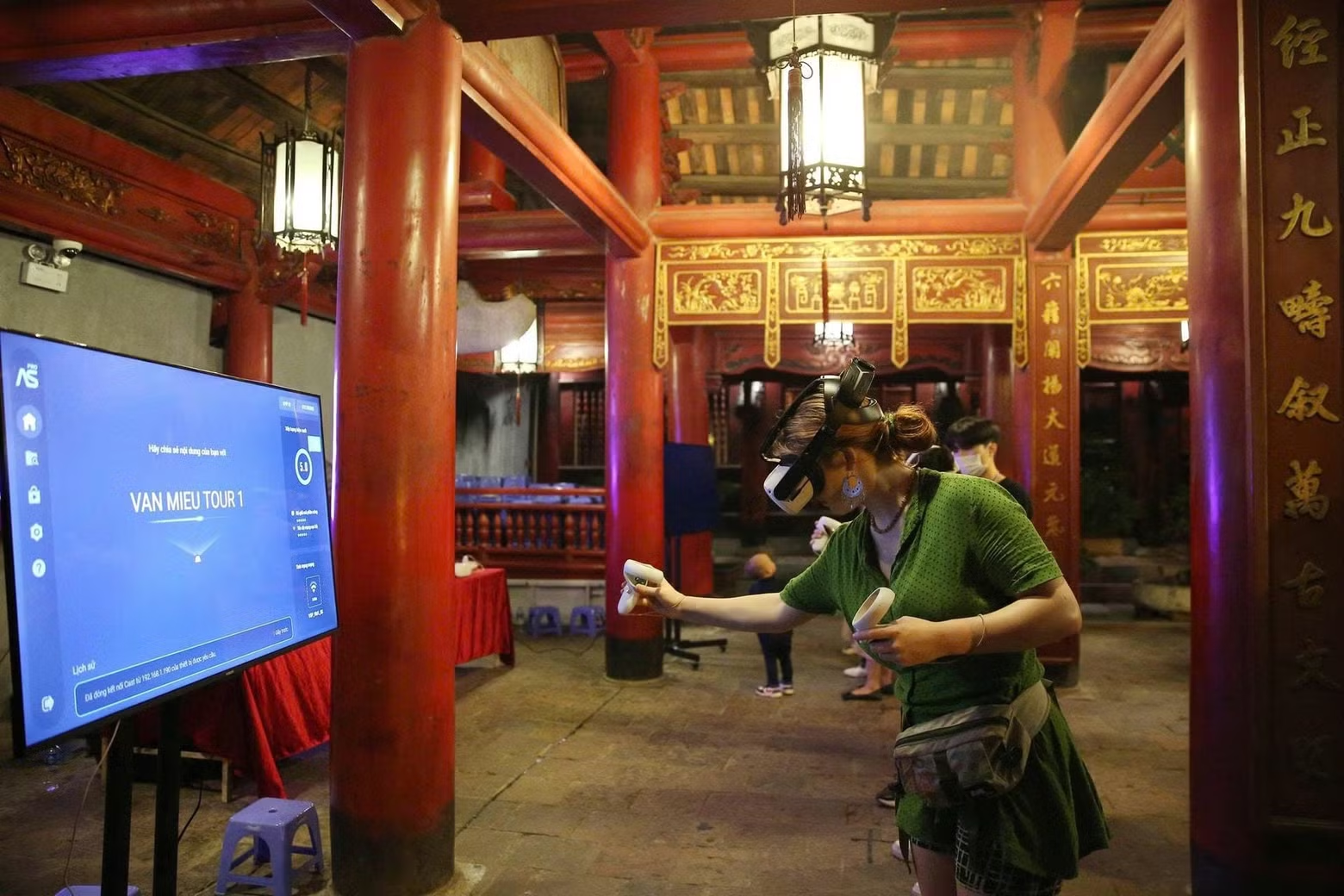
In the context of a fast-growing cultural industry and creative economy, AI integration enhances efficiency, improves organisational effectiveness and optimises resources focused on artistic content.
Yet while technology can generate countless variants from a single input and accelerate processing, the rapid advance of AI raises pressing issues of copyright, data ownership and creative ethics in digital art. These challenges confront the cultural industry directly.
Many countries are refining mechanisms to regulate data use and foster a healthy environment for digital art. Such changes also impose new demands on artists, curators and practitioners.
From the perspective of curation and experimental music practice, Nguyen Hoang Giang, founder of Viet Nam Media Lab and lecturer in digital media at RMIT University Viet Nam, emphasised that when faced with AI-generated works, artists require a solid theoretical foundation to assess quality. Many curators and practitioners agree that AI can accelerate processes, produce multiple experimental versions and unlock new modes of expression.
Within cultural industry development strategies, digital art stands out as a sector with strong growth potential. The synergy between human creativity and technological innovation is shaping the future of digital art.
Nevertheless, AI alone does not create an aesthetic value system and cannot replace the artist’s role in selection, guidance and creative direction. The essence of a work must still derive from human emotion and experience.
Crucially, when AI is combined with knowledge, life experience, artistic competence and technological mastery, digital art imbued with Vietnamese identity will be well placed to assert a distinctive presence.
Within cultural industry development strategies, digital art stands out as a sector with strong growth potential. The synergy between human creativity and technological innovation is shaping the future of digital art. This foundation supports the sustainable development of Vietnamese digital art and the creation of new value chains within the global creative space.