After more than ten years of implementing Resolution No. 29-NQ/TW on the fundamental and comprehensive reform of education and training, many positive results have been recorded. Viet Nam is among the 21 countries that have already achieved the United Nations (UN)’ Sustainable Development Goal on quality education by 2030.
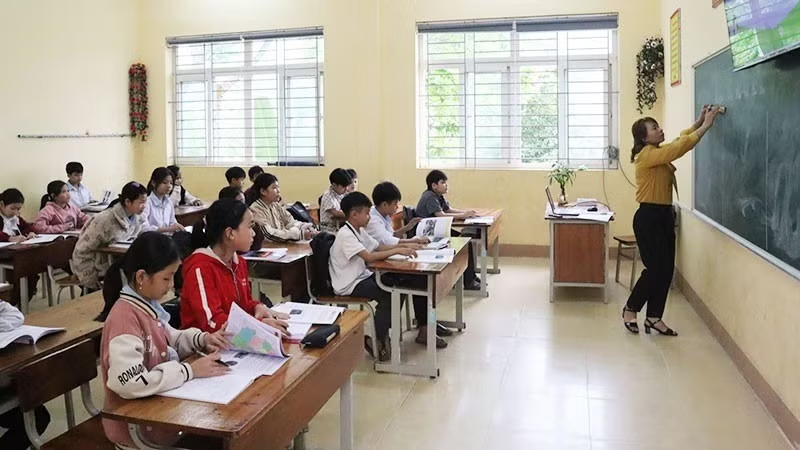
However, the education and training sector still faces limitations and has not truly become the key driving force for the country’s breakthrough development. Opportunities to access education differ significantly across regions and population groups. In many places, teachers and physical facilities fail to meet requirements.
During the 2020–2025 term, central agencies directed the prioritisation of resources to improve the quality of education and training in disadvantaged areas. Accordingly, the Politburo decided to exempt all tuition fees for students from public preschool to high school nationwide.
At the meeting on July 17, 2025, the Politburo agreed on the policy of investing in the construction of inter-level boarding schools for primary and secondary students in 248 land border communes.
Implementing the Politburo’s policy, the Government Party Committee directed related ministries, sectors, agencies, and localities to implement it strictly. Lang Son is a mountainous border province where more than 80% of students are ethnic minorities. In the 2025–2026 academic year, the Party Committee of Lang Son Province’s Department of Education and Training has urgently implemented tuition-fee exemptions for students at all levels; reviewed and prepared material facilities and teaching equipment; and balanced resources, and integrated national target programmes to prioritise investment in schools in border areas, disadvantaged regions, and ethnic minority-inhabited areas.
According to Hoang Quoc Tuan, Director of the Department of Education and Training, tuition-fee exemptions and the construction of boarding schools in border areas contribute to improving teaching and learning quality in disadvantaged regions.
Apart from prioritising investment resources and timely addressing immediate challenges, Resolution No. 71-NQ/TW on breakthrough development in education and training has been issued. The resolution identifies fundamental solutions to eliminate differences between regions and to move towards synchronous and comprehensive educational development.
In the group of tasks concerning institutional reform and the creation of special, superior mechanisms and policies for education and training development, the resolution clearly states: increasing the professional preferential allowance to 100% for teachers working in extremely disadvantaged areas, border regions, islands, and ethnic minority-inhabited areas; and expanding preferential policies for learners to ensure that no student is forced to drop out due to financial difficulties.
Increasing the professional preferential allowance to 100% for teachers working in extremely disadvantaged areas, border regions, islands, and ethnic minority-inhabited areas; expanding preferential policies for learners to ensure that no student is forced to drop out due to financial difficulties.
(Excerpt from Resolution 71-NQ/TW)
Upholding the spirit of Resolution No. 71-NQ/TW, party committees and authorities at all levels have quickly concretised the resolution through plans and action programmes suitable to local practical situations.
The Standing Board of the Quang Ninh Provincial Party Committee issued an action programme to implement Resolution No. 71-NQ/TW, focusing on building special, superior mechanisms and policies for education and training development, while adhering to the principle of “leaving no one behind”.
Based on assessments of demand and practical conditions, the province will build boarding schools in ethnic minority-inhabited and disadvantaged areas and border regions, ensuring practicality and effectiveness. The locality also encourages the mobilistion of social resources and investment attraction in education development; and plans to build at least one specialised school for children and students with disabilities.
Efforts by Party committees and authorities at all levels to implement the Party’s policies on education and training for mountainous, border, and island areas are helping to narrow the educational gap between regions, creating a foundation for synchronous and comprehensive educational development, contributing to the goal of building a modern national education system on par with the region and the world, as outlined in the draft documents submitted to the 14th National Party Congress.