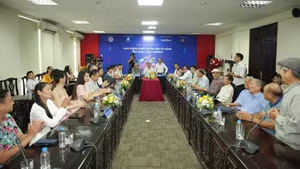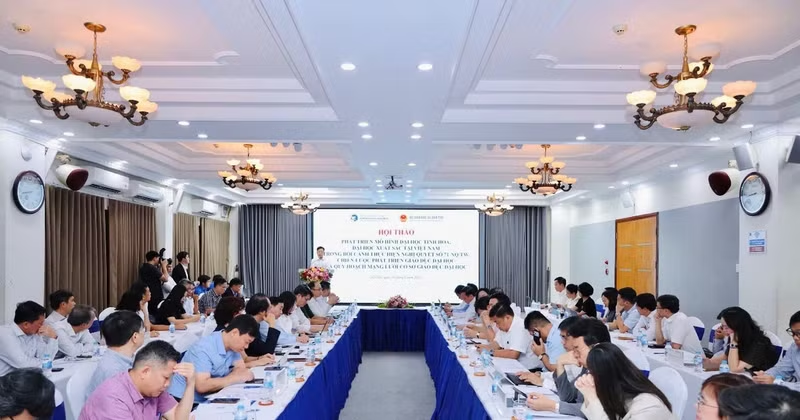
The seminar was held to exchange views, reach a common understanding, and propose orientations and solutions for developing elite and excellent university models in Viet Nam, thereby contributing to concretising the spirit of Politburo Resolution No. 71-NQ/TW on breakthroughs in education and training development.
Quality must become the core value of higher education
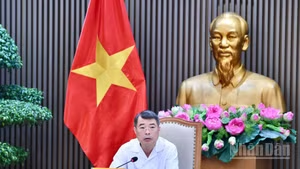
In his opening remarks at the seminar, Deputy Minister of Education and Training Le Quan stressed the need to improve quality and stratify higher education towards developing elite and excellent higher education institutions in line with the mission and capacity of each university.
According to the deputy minister, the quality of higher education is reflected not only in knowledge, skills, and professional competence but also in qualities, attitudes, behaviour, and cultural, ethical, and historical values, as well as patriotism. In the context of society shifting from recruitment based on qualifications to assessment based on actual competence, universities need to determine what learners are capable of doing after graduation, thereby using learning outcomes and their contributions to society as measures of quality.
The deputy minister said that quality must become an inherent value of higher education. All higher education institutions must ensure quality, but appropriate stratification is necessary. Elite and excellent education should be developed with higher objectives, standards, and mechanisms, based on leveraging the distinctive strengths of each institution.
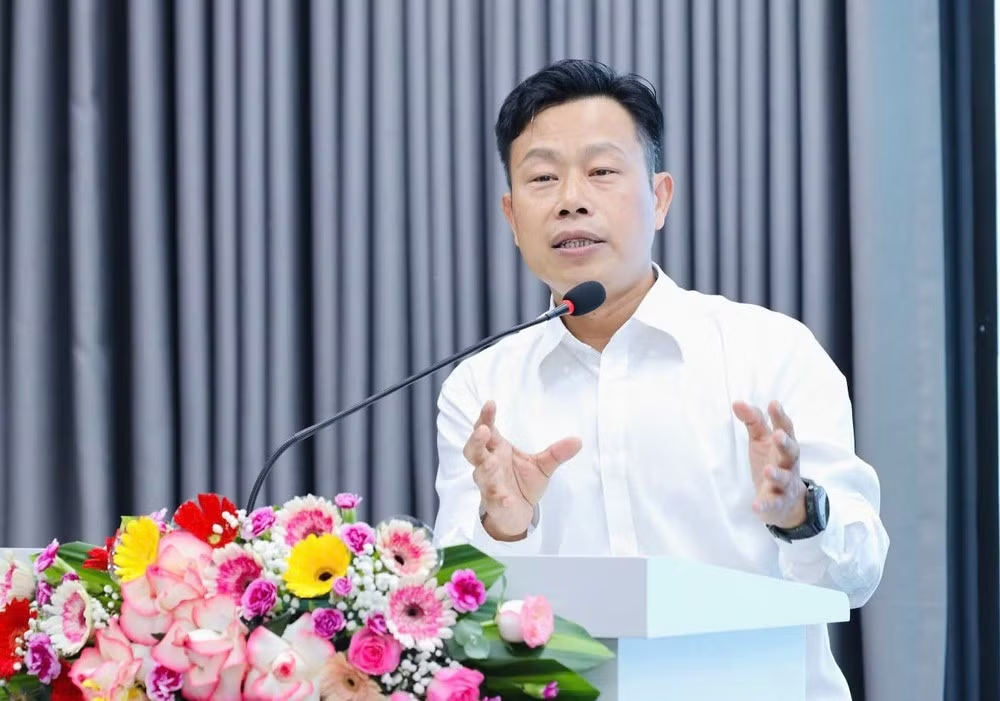
The Ministry of Education and Training will study the development of a system of criteria and mechanisms that allow universities to proactively register, while also combining this with tasks assigned by the State. The criteria must be feasible, linked to specific outputs and subject to periodic assessment. The deputy minister stressed that a rigid model should not be applied to all universities; instead, conditions should be created for each institution to select areas in which it has the potential to excel and develop, thereby forming “bright spots” of quality.
In addition, universities need to accelerate governance reform, restructure training programmes and disciplines, and strengthen the application of artificial intelligence (AI), technology, and digital transformation, with a priority for STEM, basic sciences, and strategic human-resource fields. Investment should also shift from being spread thinly to being concentrated on tasks capable of generating outstanding impacts.
Professor, Doctor Nguyen Tien Thao, Director of the Department of Higher Education under the Ministry of Education and Training, said that the draft Higher Education Development Strategy for 2026-2035, with a vision to 2045, has identified an orientation to shift higher education from fragmented and dispersed development towards building a national higher education ecosystem that connects training institutions, research institutes, businesses, localities, and international partners.
The strategy aims that by 2030, the proportion of people aged 18-22 enrolled in higher education will reach 40%, the proportion of postgraduates 10%, the proportion of learners studying STEM fields 35%, and the proportion of international students 1.5%. By 2035, these figures are expected to reach 50%, 15%, 40%, and 3%, respectively.
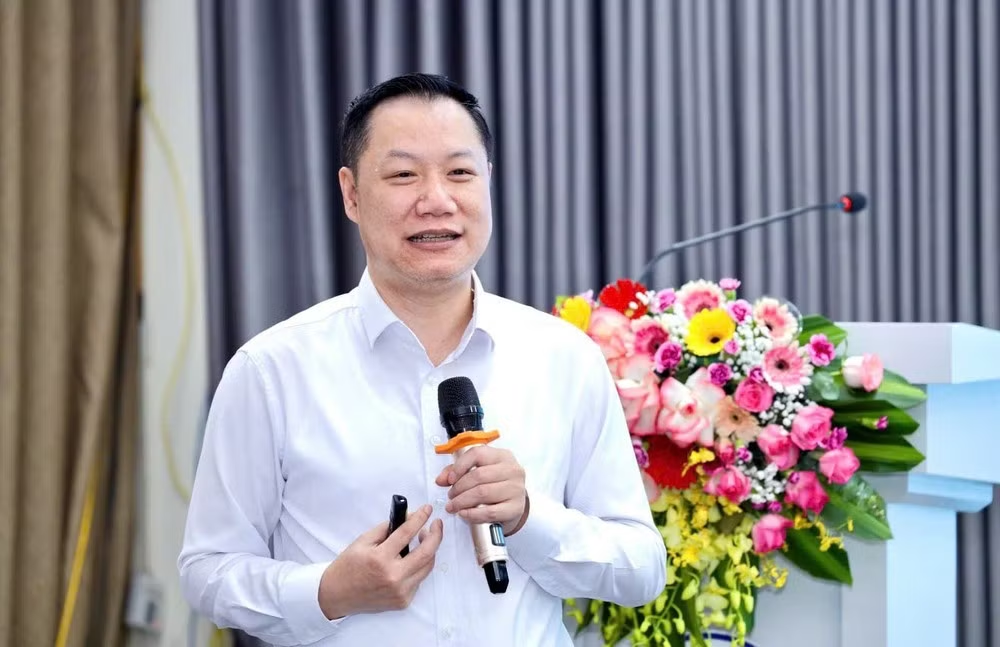
Other targets include increasing the proportion of graduates in appropriate employment 12 months after graduation, the proportion of lecturers holding doctoral degrees, the number of centres of excellence, and the international standing of higher education institutions.
Notably, Professor, Doctor Nguyen Tien Thao emphasised the stratification of the higher education network, shifting from equal and dispersed investment to investment based on missions and effectiveness. Under this orientation, the elite group is expected to comprise three to five institutions, focusing on cutting-edge research, international competition, and core innovation. The key group, consisting of around 25-30 institutions, will be responsible for training high-quality human resources and leading regions and sectors, while the remaining institutions will focus on practical vocational training.
The stratification mechanism will be designed in a dynamic and competitive manner and subject to periodic assessment, linked to missions, objectives, KPIs, resources, and outputs. The principle is that greater autonomy must go hand in hand with greater accountability.
Creating leading cores and spreading strength across the system
From the perspective of a higher education institution gradually transforming towards an elite university model, Viet Nam National University, Ha Noi has a talent-training foundation built over many decades.
Associate Professor, Doctor Dao Thanh Truong, Deputy Director of Viet Nam National University, Ha Noi, said that the university is developing a project to nurture talented human resources from the upper-secondary level, with a view to introducing some university modules into upper-secondary education and creating an integrated environment between upper-secondary schools and universities.
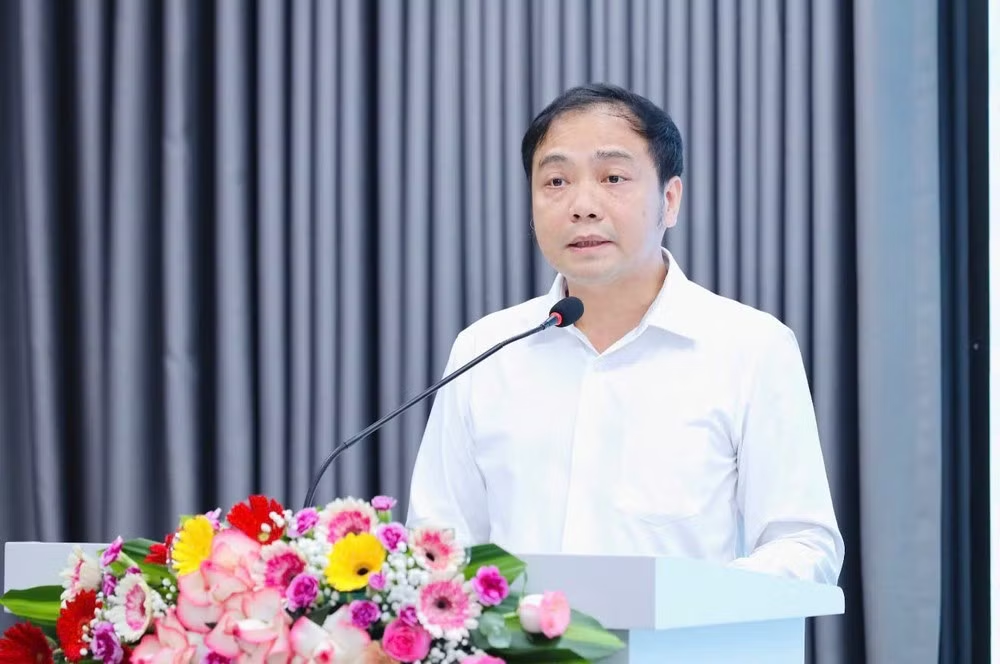
At the undergraduate level, Viet Nam National University, Ha Noi has implemented programmes for talented science students, advanced programmes, international-standard programmes, high-quality programmes, and interdisciplinary programmes in core technologies and semiconductor technology.
At the postgraduate level, the university focuses on doctoral training linked to cutting-edge research through strong research groups. According to Dao Thanh Truong, moving towards an elite university is a qualitative transformation process from fragmentation to integrating the strength of the system, from expanding scale to prioritising quality and talent development, and from producing academic results to generating social impact. Viet Nam National University, Ha Noi proposes a mechanism for allocating resources based on a chain of special mechanisms, special resources, special tasks, and special outputs, while also establishing mechanisms to identify and nurture centres of excellence, creating conditions for universities to cooperate and leverage their respective strengths.
At the seminar, many in-depth presentations were delivered, covering such topics as building elite universities, developing excellent universities in STEM and technology, experience in developing world-class universities in Viet Nam, and developing globally competitive universities in emerging countries.
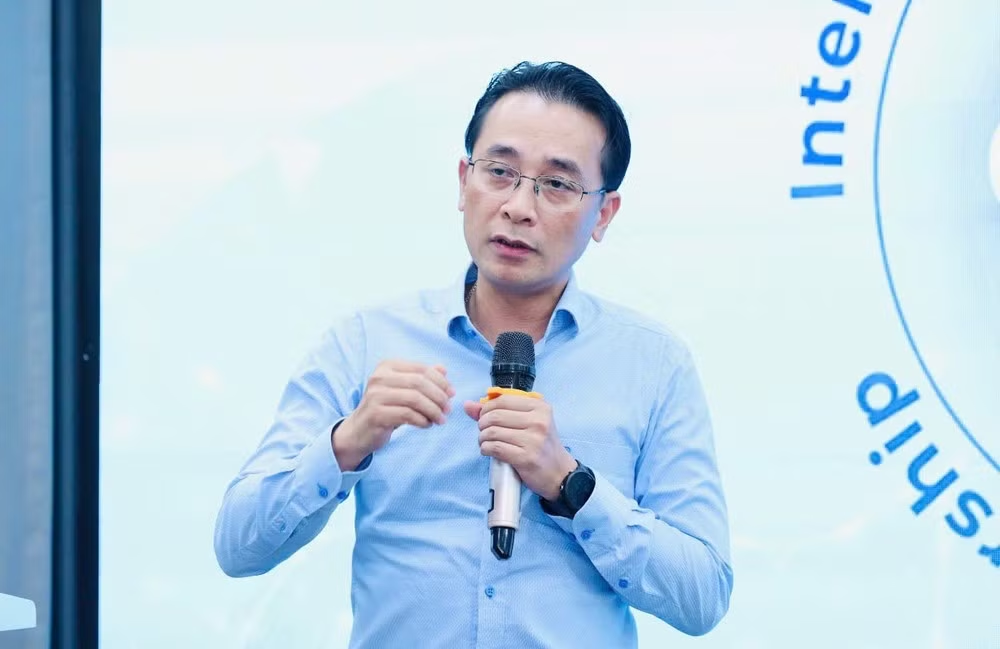
The presentation titled “Building an Elite University: From Quality Commitment to National Responsibility” by Professor, Doctor Chu Duc Trinh, Rector of the University of Engineering and Technology, Viet Nam National University, Ha Noi, emphasised that elite universities are not merely intended to create better universities, but aim to enhance national capacity. Accordingly, elite universities are built on three pillars: quality, culture, and national impact. Quality needs to become a system, a mechanism, and ultimately a culture of the university.
Professor, Doctor Chu Duc Trinh said that an elite university cannot be an “island” but must play a leading role and create a ripple effect throughout the system by piloting new models, sharing infrastructure and knowledge, training personnel, and strengthening State-University-Business connections. University autonomy needs to go hand in hand with responsibility for quality, results, and social and national impact.
Meanwhile, according to Doctor Le Mai Lan, Chairwoman of the University Council of VinUni University, five factors creating the driving force for elite universities have been identified: international standards, international partner networks, talent attraction, business-research ecosystems, and the ability to transform knowledge into practical impact. The university proposed assigning selected tasks to elite research universities, providing incentives for key science and technology fields, shifting towards commissioning training and research based on outputs, and the piloting of controlled sandboxes. The goal is to transform Viet Nam from a place that imports knowledge into a destination and regional hub for knowledge creation.
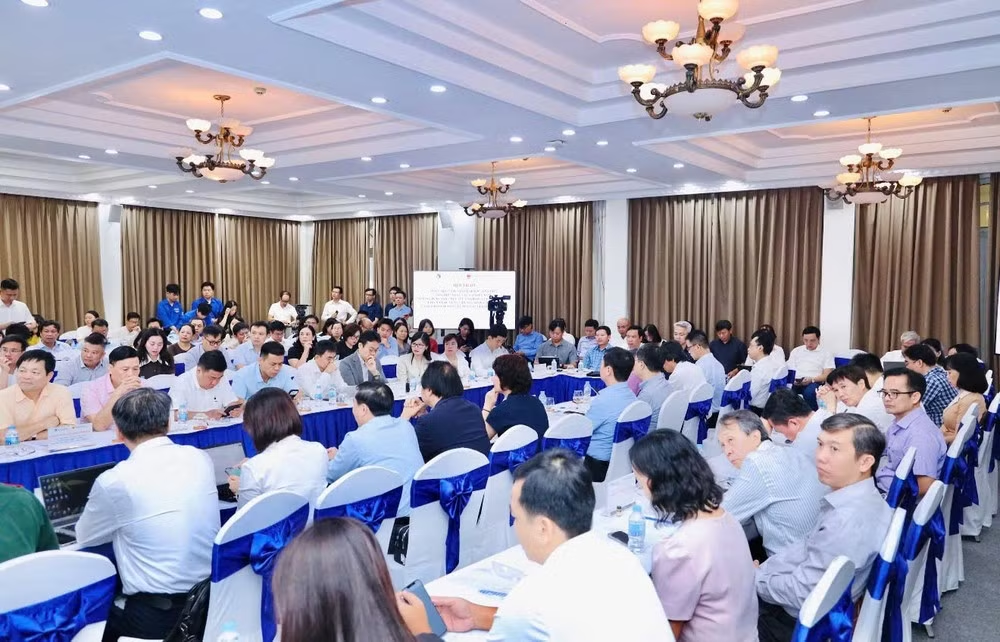
Experts, scientists, and business representatives also proposed improving mechanisms and policies to encourage both public and private higher education institutions to develop towards elite status; prioritising core technology fields, linking assessment to outputs, and increasing investment in laboratories and research centres. At the same time, State-university-business linkages should be strengthened to ensure that training programmes are aligned with practical needs and learners' capacity for international integration.
Concluding the seminar, Deputy Minister of Education and Training Le Quan asked higher education institutions to urgently review their capacity, determine their development orientations and proactively register to participate in the following groups: elite universities, key/excellent universities, or the development of centres of excellence.
Universities were asked to quickly restructure their training programmes and models, with a focus on integrating AI technology and core technologies, while also innovating training methods towards practical, hands-on approaches, and project-based research.
In addition, higher education institutions need to prepare detailed reports on difficulties related to current regulations, mechanisms and policies and submit them to the Ministry of Education and Training for compilation and coordinated resolution. At the same time, universities need to finalise their registration lists before the opening ceremony of the new academic year. This will serve as a basis for developing an overall picture of higher education.