Neurological semiology is the study of the signs and symptoms of illnesses related to the nervous system.
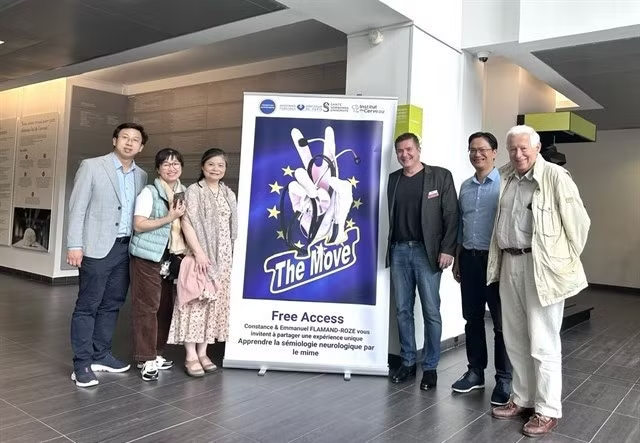
The tournament is a simulation-based medical education event created in 2014 by Professor Emmanuel Flamand-Roze from Sorbonne Université and the Paris Brain Institute, along with neuroscientist Constance Flamand-Roze, to help medical students use interactive roleplay to teach neurological semiology.
The goal is to cure 'neurophobia' by transforming the difficult study of nervous system disorders into a game-like joyful, interactive and effective modern learning experience.
Led by Professor Duong Dai Ha, Vietnamese competitors include Nguyen Anh Long, Hoang Huy Anh, Dang Dinh Duc, Nguyen Nam Phuong and Nguyen Manh Khoi. They will compete with teams from medical faculties across the globe in miming and identifying neurological signs.
Students have to prepare 5-6 minute presentations, during which they will physically act out the symptoms, pathologies and manifestations of various neurological diseases, such as Parkinson's, strokes and chorea. Using an anonymous self-administered questionnaire, the students' and teachers' emotional experience and views on the impact of the programme are then investigated.
This gamified approach improves memory retention and engagement, helping to overcome 'neurophobia'.
In the first stage, teams will be grouped into three and take each other on, following the style of The Voice in 'mime battles'. In the final stage, all of the teams will battle together.
The criteria for determining the winners are the neurological accuracy of the impersonations and the originality of the scenarios, as evaluated by a jury of medical professionals. Performances can be in English or French.
In 2024, the Vietnamese team placed second out of 10 participating teams and won the cup for the most outstanding and artistically impressive performance.