Close and responsive to the people
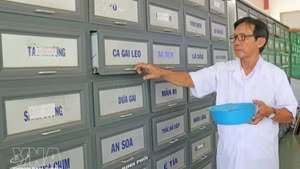
Before daybreak, doctor La Thi Dao gets on her motorbike and travels more than 20km to Bach Thong Commune Health Station for work. This has become her daily routine since she said goodbye to her colleagues at the department of medical examination of Phung Chi Kien Hospital to be seconded to the station.
Although she has a young child, when the province introduced the policy, Dao was among the first doctors to volunteer for duty at the commune health station. She shared: “I see the secondment as both an opportunity to hone my professional skills and a way to fulfil a doctor’s duty of caring for people’s health.”
After administrative rearrangement, Bach Thong Commune was formed through the merger of communes Quang Thuan, Duong Phong, and Don Phong of the former Bach Thong District with Dong Thang Commune of the former Cho Don District.
The number of villages has increased, but the population is sparse, while the distance from the first village to the last village in the commune is nearly 50km, making healthcare provision more difficult.
According to doctor Nong Van Luc, the deputy director of Bach Thong Commune Health Station, who was recently transferred from Phung Chi Kien Hospital to reinforce the commune, to meet the requirements of the new situation, the unit has arranged and allocated facilities to ensure there are no “gaps” that would force people to travel too far for medical examination and treatment.
The station has arranged its central facility in Tong Ngay Village; Facility 1 in Hop Thang Village in the far end of the commune; and Facility 2 in Na Vai Village at the first end of the commune. With a total of 19 health workers and staff, the station assigns four people to each facility. It has also consolidated its network to ensure each village maintains one village health worker.
Thai Nguyen Province has implemented a doctor secondment plan for the 2026-2030 period to achieve the target that, from April 1, 2026, each commune and ward health station in the province will have at least four doctors. Many doctors from Thai Nguyen Central Hospital and Thai Nguyen Iron and Steel Hospital have also volunteered to work at the grassroots level.
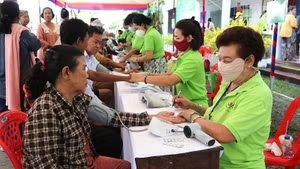
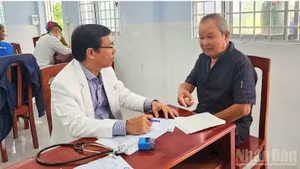
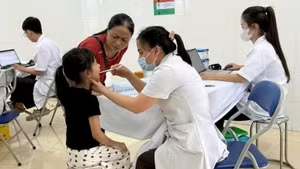
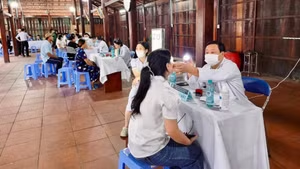
In early June 2026, Bach Thong Commune continued to welcome doctor Leng Hoang Thai Huan, Chief of Office of the Thai Nguyen Provincial Department of Health, who voluntarily transferred to work at commune level. Luong Van Luan, 64, from Ban Pe Village, shared: “I find the doctors and staff of the commune health station very enthusiastic and responsible. With good and highly qualified doctors working here, people feel more reassured when coming for check-ups.”
After the merger of communes and wards and the consolidation of provinces over a wider area, commune and ward health stations continue to affirm their role in primary healthcare, serving as the first gatekeeper of the healthcare system.
However, in mountainous, remote, and isolated areas with difficult transport conditions and broad management coverage, while health human resources remain insufficient and facilities are not yet synchronised, a commune-level health worker must take on many tasks at the same time, ranging from medical examination, treatment, and preventive medicine to implementing national target programmes on population, vaccination, and food safety.
Thai Nguyen Province also reorganised 280 health stations into 92 stations and restructured regional medical centres. The healthcare system has been firmly consolidated from higher levels to the grassroots, with 36 public non-business units in the health sector under the provincial Department of Health.
The province has Thai Nguyen Central Hospital under the Ministry of Health, Military Hospital 91 under Military Region I, Thai Nguyen University of Medicine and Pharmacy Hospital, 768 private medical practice establishments (including seven hospitals), 1,701 pharmaceutical business establishments, and three non-public social assistance facilities. The province currently has 1,629 doctors, 482 pharmacists, and 2,388 nurses.
Thai Nguyen currently ranks second out of 34 provinces and cities in the number of residents who have integrated their electronic health records into the VNeID application; 92% of residents have electronic health records. All public and private hospitals have implemented electronic medical records in accordance with regulations; and all health stations have used health information management software.
Modernisation towards autonomy
Thai Nguyen has been taking decisive steps to consolidate and narrow the quality gap in medical examination and treatment between the provincial and central levels, gradually improving its capacity for autonomy.
The proactive establishment and deepening of professional linkages with leading central-level hospitals has been identified as a strategic direction by the provincial Party Committee, which has instructed the health sector to implement it in a substantive and in-depth manner.
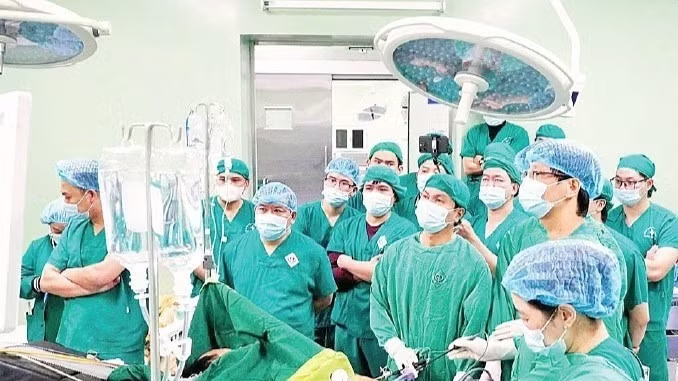
Under this policy, Pham Ngoc Thach Hospital — formerly the Thai Nguyen City Medical Centre — has signed a professional support cooperation agreement with Ha Noi Heart Hospital. The two units will coordinate in training, technology transfer, and consultation on difficult cases. Professional support in the form of hands-on guidance and remote consultation will help significantly narrow the professional gap between the two levels.
This is also an approach that other regional hospitals in the province have applied and will continue to apply. Thai Nguyen Central Hospital is a special-grade hospital under the Ministry of Health.
In early 2025, the hospital was approved by the Ministry of Health to expand its operational scale from 1,300 to 1,700 planned beds. Each day, the hospital examines 1,700-1,900 outpatients and treats 1,500-1,700 inpatients.
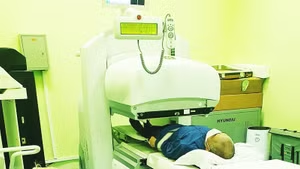
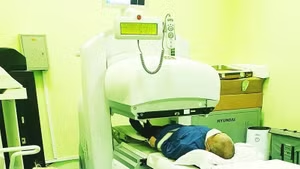
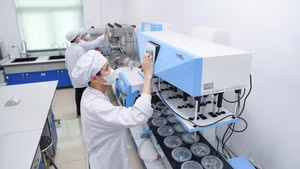
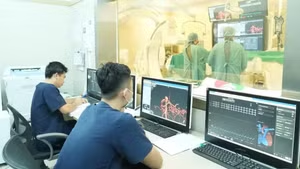
According to Assoc Prof, Dr Nguyen Cong Hoang, the director of the hospital, the unit has invested in upgrading, building, and newly investing in infrastructure and the most modern medical equipment system in the region, including a 1.5 Tesla magnetic resonance imaging system, 128-slice computed tomography scanners, radiotherapy machines, SPECT scanners, and angiography machines.
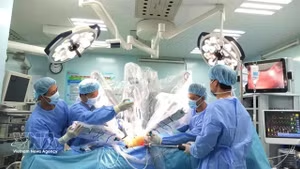
The testing system has also been modernised, meeting ISO 15189 standards. To date, the hospital has performed many specialised techniques, such as living-donor organ transplantation, bone marrow transplantation, assisted reproduction, microsurgery (reconnecting severed blood vessels and nerves), and open-heart surgery.
The hospital has become a destination for medical examination and treatment not only for people in the province but also for those from many neighbouring provinces, thereby reducing the hardship, cost, and inconvenience of travelling to Ha Noi.
Identifying healthcare as an urgent issue requiring special attention, the Thai Nguyen Provincial Party Committee has issued Project No. 14-DA/TU on the development of this field for the 2026-2030 period. The province will invest more than 4.4 trillion VND to build a modern, equitable, quality, efficient, people-centred, and internationally integrated healthcare system.
Under the project, the health sector has organised the service delivery system into three professional levels, encouraged the development of non-public hospitals, clinics, healthcare, and nursing establishments; developed policies to expand groups eligible for financial support to buy health insurance; promoted digital transformation for comprehensive management and care based on electronic health records; and stepped up the socialisation of healthcare work.
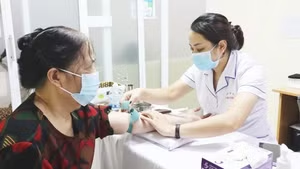
Thai Nguyen has determined that from 2026, people will receive free regular health check-ups or screening at least once a year and have electronic health records created and managed throughout their life cycle, gradually reducing the burden of medical costs.
By 2030, the province aims to reach 50 hospital beds per 10,000 people and 18 doctors per 10,000 people, with people to be exempted from basic-level hospital fees within the scope of health insurance benefits according to the roadmap; the rate of medical examination and treatment covered by health insurance at commune health stations to increase to over 25%; and at least one hospital to meet the criteria for a digital hospital.