According to updated figures, nautical charts at a scale of 1:200,000 have been produced for approximately 819,500 square kilometres, equivalent to 82% of Viet Nam's maritime areas. Detailed seabed topographic maps have also been developed for numerous coastal areas, estuaries and strategically important waters, while basic surveys of marine resources and the environment at a scale of 1:500,000 have covered more than 380,000 square kilometres.
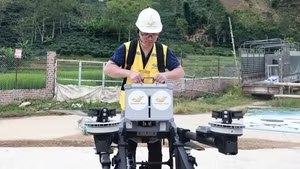
However, a more significant transformation lies in how data is collected and utilised. According to Professor Dr Mai Trong Nhuan of Viet Nam National University, Ha Noi, countries with advanced marine capabilities are shifting from manual surveys to automated and multi-platform monitoring systems. These systems combine remote-sensing satellites, monitoring buoys, IoT sensors, autonomous underwater vehicles (AUVs), remotely operated vehicles (ROVs) and unmanned aerial vehicles (UAVs) with artificial intelligence (AI) and big data.
Abnormal changes in temperature, water quality, currents or coastlines can consequently be detected earlier. AI can analyse millions of data points to forecast waves, storm surges, pollution risks and ecosystem changes. Integrating Automatic Identification System (AIS) and Vessel Monitoring System (VMS) data with satellite information can also improve vessel monitoring, helping combat illegal, unreported and unregulated (IUU) fishing and ensure maritime safety.
According to Associate Professor Dr Nguyen Tai Tue of the University of Science, the more comprehensive, up-to-date and interconnected marine resources and environmental databases become, the greater the capacity for informed management decisions. Such databases also help reduce risks for investors when selecting suitable locations for offshore wind power, marine aquaculture, seaports and emerging maritime industries. This represents a shift from management based largely on experience and responses after incidents occur to data-driven and predictive governance.
Practical experience in marine surveys also shows that technological innovation is driven by the demanding nature of working conditions at sea. Le Anh Thang, a researcher with a master's degree at the Northern Centre for Marine Resources and Environment Planning and Investigation, said offshore work frequently involves exposure to waves, strong winds, vibrations, noise and various hazards. Greater automation, remote monitoring and the use of unmanned equipment would reduce dangerous tasks while increasing the frequency and accuracy of data collection.
However, at the national level, significant technological gaps remain. Viet Nam faces shortages of marine research vessels, inconsistencies in long-term datasets, a limited number of strong marine research institutions, insufficient scientific and technological personnel, and relatively low rates of practical application of research findings.
These bottlenecks must be addressed if the country is to move from merely possessing marine data to mastering marine knowledge. Viet Nam has established a digital database system for marine resources and the environment and is upgrading it towards integration with national databases and those maintained by ministries, sectors and local authorities. Nevertheless, modern marine governance requires moving beyond digitisation towards data interoperability, analysis and real-time utilisation.
The comprehensive, up-to-date and interconnected marine resources and environmental databases become, the greater the capacity for informed management decisions. Such databases also help reduce risks for investors when selecting suitable locations for offshore wind power, marine aquaculture, seaports and emerging maritime industries. This represents a shift from management based largely on experience and responses after incidents occur to data-driven and predictive governance.
A recently introduced digital transformation plan by the Viet Nam Administration of Seas and Islands aims to connect 100% of relevant national and specialised databases by 2030. It also targets the use of real-time big data analytics and AI in at least 80% of activities involving the monitoring, forecasting and early warning of changes in marine resources and the environment. The plan seeks to make data systems "AI-ready" while developing AI agents to address specialised tasks.
Notably, the strategy places data at its centre, calling for the establishment of data flows that are accurate, complete, clean, continuously updated, consistent and shared. It also envisages the development of modern data centres, cloud computing infrastructure, data lakehouses and IoT networks for automated monitoring data collection.
To turn science, technology, innovation and digital transformation into drivers of stronger national marine capabilities, experts have emphasised the need to connect three pillars: marine resource and environmental research, surveys and forecasting; integrated management of marine resources and the environment; and blue economy development.
Data generated through research and surveys must become a direct input for management, planning and monitoring. At the same time, practical requirements arising from marine governance and economic development should continue to generate new research challenges. When this cycle operates effectively, the risks of unplanned development, overlapping uses of marine space, conflicts of interest and excessive resource exploitation can gradually be reduced.
One of the key priorities is to accelerate the transition from reactive management to predictive governance, from experience-based decisions to data-driven approaches, and from sector-specific management to integrated governance. This requires wider application of AI, IoT, satellite data, autonomous vehicles and automated monitoring systems.
In particular, Viet Nam needs to establish a national marine data centre as soon as possible, invest in equipment and core technologies, develop a highly qualified workforce, and foster a market for marine technology products.
International cooperation should also be expanded in a more substantive manner, particularly in marine resource and environmental research, surveys and forecasting, as well as the prediction of marine natural disasters. These efforts must be accompanied by institutional reforms, the mobilisation of resources from across society, and greater business participation in the development and application of marine technologies.