Upon returning and being received at support facilities, the children enter a recovery phase that requires comprehensive protection measures. However, in practice, the existing support system has yet to keep pace with the specific needs of this group of children, despite relatively comprehensive legal provisions. This reality highlights the need to further refine policies and strengthen local implementation capacity.
First and foremost, a major limitation lies in the fact that many reception facilities have yet to establish child-specific procedures. Although the 2016 Law on Children and the 2024 Law on Prevention and Combat of Human Trafficking clearly identify child protection as a top priority, most facilities still apply general procedures designed for adults and only integrate child support steps when necessary.
This approach makes case handling heavily dependent on individual staff experience and results in a lack of consistency across localities. For children suffering trauma, experiencing panic, or accompanying adults whose relationship is unclear, the absence of standardised guidelines can lead to confusion in support efforts and even the omission of critical needs.
Facilities and infrastructure also pose significant challenges. In many places, areas designated specifically for children are insufficient; living and resting spaces are cramped; and basic conditions to ensure a child-appropriate environment, as required by law, are lacking. Having to share living spaces with adults amid limited supplies and space can adversely affect children’s psychological well-being, especially in the early days after returning from situations of trafficking or exploitation.
Human resources dedicated to child protection represent another bottleneck. Decree No. 162/2025/ND-CP requires reception facilities to have counseling staff, social workers, and psychological experts suited to victims’ needs. In reality, however, the number of specialized staff remains limited; many are multitasking and have not received in-depth training in working with traumatized children. Meanwhile, children accompanying trafficking victims are often emotionally vulnerable, face risks of prolonged psychological harm, and require persistent, continuous access to mental health support services.
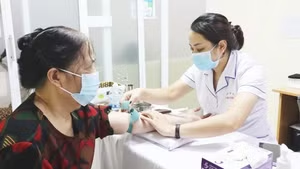
Beyond mental health care, children also face difficulties in accessing healthcare, education, and other essential services. Some return in poor physical condition, yet initial medical examinations and treatment are not always provided in a timely manner, especially in remote and mountainous areas where pediatric healthcare resources are limited.
In addition, disruptions to schooling, loss of personal documents, or missing academic records create obstacles when children attempt to return to school. Although current regulations clearly assign responsibility for ensuring uninterrupted education for children, administrative procedures in some localities remain time-consuming.
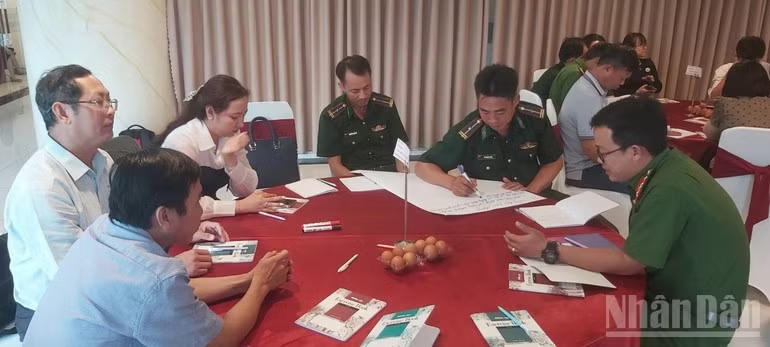
Another notable issue is that temporary protection mechanisms for children accompanying victims have not been implemented uniformly. In many cases, children are not immediately identified as victims under legal definitions, preventing them from fully accessing services during the initial period—a critical time for stabilising their physical and mental health. Delays in information sharing and coordination among law enforcement, labour–social affairs, and health sectors further undermine the effectiveness of child protection efforts.
These challenges highlight the need for stronger and more coordinated solutions to improve the quality of support for children accompanying victims of human trafficking. First and foremost, reception facilities need to develop and apply child-specific procedures, ensuring consistency nationwide. These procedures must clearly define rapid assessment steps for children’s physical health, psychological condition, and risk levels within the first 24 hours. This will serve as a crucial basis for the timely implementation of appropriate protection measures.
In addition, investment in facilities is an urgent requirement. Dedicated living areas, child-friendly counseling rooms, and age-appropriate spaces for learning and recreation should be fully provided. Such improvements not only enhance the quality of care but also create a safe environment that better supports children’s recovery.
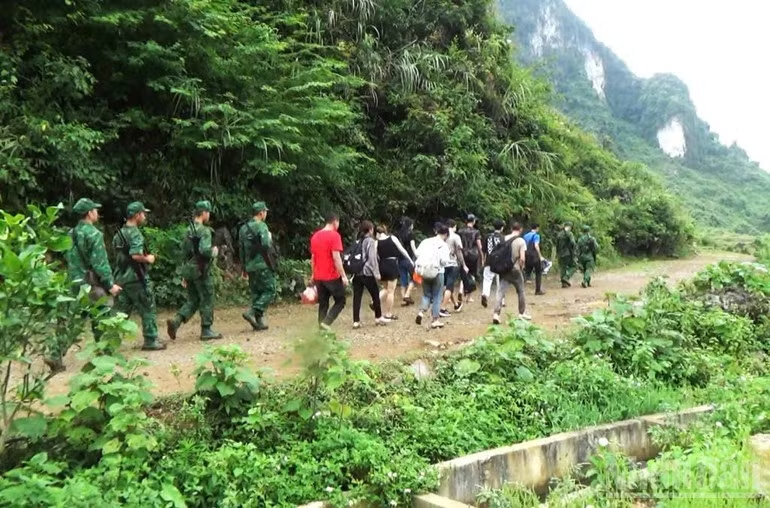
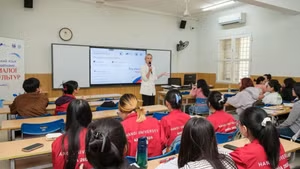
At the same time, it is essential to strengthen training and professional capacity building for personnel engaged in child protection at reception facilities. Skills such as trauma-informed support, psychological counseling, risk assessment, and working with children lacking personal documents should be prioritised. Alongside training, increasing the number of specialised staff is also crucial to easing the workload and pressure on local officials.
Intersectoral service coordination must be further enhanced. Law enforcement agencies, healthcare providers, educational institutions, and labour–social affairs authorities need to work closely together to ensure children can promptly access medical care, education, and legal assistance. Interconnected information systems should continue to be improved to shorten processing times and prevent children’s needs from being overlooked.
Protecting children accompanying victims of human trafficking is not only the responsibility of reception facilities but a shared task of the entire political system and society. When policies are effectively implemented, procedures standardised, and resources invested in the right direction, children, as the most vulnerable group, will receive more comprehensive protection and gain better opportunities for recovery and sustainable reintegration. This is also a key objective in the effort to build a safe environment for all Vietnamese children, ensuring that no one is left behind.