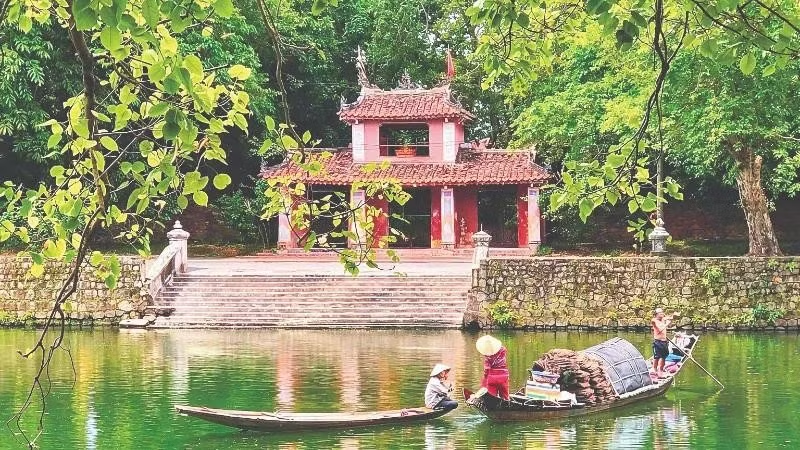
The river within the structure of the ancient urban area
When mentioning Hue, people often think of the Huong River. However, within the urban structure of the Hue Citadel there is also a system of canals surrounding and running through the inner city.
The most important are the Dong Ba and Ngu Ha routes. These are artificial waterways used to transport food and goods from outside into the citadel. While Ngu Ha connects with the defensive waterway system, passing through many relics such as Tinh Tam Lake, Tang Thu Pavilion and Hoc Hai Lake, on the eastern side of the citadel, the Dong Ba River runs along the edge of the citadel, connecting with Dong Ba Market, the old quarters of Gia Hoi and Chi Lang, then flowing down to Bao Vinh, once a bustling trading port of Dang Trong.
If the Huong River creates the space of a riverside city, these canals bring a more enclosed, tranquil feeling closely connected to the lives of local residents.
According to Cung Trong Cuong, Director of the Hue City Institute for Development Studies, the Dong Ba–Ngu Ha river system can create a distinctive experience for Hue tourism. These rivers lie within the central waterway network and are entirely suitable for developing waterway tourism products linking heritage, old quarters and urban life.
Vo Le Nhat, Secretary of Phu Xuan Ward, said that developing river tourism on the tributaries of the Huong River is a necessary direction. Exploiting waterway tourism, especially on Dong Ba and Ngu Ha, will not only diversify tourism services but also unlock untapped potential in the citadel and old quarter areas, particularly in cultural and culinary services. However, according to Nhat, for these river routes to truly attract visitors, there needs to be more commensurate investment in landscape, lighting and convenience for tourists.
More than just opening an additional sightseeing route, river tourism also offers a different way of approaching the Hue Citadel. For many years, traffic in this area has been a bottleneck. The system of citadel gates, ancient bridges and narrow streets is not suitable for large tourist vehicles, making many cultural spaces inside the citadel difficult to access through conventional tours. In this context, waterways can become an alternative entrance.
Duong Cam Van, a tour guide at the Hue Monuments Conservation Centre, said that if boat routes are developed, visitors can access the citadel in a different way. After visiting royal tombs, they can board boats, travel along river sections close to the citadel walls, then dock right inside the citadel, where there could be a traditional wooden house-style hotel or a restaurant in classical architecture.
Reviving cultural spaces that have been “silted up”
Once the rivers blend into contemporary life, few may remember their relatively quiet past. Before the 2000s, the Dong Ba River was once home to hundreds of boats, with communities of boat dwellers living along the river. Meanwhile, Ngu Ha was almost forgotten. As the Van Xuan River became silted up, water could not flow in, causing many sections to stagnate. Residents along the banks recall that in the dry season, the riverbed was so shallow that people could step down, till the soil and grow vegetables.
It was not until the late 2010s that Hue began implementing dredging and renovation programmes for these rivers. In the past two years, restoration has been accelerated, with bushes in the river cleared, embankments reinforced and walking paths formed along both banks… These changes have created a foundation for the canals to gradually return to urban life.
However, bringing boats back to these waterways is not only about opening a new sightseeing route; more importantly, it is about the potential to revive cultural spaces that have been “silted up” within the citadel.
Along rivers such as Ngu Ha and Dong Ba, shaded by trees, old houses behind citadel walls and a slow pace of life have become part of Hue’s identity. This is also where many traditional dishes are concentrated. When visitors begin travelling by boat along these rivers, such culinary spaces can become part of the experiential journey.
Moreover, many other cultural layers of Hue can also be reconnected. Hue was once a centre where classical opera flourished, and if waterway tourism routes are organised appropriately, they could open new spaces for traditional cultural performances.
Nguyen Manh Cuong, Vice Chairman of Hoa Chau Ward People’s Committee, where Bao Vinh old quarter is located, said that waterway tourism routes could create new opportunities for the area. According to him, residents of Bao Vinh have recently begun comparing their locality with Hoi An ancient town. “If developed in the right direction, Bao Vinh could fully grow like Hoi An today,” he said.
On a morning in Bao Vinh old quarter, Ma bakery in an old riverside house still opens to sell traditional Hue cakes. The shop is not very famous but is visited by many foreign tourists to learn how to make cakes. “If there were boats bringing visitors from the city centre here, it would certainly be more crowded. We should be different from Hoi An; this should be a place for experience rather than just sightseeing,” the owner shared.
According to the city’s waterway tourism development plan, boat routes can connect many heritage sites, craft villages and old quarters along the river system, from the citadel to Bao Vinh, Thanh Ha or riverside villages along the Huong River. The formation of these routes is also a concrete step in implementing the city’s orientation for developing river tourism.
Tran Thi Hoai Tram, Director of the Hue City Department of Tourism, said that in recent times Hue’s river tourism potential has not been fully exploited. The city is implementing a synchronised strategy, from clean-energy electric boats and investment in wharves to building experiential routes connecting heritage, craft villages and the night-time economy to extend visitors’ length of stay.
In April 2026, when the first electric boats begin operating on the Ngu Ha–Dong Ba route, the canals that once served the ancient capital will embark on a new journey. At that time, these rivers may no longer be merely old waterways but will become part of the cultural space and urban life of the heritage city today and in the future.
![[Video] Viet Nam among Top three Asian destinations for return visitors](https://en-cdn.nhandan.vn/images/nyM650OGFWrOVWc-xajqN-rTZ68Rlmc1fiGJOhBRYHErj-E25MBpvJqrpphXazfrpe9t-fYCGuQU4CN0yXo3Rg/du-lich-vietnam.jpg.avif)





![[In Pictures] Nui Chua Rock Park: A million-year-old outdoor museum of landforms on the Khanh Hoa coast](https://en-cdn.nhandan.vn/images/nyM650OGFWrOVWc-xajqNz57td8idIAL_VG9puyG2UZEKOnmq1DVlT1--ZclbO3z2WBaWZhbt6O3e8kjPZqJMWkfEz7RO9qhcwg8o8LQFK8/ndo-br-cao-nguyen-da-moi.jpg.avif)