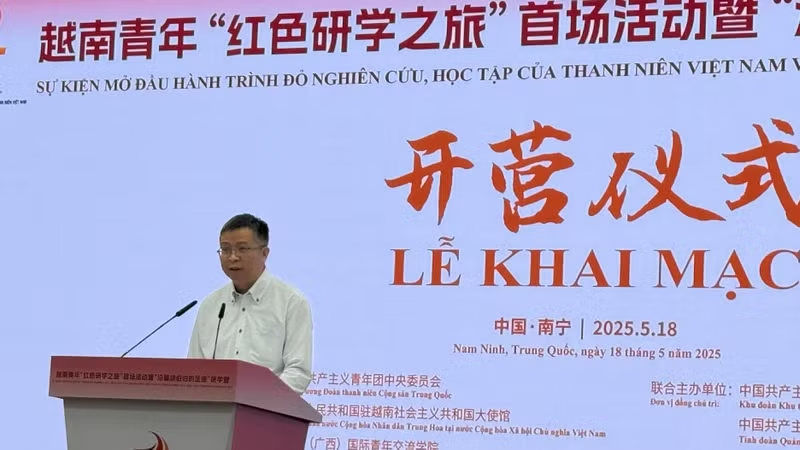
This event marks the commencement of the ‘2025 Red Journey: Youth Research and Study’ programme.
The event was attended by Vietnamese Ambassador Pham Thanh Binh; Chen Gang, member of the Communist Party of China (CPC) Central Committee, Secretary of the CPC Committee of the Guangxi Zhuang Autonomous Region; A Dong, First Secretary of the Secretariat of the Communist Youth League of China (CYLC), along with numerous youth delegates from Vietnamese localities such as Ha Giang, Lang Son, Quang Ninh, Cao Bang, and Hai Phong, as well as from Guangxi. These are areas that play a vital role in the traditional friendship and bilateral cooperation between Viet Nam and China.
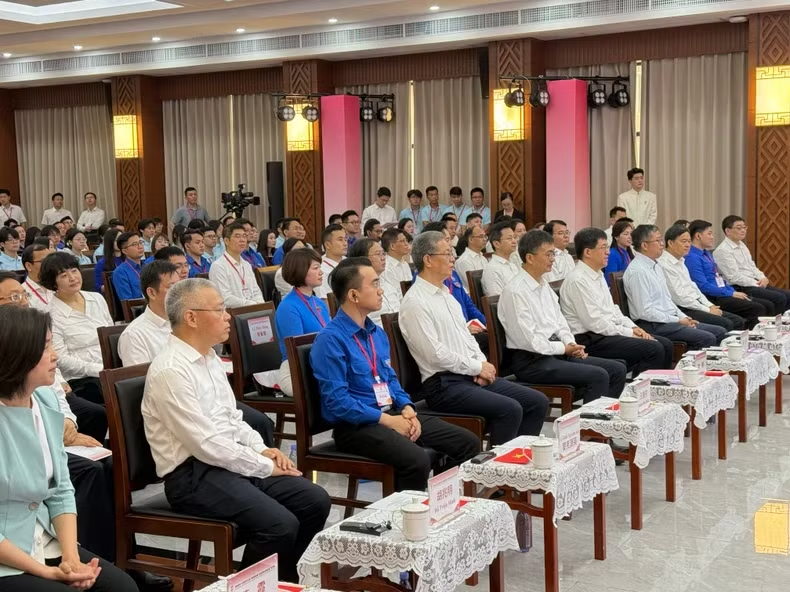 |
| Delegates attending the opening ceremony. (Photo provided by the Vietnamese Embassy in China) |
In his speech at the event, Ambassador Pham Thanh Binh highly valued the significance of the programme, especially in the context of the two countries celebrating the 75th founding anniversary of diplomatic relations between Viet Nam and China, the Year of Viet Nam-China People-to-People Exchange.
The ambassador emphasised that the research and study camp “Following in President Ho Chi Minh’s footsteps” serves as a concrete embodiment of the shared understanding reached between the top leaders of both parties and both countries. It contributes to strengthening mutual understanding and exchange among the younger generations of both sides, particularly the youth from localities with a long-standing tradition of friendship.
Earlier, Ambassador Pham Thanh Binh and the delegation visited the Nanning Yucai School under Guangxi University — which, during the resistance war years, was the largest overseas training institution for Vietnamese cadres.
Thanks to the valuable support from China in terms of facilities, logistics, and teaching staff, Nanning Yucai School has become a vivid symbol of solidarity and mutual assistance between the two countries during a challenging period.
During the visit, Ambassador Pham Thanh Binh learned about the school’s formation, development, and meaningful educational tradition. He also met and exchanged views with officials and lecturers currently engaged in research and teaching on revolutionary history and Viet Nam–China friendship.