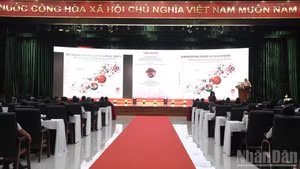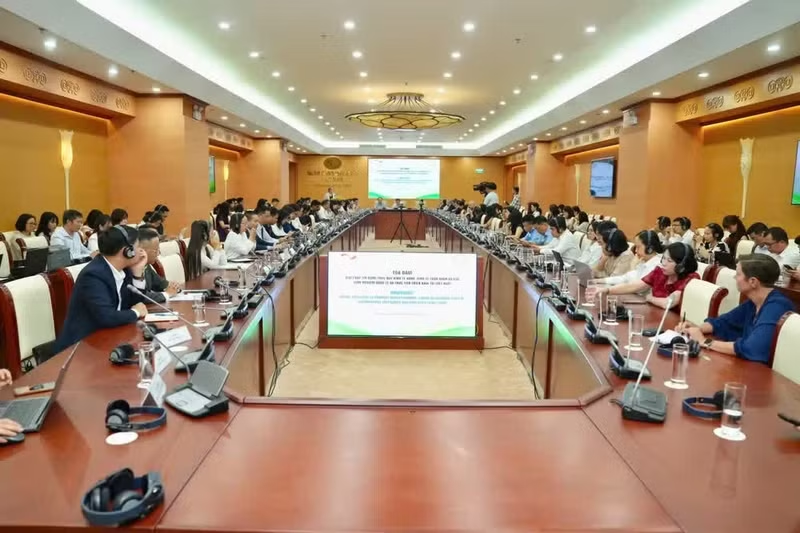
The event was held within the framework of the Macroeconomic Reform/Green Growth Programme with support from Germany’s Federal Ministry for Economic Cooperation and Development.
The seminar aimed to enhance dialogue, exchanges, and the sharing of international experience to further improve policy mechanisms and practical solutions for directing credit and investment capital towards sustainable economic models, strengthening the economy’s competitiveness in a new development phase, and contributing to Viet Nam’s goals of achieving net-zero emissions by 2050 and becoming a high-income country by 2045.
Addressing the seminar, SBV Deputy Governor Nguyen Ngoc Canh said that, alongside resources from the state budget and international financial sources, the development of green credit has been identified as one of the key solutions to meet capital demand for the economy’s green transition, helping to mobilise and allocate resources effectively for sustainable growth.
Nguyen Ngoc Canh noted that the banking sector has actively and proactively implemented a range of synchronised measures to promote green growth and sustainable development. The SBV has established orientations and set clear targets for credit institutions in implementing green lending, green banking, and environmental and social risk management.
It has also introduced various preferential credit mechanisms and policies to encourage organic agriculture, circular-economy agricultural production, and lending under the project to develop one million hectares of high-quality, low-emission rice in the Mekong Delta region.
Notably, the SBV is submitting to the government a draft decree on a 2% interest-rate subsidy funded by the state budget for private-sector enterprises, business households, and individual business operators borrowing from banks to implement green and circular projects and apply ESG standards.
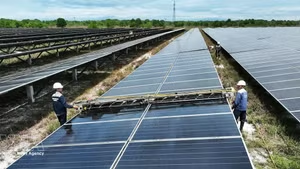
According to the SBV deputy governor, eighty-two credit institutions have recorded outstanding green credit loans so far, with total outstanding green credit reaching 828 trillion VND. Average annual growth in green credit exceeded 20% during the 2017–2025 period.
At the seminar, delegates focused their presentations, exchanges, and discussions on several key issues, including the implementation and outcomes of banking-sector credit solutions promoting the green economy, circular economy, and ESG; identifying the current situation and challenges facing Vietnamese credit institutions and businesses in the new context; guidance on identifying green and circular projects and applying environmental, social, and governance standards; international experience in financing circular-economy projects and ESG implementation; and recommendations for Viet Nam.
Speaking at the event, Dr Michaela Baur, Country Director of GIZ Viet Nam, said that green finance cooperation between Germany and Viet Nam is not merely a development partnership but a strategic, two-way investment in green growth and competitiveness. Viet Nam benefits through attracting investment, boosting growth, and reducing carbon emissions, while Germany gains greater access to markets, stronger partner connections, and more resilient supply chains.