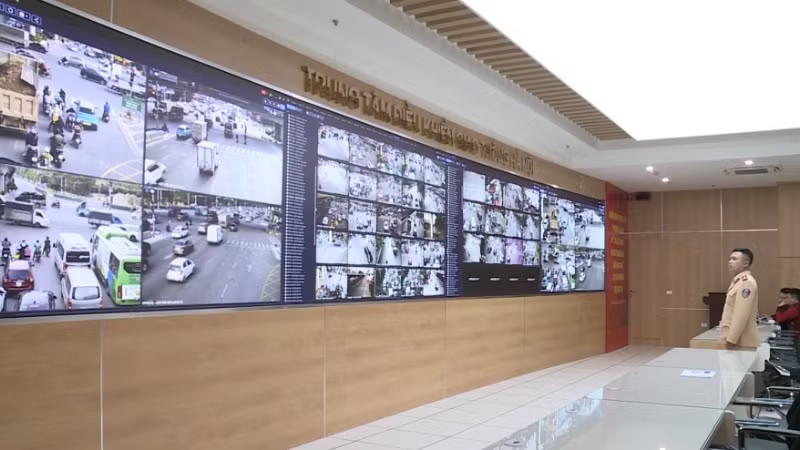
After one month of operation, the AI camera system identified more than 6,350 traffic violations with sufficient grounds, supporting the issuance of notifications for fines via automated enforcement in accordance with regulations. However, the system’s core goal is not limited to monitoring and sanctioning violations; it also aims to optimise traffic flows, reduce congestion, and ensure traffic order and safety.
At present, Ha Noi’s intelligent traffic control centre has been directly connected to more than 180 traffic signal control cabinets using AI technology. By collecting and analysing real-time traffic data, the system allows flexible adjustments to signal cycles to match vehicle density at each junction.
According to Senior Lieutenant Colonel Bui Thi Thom of the Traffic Command and Signal Control Team under the Traffic Police Division of the Ha Noi City Police, AI can automatically analyse traffic volume at each specific point in time. On that basis, the system adjusts signal cycles, helping shorten red-light waiting times and improve traffic efficiency at intersections.
According to Senior Lieutenant Colonel Dao Viet Long, Deputy Head of the Traffic Police Division of the Ha Noi City Police, the city currently has more than 5,000 intersections, while the AI camera system still meets only part of demand. However, once the second phase is rolled out and the system is completed in a coordinated manner, AI will become an effective tool for addressing congestion and traffic accidents, while also helping raise road users’ compliance with the law.
In addition to technical effectiveness, the AI system also enables coordinated control of numerous signalised junctions along the same corridor, allowing vehicles to move more continuously and reducing the need to stop repeatedly at lights, which can cause localised bottlenecks.
Under the plan, in the first half of this year, Ha Noi will install an additional 5,000 AI cameras, and by the end of the year will deploy an additional 13,000, bringing the total to around 20,000 AI cameras citywide.