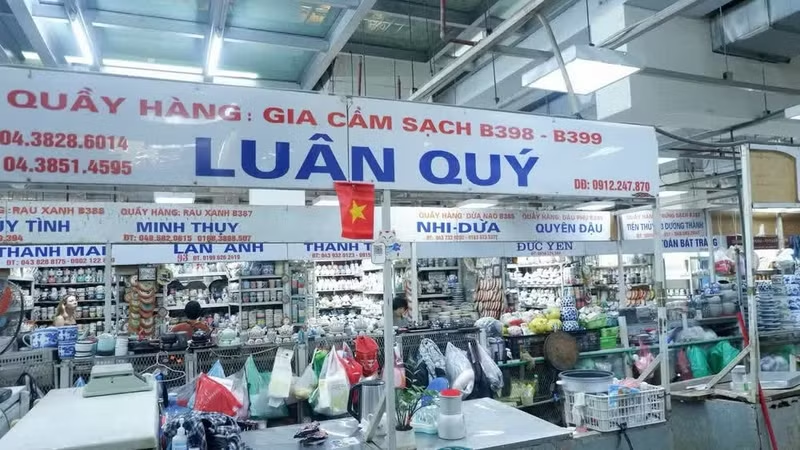
Markets are not only places for buying and selling but also spaces for community life closely connected to daily routines. The calls of vendors in the early morning, street hawkers, and conversations beside market stalls have long contributed to the distinctive market culture of urban Ha Noi.
Across Ha Noi, many long-established traditional markets such as Dong Xuan Market, Hang Da Market, and Hom–Duc Vien Market serve not only as commercial centres but also as places that preserve the urban memories. Despite numerous historical changes, these markets continue to connect communities and reflect the lifestyles of the capital’s residents.
Markets taking on a new appearance
Amid the country’s strong transformation, markets, as important commercial hubs, inevitably need to evolve to remain relevant and keep pace with consumer trends and preferences, thereby contributing to the development of a modern and civilised society.
Under Plan No. 117/KH-UBND on market development and management in Ha Noi for the 2026–2030 period, several markets, including Hang Da Market, Hom–Duc Vien Market, and Dong Xuan Market, have been planned. Following being planned, these markets are managed under stricter regulations by market management boards. Trading activities are organised in a more scientific and systematic manner, with clearly designated areas and stalls offering products that have been inspected, certified, and meet food safety standards.
Change is inevitable and always accompanied by challenges that every market must face. This requires timely support and guidance from the state and local authorities, including recognising the role of communications in enhancing the image of markets, supporting digital transformation for traders, and developing policies to preserve cultural identity.
Despite many difficulties and challenges, the transformation of these markets has generally been positive. They are becoming more orderly, modern, and vibrant while still retaining their unique traditional character. Many markets in Ha Noi have undergone an impressive and determined process of renewal.
Nguyen Thanh Hue, a 64-year-old trader at Hang Da Market, shared her experiences of selling traditional products and her hopes for the future of planned markets.
“Although I am getting older, I am still trying to learn not only about modern payment methods and product promotion but also about communicating and interacting with foreign tourists. I hope to receive more support in digital transformation so that I can continue to cooperate and develop my business in the planned market,” said Hue.
As regular shoppers at Hom–Duc Vien Market, Nguyen Thi To Uyen (aged 20) and Hoang Thi Thuy (aged 45) expressed their satisfaction with shopping in the planned markets.
“The market is still busy in the mornings because that has always been its characteristic feature, but the spacious and brighter environment of the new market makes shopping much more pleasant,” Thuy said.
Markets — Living cultural heritage with a promising future
In recent years, supermarkets, convenience stores and e-commerce platforms have expanded rapidly. However, shopping and trading at traditional markets continue to hold special significance, unique characteristics, and cultural value. Buyers and sellers can communicate directly, while the lively atmosphere of trading remains closely connected to the long-standing habits of Ha Noi residents.
Discussing market culture, Assoc Prof, Dr Pham Ngoc Trung, Senior Lecturer and former Head of the Faculty of Culture and Development under the Academy of Journalism and Communication, emphasised the spiritual and cultural element is formed thanks to the important role played by the lifestyle and interaction of people as well as the unique atmosphere.
“Markets are places of cultural exchange and vivid expressions of spiritual and cultural life, especially during Tet. Markets held before Tet are particularly busy, and some even create an early festive atmosphere,” Assoc Prof, Dr Pham Ngoc Trung explained.
Market spaces may change over time, from management methods and business practices to the appearance of each stall. However, the true essence of a market does not lie in new walls or roofs. It lies in the people who remain connected to these places day after day; in the conversations beside the stalls, in the familiar relationships between buyers and sellers, and in the customs and routines that have been nurtured over generations.
Amid the continuous development of the modern urban areas, markets are gradually adapting to meet new demands. And perhaps it is through these changes, their familiar values are being preserved in new ways, ensuring that whenever people enter a market, they can still feel a part of Ha Noi’s memory and everyday rhythm of life.