The IIP rose 7% year-on-year, marking a positive rebound after a period of pressure from global market fluctuations. However, achieving long term sustainable growth will require the sector to address challenges in productivity, technology, infrastructure and supply chain connectivity.
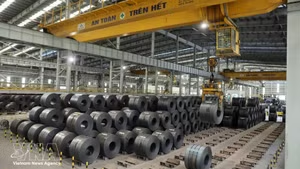
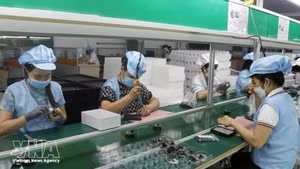
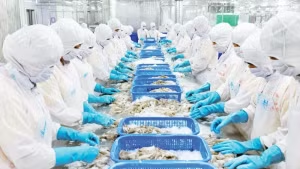
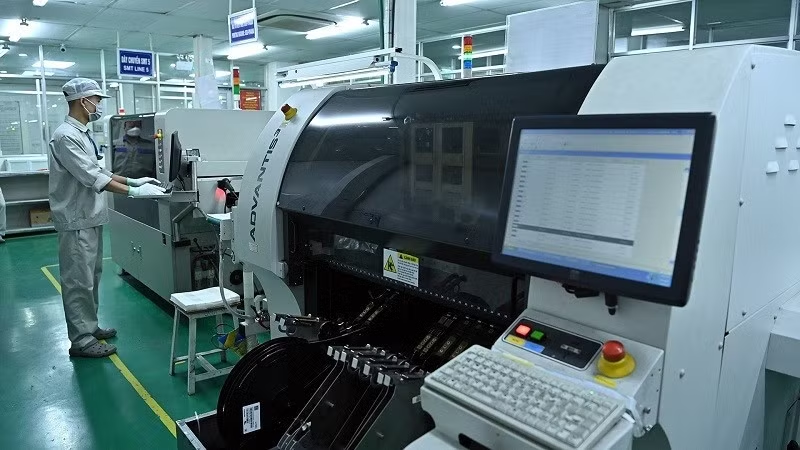
Growth has been driven mainly by processing and manufacturing industries, including electronics, textiles, mechanical equipment and food processing. Enterprises have enhanced market forecasting, integrated technology into supply chain management and optimised production. Yet growth based largely on scaling up output is reaching its limit. Higher labour productivity and greater technological content remain decisive to long term competitiveness.
High production costs are among the biggest barriers. Incomplete logistics infrastructure pushes up transport expenses, resulting in higher product prices compared with provinces with specialised industrial zones. Meanwhile, the limited availability of clean industrial land hampers expansion and technological upgrading.
Human resources shortages also persist in electronics, precision engineering and automation. The city is advised to work with vocational colleges and technical universities on demand driven training to narrow the gap between education and the labour market.
Digital transformation is another major requirement. While large firms are adopting automation and data driven management, many small and medium sized enterprises struggle with the cost and skills needed for digital tools. Targeted support is needed to help them access technology platforms, management software and AI based forecasting solutions.
A 7% growth rate is commendable, but breakthroughs will depend on improved productivity, stronger technological investment, upgraded industrial infrastructure and a renewed competitive position in global supply chains.