Regional identity showcased on every route
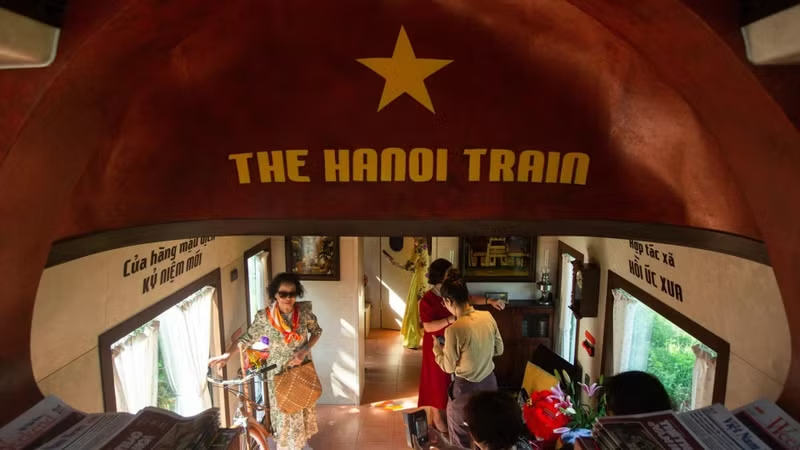
On a weekend morning, the ‘Ha Noi 5 Cua O’ (Ha Noi’s Five Gates) train departed from Ha Noi Station to the rhythm of traditional ‘xam’ melodies echoing through the community carriage. Through the window, the bustle of the Old Quarter faded as the centuries‑old Long Bien Bridge came into view.
Unlike conventional trains, passengers journey from the capital to Bac Ninh immersed in a cultural space of ‘xam’ songs, stories of old Ha Noi and attentive service. In less than a year since its launch, the ‘Ha Noi’s Five Gates’ train has welcomed around 70,000 visitors.
The route from Ha Noi Station to Tu Son in Bac Ninh province offers easy access to Den Do and the Kinh Bac cultural area. Families often choose the service to strengthen bonds and provide children with an educational experience, while international visitors see it as a gateway to Ha Noi’s urban culture and Bac Ninh’s renowned Quan Ho singing tradition.
What unites these heritage trains is the organisers’ commitment to placing culture at the heart of the journey. Behind them lies the railway sector’s determination to innovate amid growing competition from other modes of transport.
Meanwhile, the ‘Hoa Phuong Do’ (Red Flamboyant) train on the Ha Noi–Hai Phong line impresses with its modern, elegant design. Its 20 new carriages, painted in bold green, white and red, include VIP compartments styled in Indochine fashion, blending East Asian aesthetics with contemporary flair.
Passengers savour regional drinks and cuisine while watching the Red River Delta countryside roll past, before arriving in the vibrant coastal city of Hai Phong.
The ‘Central Heritage Connection’ train linking Hue and Da Nang runs along the Hai Van Pass, with Lang Co Bay on one side and mountains on the other. Many passengers are deeply moved by what is considered one of Viet Nam’s most scenic coastal railway stretches.
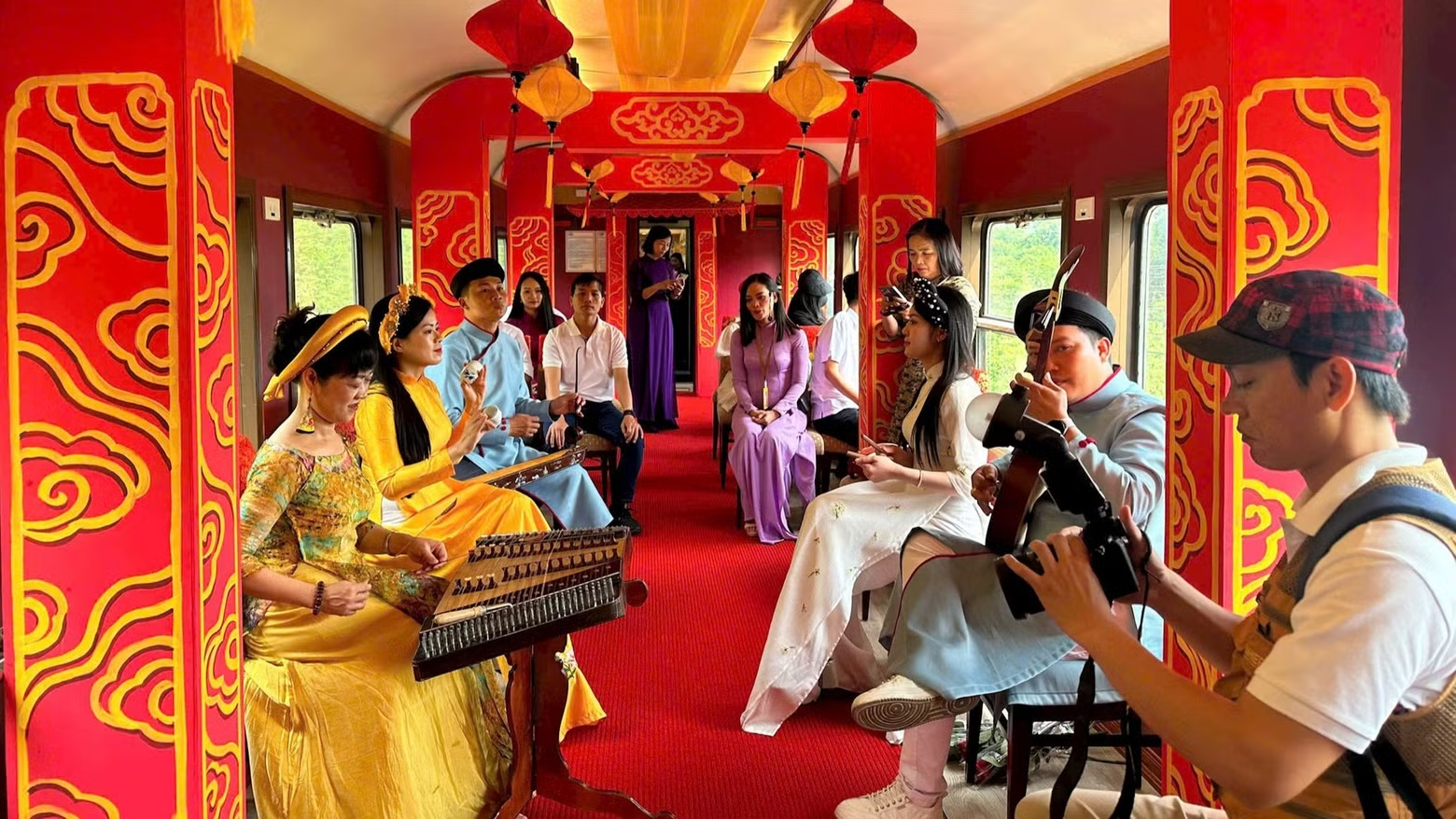
A highlight of the service is its community carriage, where artists from Hue and Da Nang perform folk songs, Hue court music and the evocative melodies of the central region. Local dishes prepared on board by artisans tell the culinary story of the landscapes passed along the way.
The Ha Noi–Lao Cai train service to Sa Pa is distinguished by its long‑haul comfort. Tourist sleeper carriages such as Chapa Express, Sapaly Express, Victoria Express and Livitrans are styled after the Northwest highlands, with wooden cabins, soft berths and warm interiors.
For many international travellers, boarding at night in Ha Noi, rocking to the rhythm of the rails and waking at dawn in the mist of Lao Cai Station has become an unforgettable memory of their Sa Pa explorations.
What unites these heritage trains is the organisers’ commitment to placing culture at the heart of the journey. Behind them lies the railway sector’s determination to innovate amid growing competition from other modes of transport.
Building distinctive heritage train experiences
Viet Nam enjoys many advantages for developing rail tourism. Its routes are scenically rich and culturally layered, such as the central coastal line via Hai Van Pass–Lang Co, the Ha Noi–Lao Cai route through the midlands and Northwest highlands, and the Ha Noi–Hai Phong line linking the Red River Delta with the coast.
Beyond the scenery, rail’s strength lies in sustainable connectivity. Train travel allows passengers to feel the rhythm of each region, observing changes in nature, villages and urban life along the way.

Phung Quang Thang, an expert in green tourism, believes the rise of heritage trains reflects global trends, as travellers increasingly favour immersive, eco‑friendly journeys with cultural depth rather than simply fast transit. With systematic investment, this model could become a hallmark of Viet Nam’s tourism future.
Rail tourism in Viet Nam still has ample room to grow in professionalism and distinctiveness. Specialists suggest developing complementary products such as photo books, magazines, postcards, poetry and prose collections, or route‑specific souvenirs — enriching travellers’ emotional connection to their journeys.
Another promising avenue is linking artists with rail experiences. In recent trips organised by the railway sector, writers, poets, musicians and photographers have drawn creative inspiration. Numerous works of literature, music, visual art and photography have been produced on board and shared interactively with passengers.
Most importantly, people remain the foundation of sustainable rail tourism. Behind emotionally rich journeys are the dedication of drivers, service staff, engineers and technicians who ensure every system runs smoothly.
Trains should embody Viet Nam as a nation renewing and integrating while preserving its cultural essence, thereby promoting the country’s image — its culture and people — more widely on the world tourism map.
Hoang Gia Khanh, General Director of Viet Nam Railways Cooperation
According to Hoang Gia Khanh, General Director of Viet Nam Railways Cooperation, in an era where global tourism is shifting towards experience and identity, what makes a journey memorable is its ability to touch emotion and cultural depth.
He noted that while travellers may pass through countries with modern airports and luxury hotels, what endures are authentic experiences. This is rail tourism’s opportunity.
Developing heritage trains is a way to narrate the homeland’s story and culture in the modern language of experience. Trains should embody Viet Nam as a nation renewing and integrating while preserving its cultural essence, thereby promoting the country’s image — its culture and people — more widely on the world tourism map.

![[Video] Viet Nam among Top three Asian destinations for return visitors](https://en-cdn.nhandan.vn/images/nyM650OGFWrOVWc-xajqN-rTZ68Rlmc1fiGJOhBRYHErj-E25MBpvJqrpphXazfrpe9t-fYCGuQU4CN0yXo3Rg/du-lich-vietnam.jpg.avif)