Construction underway across line
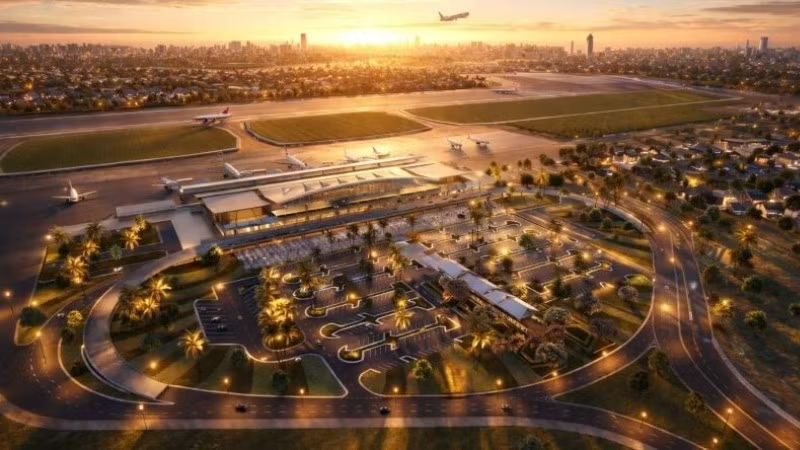
Construction of the Phu Quoc LRT began in December 2025. It is the first light rail line in Viet Nam to be funded by a private enterprise. The project is nearly 18km long and comprises six stations, directly connecting Phu Quoc International Airport with the APEC Conference and Exhibition Centre and Sun Group’s entertainment and leisure ecosystem in the south of the island. Once operational, the line will not only serve APEC delegates but also cut travel time for residents and tourists heading to southern Phu Quoc to around 20 minutes, helping to ease traffic pressure while expanding green transport options on the island.
The rail track system is expected to begin installation at the end of August, with the project aiming to be completed on schedule for APEC 2027.

“We expect the LRT line to leave an impression on international visitors not only through its speed and technology, but also through the Vietnamese spirit infused into every architectural space. Together with the key projects being developed for APEC, the project will help raise Phu Quoc’s profile and bring the image of a modern Viet Nam, rich in cultural identity, closer to the world,” a Sun Group representative shared.
The first phase of the Phu Quoc LRT, invested in by Sun Group under a build-operate-transfer (BOT) model, has a total investment of nearly 9 trillion VND and is scheduled for completion in the second quarter of 2027. The project is expected to become a new landmark for Phu Quoc, with architecture as its distinctive feature.
When APEC 2027 takes place, Phu Quoc is expected to welcome thousands of delegates, heads of state, business leaders, and international tourists. From Phu Quoc International Airport, the LRT line will connect them with the APEC Conference Centre and resorts in the south of the island, becoming one of the first journeys international visitors experience upon arriving on the island.
And it will be more than a journey from the airport to the conference venue. From the very first stops, passengers will be able to experience a multifaceted Viet Nam: rustic yet refined, tranquil yet full of vitality. Each station therefore resembles an architectural “calling card”, introducing the beauty of the country, its people, and its regional identities to the world.
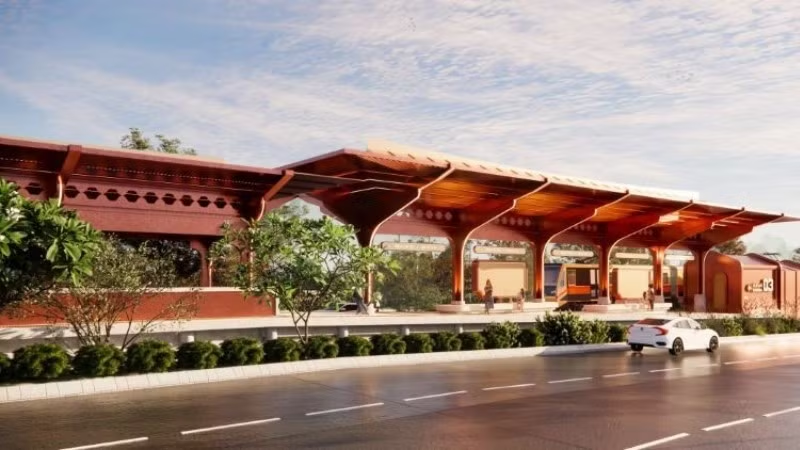
Hue Station bears the imprint of the former imperial capital, with deep red tones and architecture inspired by the royal court. “A railway line can shorten geographical distances. But if it is created with a strong sense of identity, it can also bring cultures closer together. We hope the stations of the Phu Quoc LRT will become the first points of contact through which international visitors can experience the beauty of Vietnamese culture,” a representative of the design firm emphasised.
One journey, six emotional landscapes
Along the Phu Quoc LRT line, the six stations have been conceived as six cultural snapshots, taking passengers from the north-western mountains through Ha Noi’s Old Quarter, the former imperial capital of Hue and the Central Highlands, before arriving in vibrant Saigon and finally reaching the blue hues of the pearl island. In around 20 minutes, a “journey through Viet Nam” gradually unfolds through architecture, materials, colours, and landscapes.
The journey begins at the Northwest Station, where the beauty of the mountainous region is evoked through natural beige-yellow stone surfaces, ceramic panels arranged in an intentionally spontaneous pattern, and motifs subtly inspired by the earthen-walled houses of highland communities. Interspersed among these rustic tones are pink trumpet trees and white bauhinia and lagerstroemia, bringing the spirit of the mountains and forests into the station space.
Leaving the mountains behind, the train takes passengers into elegant and contemplative Ha Noi. Floor paving evokes the pavements of the Ha Noi Old Quarter, while the roof structures recall the city’s urban architecture, complemented by copper-gold tones suggestive of the passage of time. Without attempting to reproduce the original setting, Ha Noi Station still evokes a familiar sense of the capital with its thousand-year-old heritage.
If Ha Noi Station captures the city’s contemplative rhythm, Hue Station seems to slow the journey down another beat. The deep red of the ancient citadel blends with contemporary geometric forms, retelling the beauty of the imperial court through a new design language. Beneath frangipani and flamboyant trees and layered roof forms evoking the former imperial capital, an old, gentle, understated Hue comes into view.
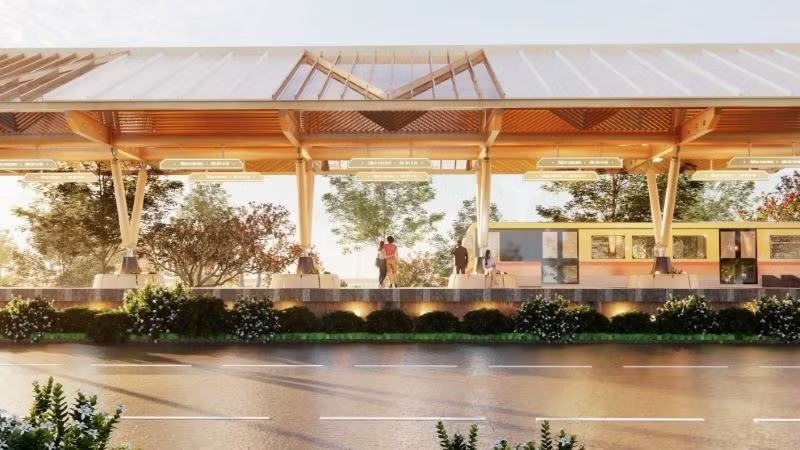
From central Viet Nam, the train moves into the Central Highlands Station, where inspiration from communal longhouses, vast forests, gong culture, and cascading waterfalls is transformed into architectural forms. Stone tones, natural wood grain and large canopies of greenery fill the space, evoking the powerful and free-spirited vitality of the basalt highlands.
At Saigon Station, the atmosphere shifts to a youthful and open rhythm. Curved vaulted rooflines evoke the Central Post Office in Ho Chi Minh City, combined with a modern architectural language to create a stop embodying the generous and dynamic spirit of the southern metropolis.
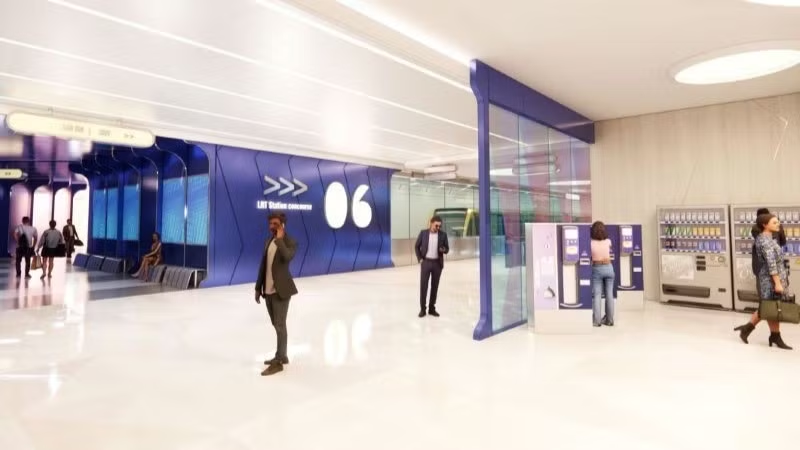
The journey concludes at the Pearl Island Station, an underground station directly connected to the APEC Conference Centre. At ground level, the story of the carp transforming into a dragon conveys aspirations for progress and upward achievement. Down underground, passengers enter a space inspired by Phu Quoc’s traditional fish sauce-making craft: the white of sea salt, the silvery shimmer of schools of fish, and layers of shifting light interweave throughout the space. Modern yet deeply rooted in local identity, the station serves as a greeting from the pearl island to visitors from around the world.
“Far from being merely places for passengers to board and alight, each station on the Phu Quoc LRT has been designed by Sun Group as a destination in its own right, carrying a distinct story of the culture and architecture of Viet Nam’s northern, central, and southern regions,” the project’s chief architect said.
![[Video] Viet Nam among Top three Asian destinations for return visitors](https://en-cdn.nhandan.vn/images/nyM650OGFWrOVWc-xajqN-rTZ68Rlmc1fiGJOhBRYHErj-E25MBpvJqrpphXazfrpe9t-fYCGuQU4CN0yXo3Rg/du-lich-vietnam.jpg.avif)


![[In Pictures] Nui Chua Rock Park: A million-year-old outdoor museum of landforms on the Khanh Hoa coast](https://en-cdn.nhandan.vn/images/nyM650OGFWrOVWc-xajqNz57td8idIAL_VG9puyG2UZEKOnmq1DVlT1--ZclbO3z2WBaWZhbt6O3e8kjPZqJMWkfEz7RO9qhcwg8o8LQFK8/ndo-br-cao-nguyen-da-moi.jpg.avif)