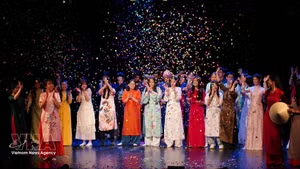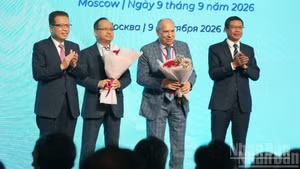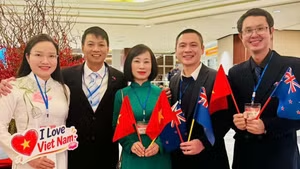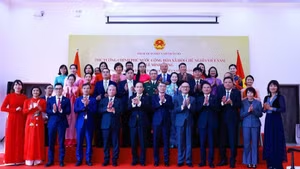
A rendezvous with the homeland – A rendezvous among overseas Vietnamese
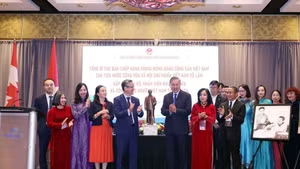
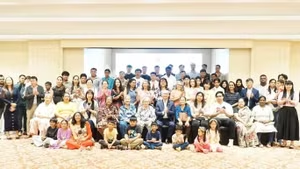
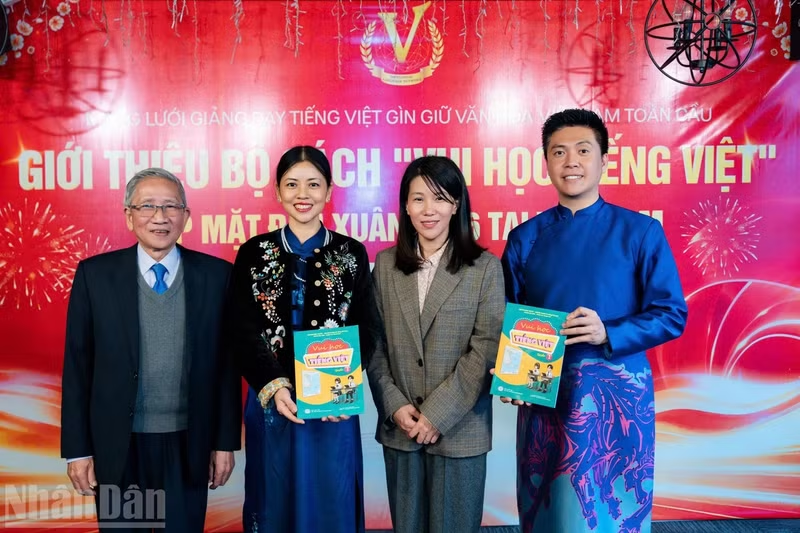
Coming from Malaysia, Nguyen Thi Lien, a Vietnamese language ambassador and Deputy Secretary-General of the Global Network for Vietnamese Language Teaching and Vietnamese Culture, was among 100 outstanding overseas Vietnamese invited to return to Viet Nam to join activities under Homeland Spring 2026, organised by the State Committee for Overseas Vietnamese under the Ministry of Foreign Affairs.
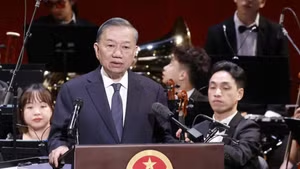
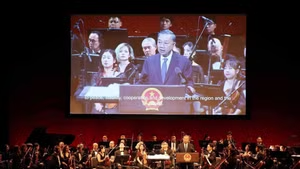
For Nguyen Thi Lien, returning to Viet Nam to take part in Xuan Que Huong 2026 is an honour and a source of pride, as the programme takes place amid nationwide celebrations of the successful 14th National Party Congress, marking the opening of a new development phase, with a more proactive and confident posture and a stronger national aspiration to rise.
According to Nguyen Thi Lien, this year’s Homeland Spring is the longest-running programme in recent years. It also connects with Ninh Binh Province for the first time following the completion of administrative consolidation, enabling overseas Vietnamese to visit and engage, while creating opportunities for Ninh Binh to showcase its development potential, strengths and distinctive cultural values to the world through the overseas Vietnamese community.
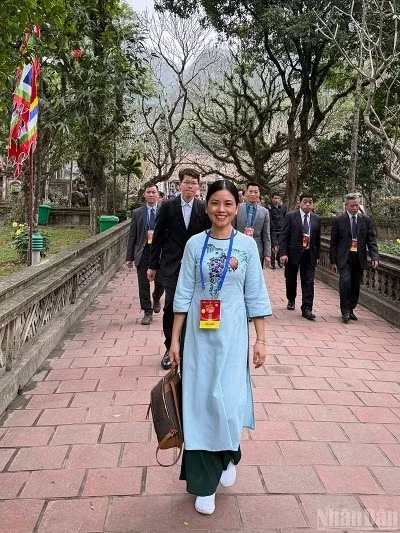
“Homeland Spring is a rendezvous for overseas Vietnamese with the homeland, and also a rendezvous for overseas Vietnamese with one another. Through the programme, we can connect, share and learn from each other, enriching our lived experience and community work, and linking Vietnamese people across the world to strengthen unity and development,” Lien shared.
Emphasising the role and contributions of overseas Vietnamese, Lien said that after more than 20 years implementing Politburo Resolution No. 36-NQ/TW (2004) on overseas Vietnamese affairs, the country has strengthened the great national unity bloc and harnessed the combined strength of overseas Vietnamese communities in support of the homeland.
She added that Politburo Resolution No. 57-NQ/TW is expected to tap the resources of more than 600,000 overseas Vietnamese intellectuals and experts to “leapfrog” and drive robust national development in the new era. This, she said, shows that the Party and State have placed particular emphasis on promoting the role and potential of Vietnamese people living abroad.
Sharing about the Vietnamese community in Malaysia, she said that over the past 10 years the community has developed rapidly. With guidance and support from the Embassy of Viet Nam in Malaysia, associations that once emerged spontaneously and were concentrated mainly in Kuala Lumpur, have expanded significantly in both quality and reach across Malaysia.
Ready to contribute to a prosperous, sustainable Viet Nam
For Dr. Nguyen Hong Son, President of the Federation of Vietnamese Associations in Japan, returning to the homeland for the first time to attend Homeland Spring 2026 is a great honour. For him, it is not only recognition of an individual, but also appreciation for the overseas Vietnamese community — those who live, study and work far from the homeland yet have never been separated from their roots in spirit, affection and responsibility. In particular, the attention shown by the Party, the State and relevant agencies left a deep impression on him, serving as clear evidence that Vietnamese people, wherever they are, remain an inseparable part of the Vietnamese national community.
“Joining the delegation of outstanding overseas Vietnamese for Homeland Spring for the first time, I felt something very special — moved, proud, and a sense of sacredness, as if returning to the nation’s embrace after a long journey abroad. In the warm spring atmosphere, amid the colours of spring and the springtime warmth in people’s hearts, I felt more deeply than ever the two simple yet enduring words “Que huong” (Homeland) — familiar, heartfelt and profound,” Son shared.
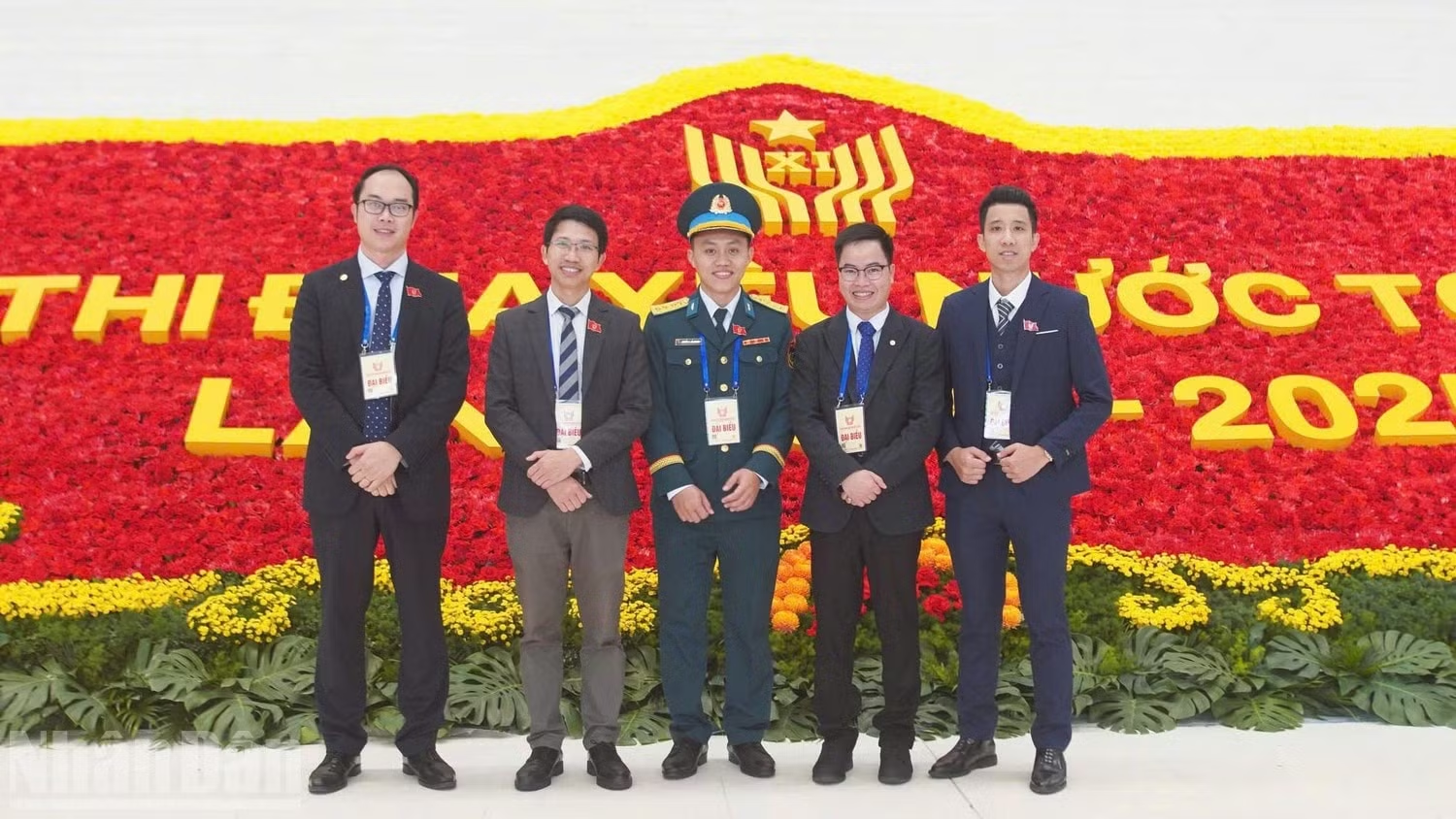
On this return to Viet Nam, Son said he clearly felt confidence, momentum and a development aspiration spreading across society. Viet Nam today is entering a new stage of development, with a more stable economic foundation, deeper international integration, and an increasingly elevated international standing. Recent achievements in the economy, science and technology, innovation, diplomacy and human resources development, he said, indicate that the country is moving in the right direction with steadiness and confidence.
He said Viet Nam is undergoing a strong transformation and national fortunes are on the rise, with sufficient resources, readiness and resolve to seize the moment. Viet Nam today, he noted, is in a very different position than before with a growing pool of intellectuals, a dynamic younger generation, a stronger business community, and an overseas Vietnamese community that is increasingly connected to and proactively oriented towards the homeland. These are critical foundations not only for fast development, but also for sustainable development.
As President of the Federation of Vietnamese Associations in Japan, Son said the Vietnamese community in Japan holds a particularly important role in this new development stage. Japan is among the world’s leading countries in science and technology, manufacturing, semiconductors, automation and modern production management. It is also home to a large community of Vietnamese intellectuals, engineers, researchers and entrepreneurs working directly in Japan’s leading corporations, research institutes and technology firms.
Therefore, he said, the greatest advantage of the Vietnamese community in Japan lies not only in expertise and practical experience, but also in a deep understanding and ability to bridge the industrial cultures of Viet Nam and Japan.
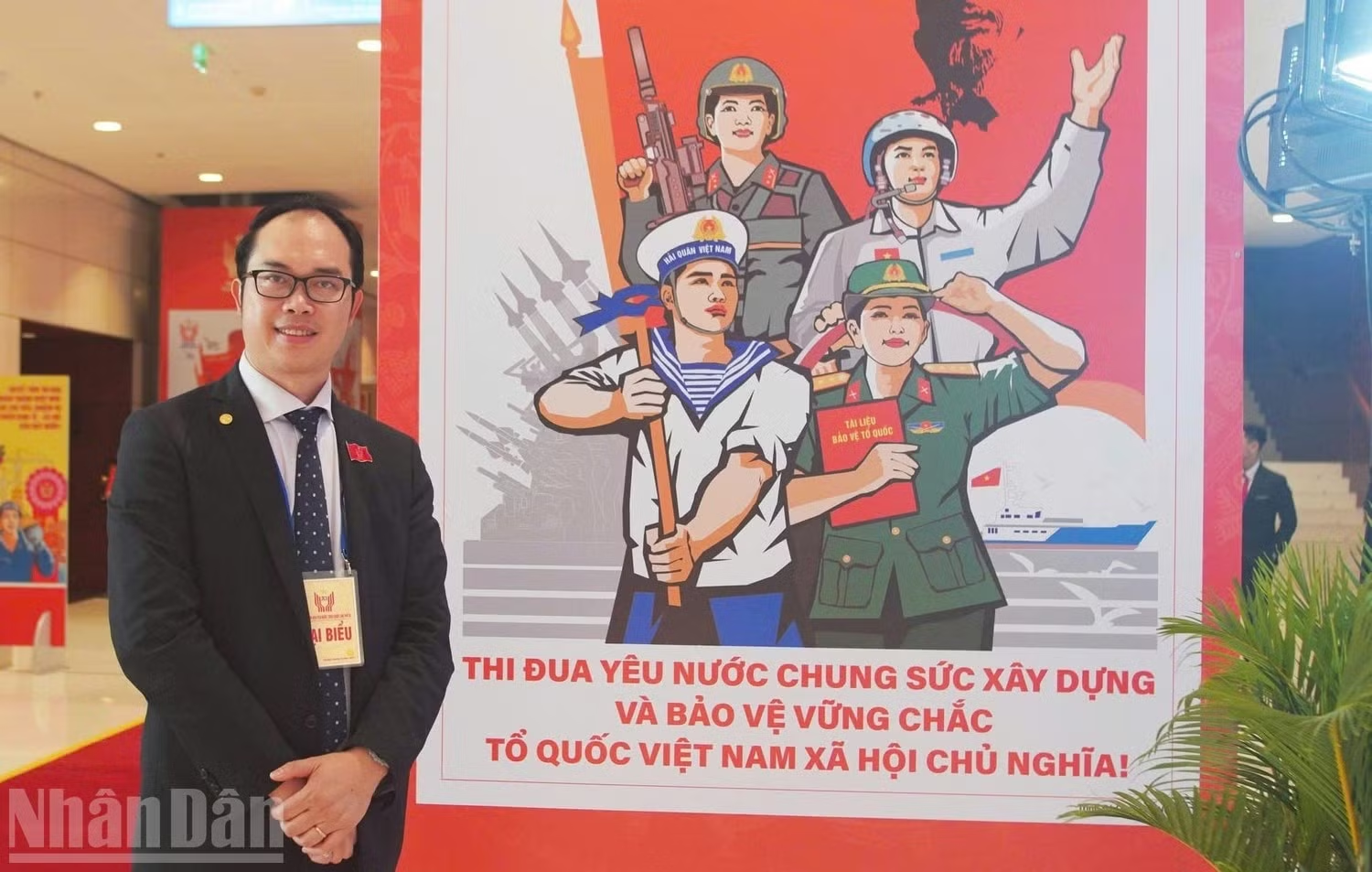
“We understand Japan’s exacting demands on quality, technical standards, labour discipline and continuous-improvement thinking. At the same time, we understand Viet Nam’s realities, needs and development conditions. This two-way understanding enables the Vietnamese community in Japan to become an effective bridge in transferring technology from Japan back to Viet Nam,” Son emphasised.
For him, returning to attend Homeland Spring this time is not only symbolic, but also an important spiritual milestone reminding him more clearly of the responsibility of an overseas Vietnamese intellectual in the new period.
He affirmed that the Vietnamese community in Japan is always proud to be Vietnamese, and is always ready to accompany, contribute and dedicate efforts to the homeland’s prosperous and sustainable development. He expressed confidence that with national unity at home and abroad, and with increasingly close links among the State, businesses and the overseas Vietnamese community, Viet Nam will continue to rise strongly, asserting its position in the region and the world in the new era of opportunity.
A spiritual rendezvous linking millions of overseas Vietnamese with the motherland
As an overseas Vietnamese who has lived and worked for many years in the Republic of Korea, Dr. Tran Hai Linh—Member of the Central Committee of the Viet Nam Fatherland Front, President of the Viet Nam–Korea Business and Investment Association (VKBIA), and Founding President of the Viet Nam–Korea Experts and Intellectuals Association (VKEIA)—said he was honoured and fortunate to be able to return repeatedly to participate in Homeland Spring as a delegate.
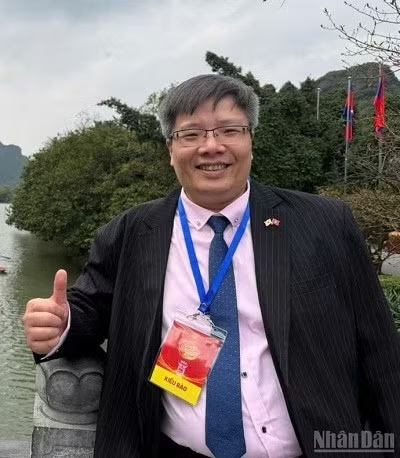
He said each time he returns for Homeland Spring, his feelings remain as vivid as the first time — moved, proud and reflective. But for him, Homeland Spring 2026 carries a particularly special meaning because it is not only a spring of reunion, but also a spring of confidence and expectation, as the country has just entered a new stage of development following the successful 14th National Party Congress.
“For overseas Vietnamese, Tet is always the most sacred moment of the year. Wherever we are, every Vietnamese person carries a ‘spring of the homeland’ in their heart — family, childhood memories, customs and traditions, and our national roots. Homeland Spring therefore is not merely an annual cultural and external-affairs event; it has become a spiritual rendezvous connecting the hearts of millions of overseas Vietnamese with the motherland,” Linh shared.
What he values most about Homeland Spring, he said, is the sincerity, warmth and openness shown by the Party, the State and people at home towards overseas Vietnamese. Over the years, the programme has continued to innovate in content and format, but its core spirit remains unchanged: cherishing overseas Vietnamese as an inseparable part of the Vietnamese national community. Meetings with Party and State leaders; greetings and attentive listening; and traditional rituals imbued with national identity — all have helped overseas Vietnamese feel deeply that no matter how far they travel, the homeland’s arms remain open.
For Linh, Homeland Spring is also a special space for overseas Vietnamese to connect with one another. Delegates can meet familiar faces from many countries and fields. Each person brings a different story and journey, yet shares a common aspiration to contribute to the country. Those encounters, he said, have generated initiatives for cooperation, connectivity projects, and enduring relationships that transcend geographic distance and differences in living environments.
He said Homeland Spring 2026 is even more meaningful as it takes place soon after the successful 14th National Party Congress. Following the congress and returning for this year’s programme, he said he strongly sensed a new momentum, a new vision and a new determination for the country’s next development era.
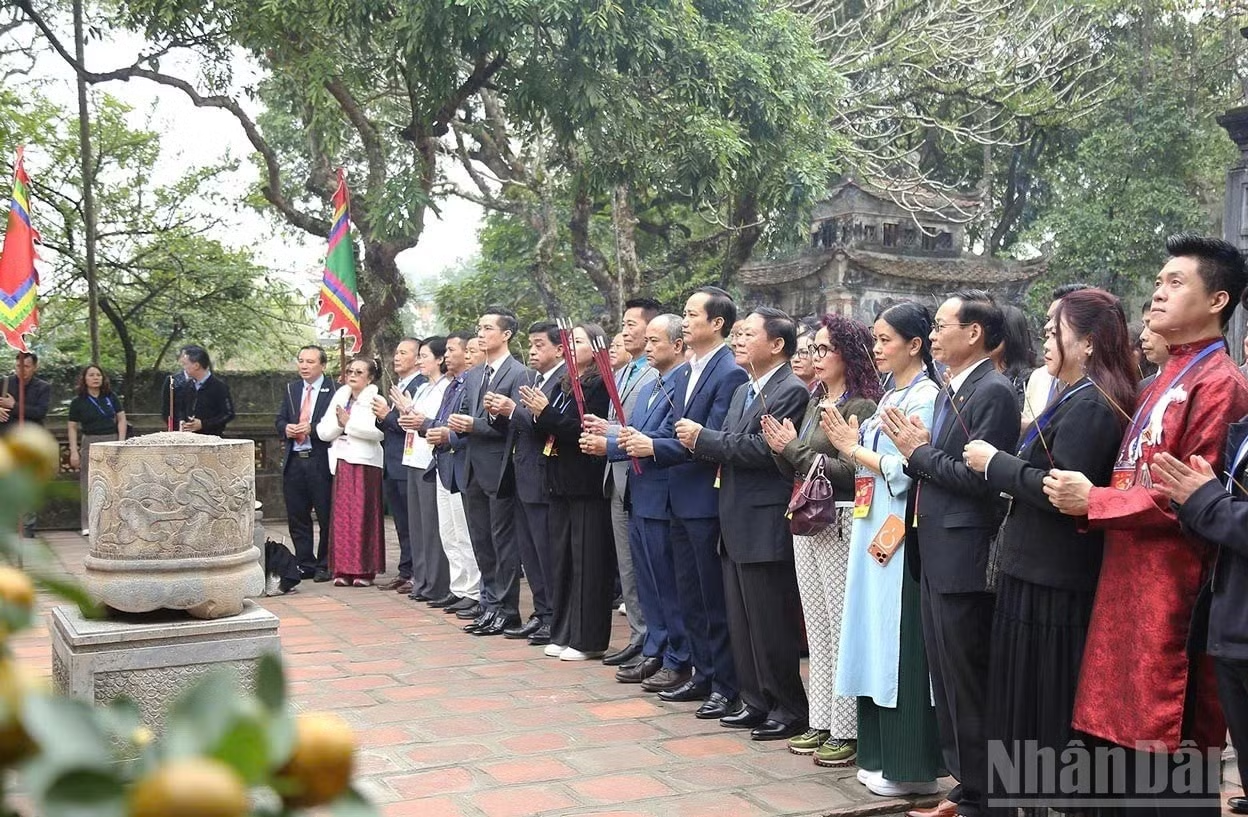
For overseas Vietnamese, he said, this year’s Homeland Spring is not only “returning to remember”, but also “returning to think and act together”. Messages from the 14th National Party Congress and Party and State leaders have reaffirmed more clearly than ever the role of overseas Vietnamese as an important national resource. This is not only moral encouragement, he said, but also opens up concrete expectations for mechanisms and policies enabling overseas Vietnamese to participate more deeply and more substantively in national development.
As someone long engaged in connectivity efforts between Viet Nam and the Republic of Korea and internationally, Linh said trust is the most important foundation. When overseas Vietnamese feel trusted, listened to and accompanied by the homeland, the aspiration to contribute is naturally awakened. Homeland Spring, he said, is where that trust is nurtured quietly, persistently, and deeply.
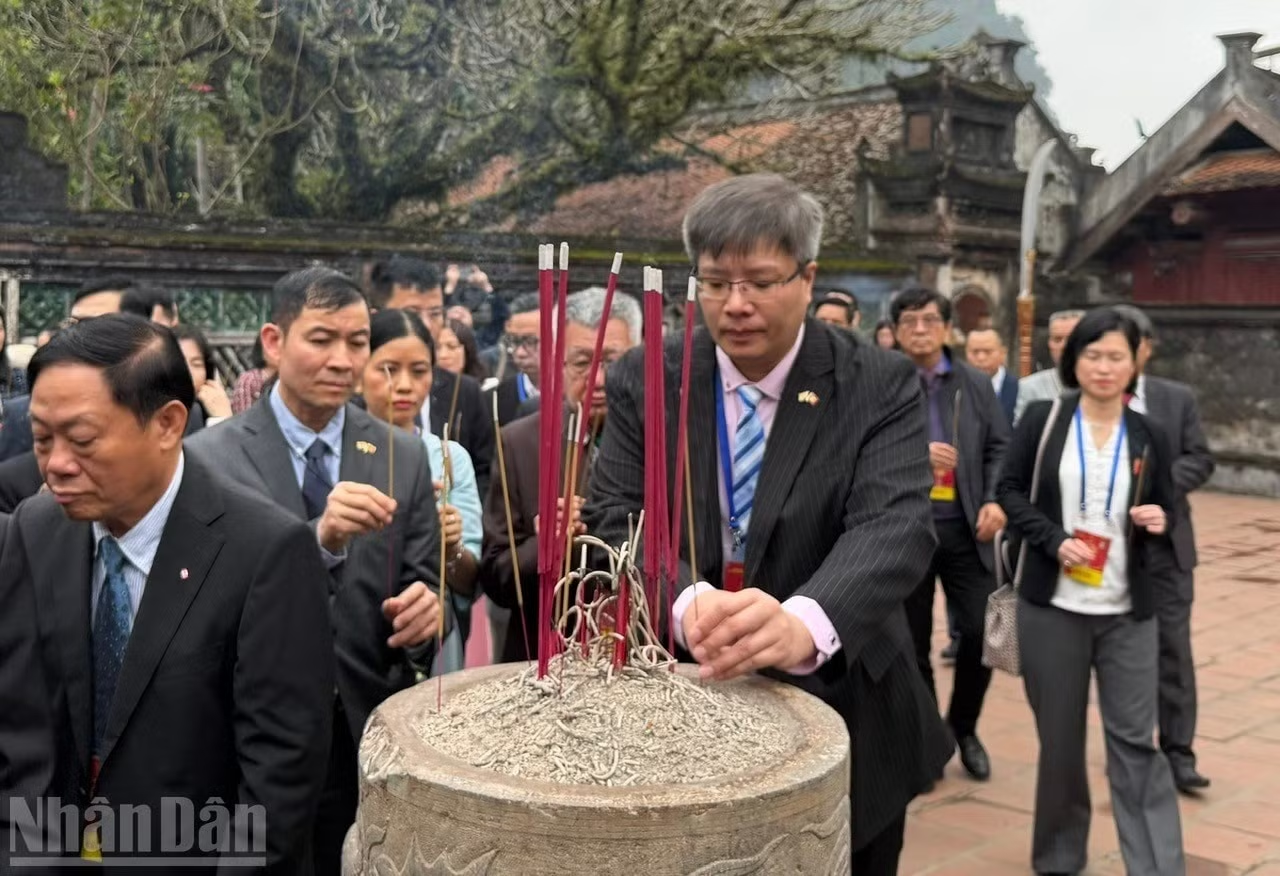
In his view, as the country enters a new development stage after the 14th National Party Congress, that value becomes even more important. “Setting foot on the motherland for Homeland Spring 2026, what stays with me is not only the aftertaste of Tet, but also the responsibility of an overseas Vietnamese child of the nation amid a new opportunity. I believe that with the right strategic orientations from the 14th National Party Congress, and with increasingly close bonds between the homeland and overseas Vietnamese, the aspiration to build a strong and prosperous Viet Nam will gradually become reality. And Homeland Spring will always remain a spiritual anchor —the starting point for those journeys of contribution,” Linh reflected.
It can be said that for overseas Vietnamese, Homeland Spring 2026 not only evokes memories of a reunifying Tet, but also awakens the responsibility of those living far from home amid the nation’s new opportunities. With strategic direction from the 14th National Party Congress and stronger links between the homeland and overseas Vietnamese communities, the aspiration to build a strong and prosperous Viet Nam is becoming a shared confidence and collective action.