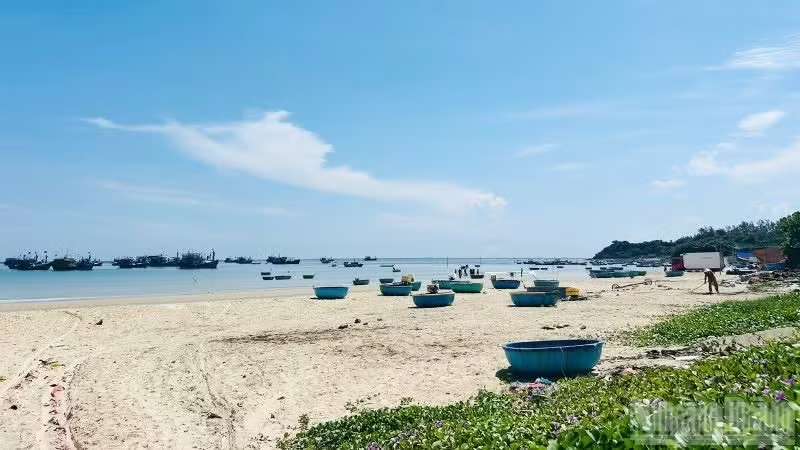
In the past, after every period of rough seas, fragments of ancient timber and pieces of porcelain decorated with ancient motifs would appear along the water’s edge and on the sandy beaches.
What seemed at first to be nothing more than remnants washed ashore by the waves turned out to be evidence that beneath the seabed lay a hidden treasury of ancient artefacts.
In 2012, while fishing offshore, a local fisherman discovered the first porcelain bowls and plates bearing ancient decorative patterns. He believed that many more artefacts remained buried deep beneath the sand.
News of the discovery quickly spread throughout the village, prompting local fishermen to dive offshore in search of artefacts to display in their homes.
At first, people were motivated mainly by curiosity. Later, antique dealers began arriving and offered to buy the artefacts. Only then did the fishermen realise the considerable value of the objects they had recovered.
According to local fishermen, the area contains the remains of three to four ancient ships. Some were presumably sunk by storms, while others were destroyed by fire. When the artefacts were recovered, many wooden fragments and cargo items still bore signs of burning. Most of the vessels are believed to have been carrying ceramic and porcelain goods originating from China.
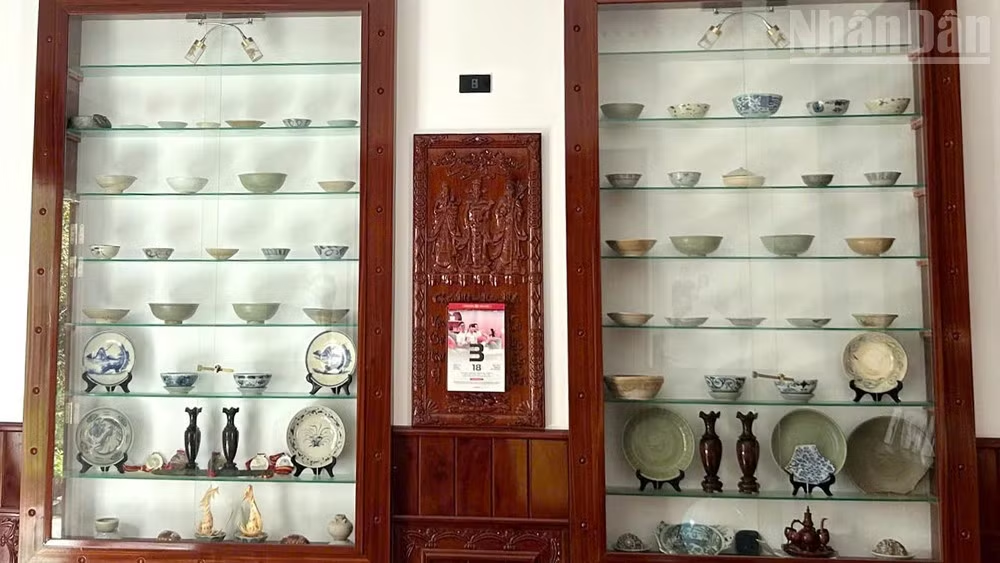
A short distance away, around 300 metres offshore from Chau Tan Beach, fishermen have also identified the site of another wreck that is said to have carried bronze and cast-iron goods. Items such as plates, basins, trays, and springs were recovered, many decorated with exotic and intricate designs.
In addition to porcelain bowls and plates, fishermen have found ceramic bowls and basins, flower vases, teapots, small porcelain jars, and intact jewellery containers, all adorned with striking patterns.
Fishermen have also recovered hundreds of concretions containing antiques and ancient coins. When these concretions were broken open, the number of coins discovered was so great that they were measured by the basket-load. The coins vary in size, shape and decoration.
Some have been retained by local residents as keepsakes and display pieces, while a smaller number have been sold to collectors and antique enthusiasts. Coins bearing inscriptions on both sides are particularly sought after by collectors.
Dang Dao, a local fisherman, has recovered a variety of artefacts over the years. He recalled that, in 2016, while diving for juvenile lobsters during rough weather, he unexpectedly found a fragment of an ancient porcelain plate where strong waves exposed a rocky reef beneath the sand.
Afterwards, Dao and several fellow fishermen equipped themselves with proper diving gear and returned to search the area. They discovered numerous ancient plates and bowls that were larger, thicker, and coated with a glaze unlike that found on previously discovered wrecks.
“We asked antique dealers to assess the artefacts, and everyone was surprised when they concluded that the items dated back to the late Song Dynasty of China,” Dao said.
Viewed from above, Chau Thuan Beach forms a crescent-shaped shoreline enclosing a small bay. For this reason, it once served as a shelter for large merchant vessels and as a stopover for trade and the replenishment of fresh water supplies.
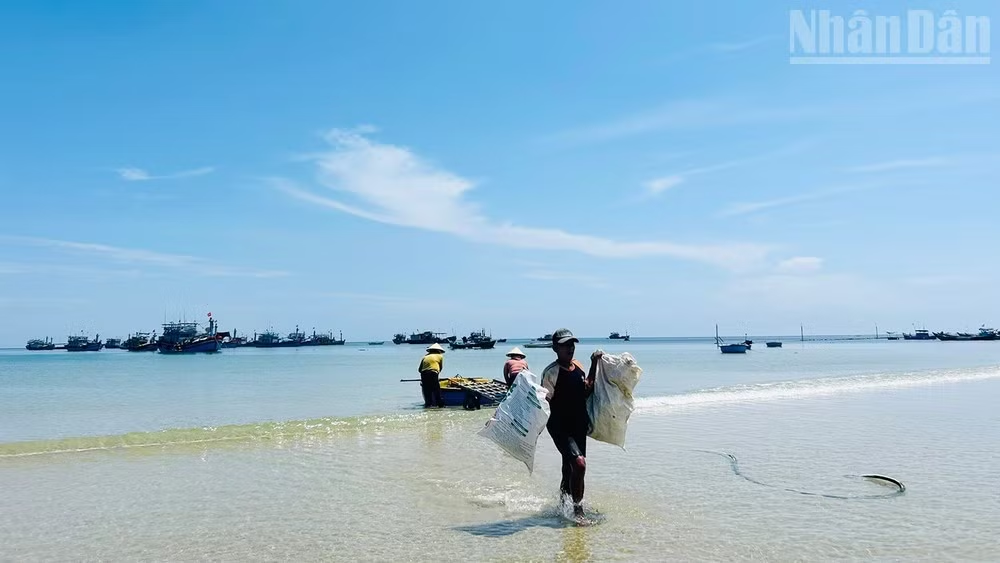
This is also believed to be why so many ships sought refuge there during storms, only to meet disaster and sink. Over time, all that remained were fragments of pottery, porcelain, and other artefacts, which were later discovered by fishermen while earning their living at sea.
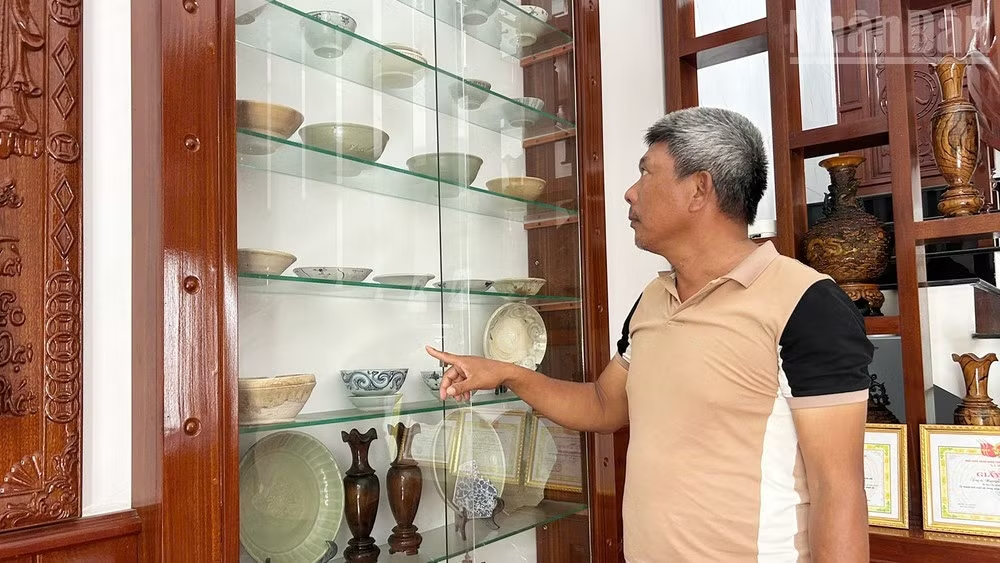
At the home of Nguyen Thuan, Deputy Head of Chau Thuan Bien Village, a small corner of the living room has been devoted to displaying the artefacts he recovered during fishing trips.
According to Thuan, each object found beneath the sea carries not only historical value but also serves as a reminder of a maritime area that was once bustling with passing vessels.
![[Video] Viet Nam among Top three Asian destinations for return visitors](https://en-cdn.nhandan.vn/images/nyM650OGFWrOVWc-xajqN-rTZ68Rlmc1fiGJOhBRYHErj-E25MBpvJqrpphXazfrpe9t-fYCGuQU4CN0yXo3Rg/du-lich-vietnam.jpg.avif)











![[In Pictures] Nui Chua Rock Park: A million-year-old outdoor museum of landforms on the Khanh Hoa coast](https://en-cdn.nhandan.vn/images/nyM650OGFWrOVWc-xajqNz57td8idIAL_VG9puyG2UZEKOnmq1DVlT1--ZclbO3z2WBaWZhbt6O3e8kjPZqJMWkfEz7RO9qhcwg8o8LQFK8/ndo-br-cao-nguyen-da-moi.jpg.avif)