In the pursuit of a smart, sustainable, and environmentally friendly agricultural sector, Vinaseed is not only a leading seed company but also a symbol of scientific innovation combined with modern market thinking. From laboratories to fields, and from domestic markets to the international stage, Vinaseed is steadily asserting its pioneering role within Viet Nam’s and the region’s seed ecosystem.
From a rice variety rooted in the Mekong Delta, Dai Thom 8 — developed by Vinaseed — has expanded far beyond its origins, helping to reshape Viet Nam’s rice industry. For Bach Thi Vung, often described as the “mother” of this variety, it marked the beginning of a long and ambitious journey: bringing Vietnamese green rice to the world.
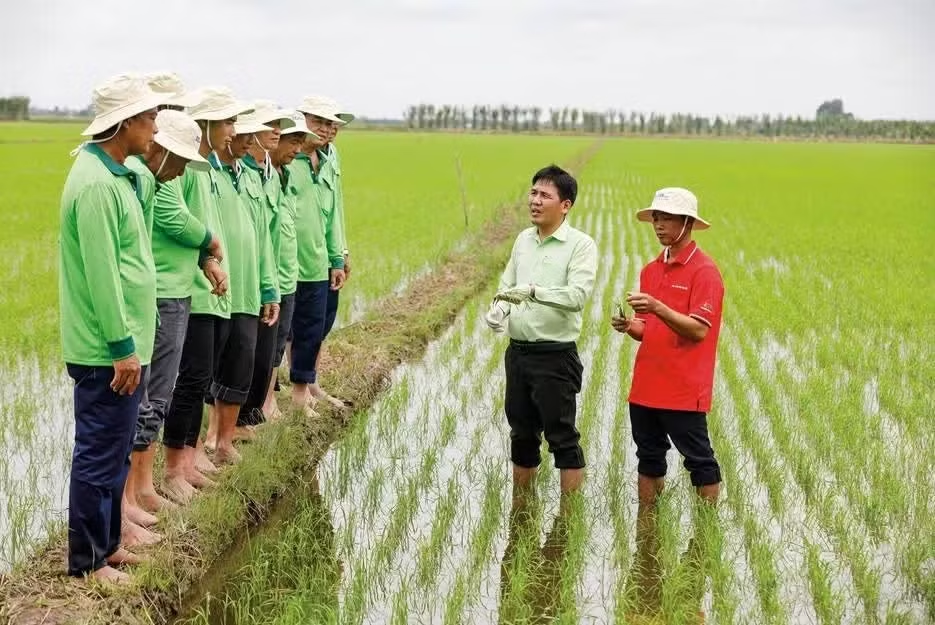
Introduced nearly a decade ago, Dai Thom 8, developed by Bach Thi Vung and her research team at Vinaseed, quickly became a familiar name among millions of farmers in the Mekong Delta. With a cultivated area now reaching 1 million hectares — accounting for nearly 30% of the region’s rice acreage — Dai Thom 8 has become not only a “national rice variety” but also one of Viet Nam’s leading aromatic rice exports, contributing over 1 billion USD to national export turnover.
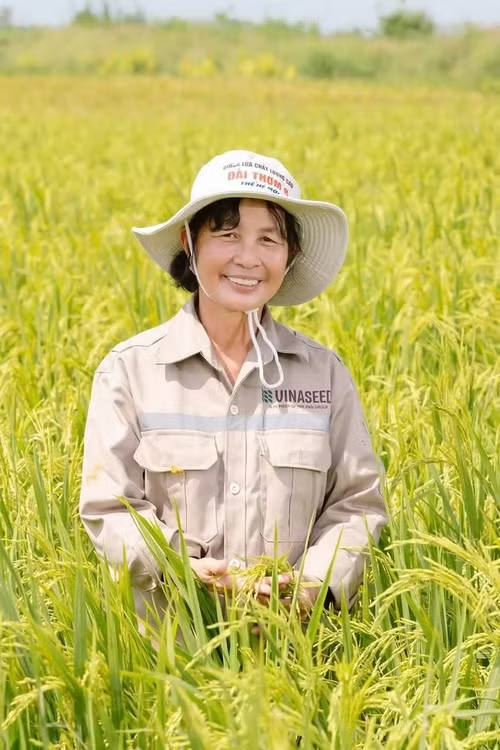
For Vung, the sight of bags of Dai Thom 8 seeds being transported by boat to fields across Can Tho, Kien Giang, and Bac Lieu is a source of immense pride. “I can only describe it in two words: happiness,” she shared, recalling those moments.
Dai Thom 8 is already a success story. But for Bach Thi Vung and Vinaseed, it is not enough. The ambition to bring Vietnamese green rice to the global stage is not merely a corporate aspiration but a responsibility for those engaged in scientific research.
Global mindset, pioneering technology
Taking Vietnamese rice to international markets requires both a global mindset and advanced technological capabilities. According to Vung, agriculture can no longer follow traditional methods in the new era. Vinaseed is strengthening cooperation with international research institutes such as the International Rice Research Institute (IRRI) in the Philippines and Chinese crop research institutes, applying biological markers, genetic analysis, digitalisation, and artificial intelligence (AI) in breeding processes.
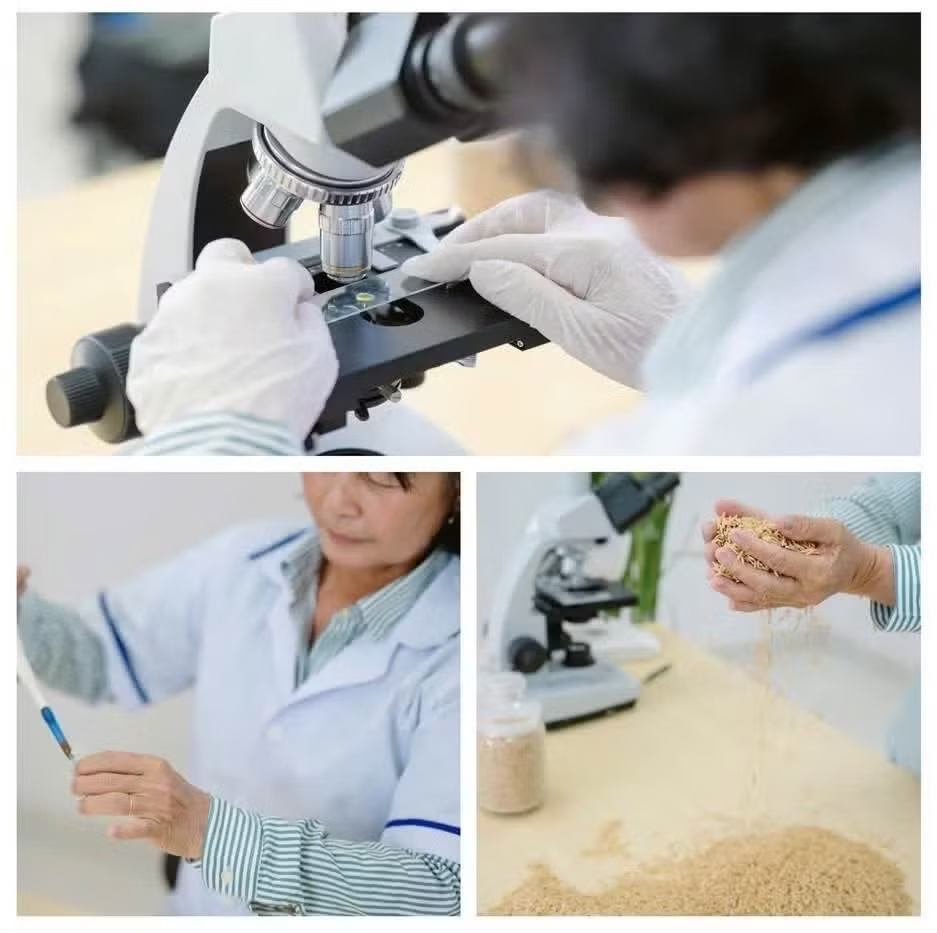
At the AI Research and Development Centre (VRDC) in Can Tho, where Vung is in charge, technology has become a central pillar. “We culture bacteria, identify salt-tolerant genes, and analyse genetic distances to optimise hybrid vigour,” she explained. This represents a shift from the mindset of “traditional farmers” to that of “scientists and next-generation farmers”, as she describes it with a smile.
Following Dai Thom 8, two new varieties — Co Son 99 purple rice, targeting the health-conscious consumer segment, and MN 25-2 glutinous rice, an improved version of the IR4625 variety enhanced with bacterial leaf blight resistance genes — are expected to become new options in the southern glutinous rice market.
The combination of superior varieties, advanced technology, and global strategy is the pathway for Vietnamese rice to move beyond its status as a raw commodity and enter high-end markets with stringent quality standards.
A vision to take Vietnamese agricultural products further
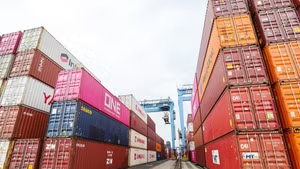
With a vision of expanding Vietnamese agricultural products globally, Vinaseed aims to compete not on quantity but on quality. The company has successfully entered markets such as Japan, the EU, and the US, all of which impose strict requirements on quality, safety, and traceability.
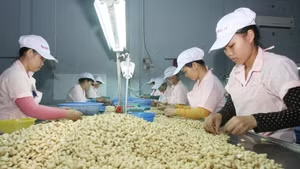
Penetrating the Japanese market — widely regarded as one of the most demanding — marks a significant milestone, demonstrating Vinaseed’s capabilities. It also paves the way for Vietnamese rice, particularly “green pearl” varieties, to reach supermarket shelves in developed countries, meeting standards for cleanliness, safety, and organic production.
Nguyen Thi Tra My, Chairwoman of Vinaseed, stated: “We export not only products, but also the reputation and brand of our nation.” Upon taking over Vinaseed, a company with a long-standing tradition, Tra My and The PAN Group chose not to pursue rapid growth, but instead restructured the company from its foundations — people, systems, and culture — while respecting legacy values and promoting innovation. A strong focus on research and development (R&D) and investment in science and technology has been decisive in reshaping the seed industry and extending its impact across the entire agricultural value chain.
Guided by the “go green” philosophy of sustainable development, Tra My has positioned Vinaseed as a leading force in promoting high-value Vietnamese products in demanding markets such as Japan, the EU, and the US.
A modern mindset combined with respect for tradition has enabled Vinaseed and PAN to generate more than 50% of their revenue from markets with strict requirements on quality and traceability. She emphasised: “Once we conquer Japan, we can export rice to every corner of the world.”
R&D: The backbone of future agriculture

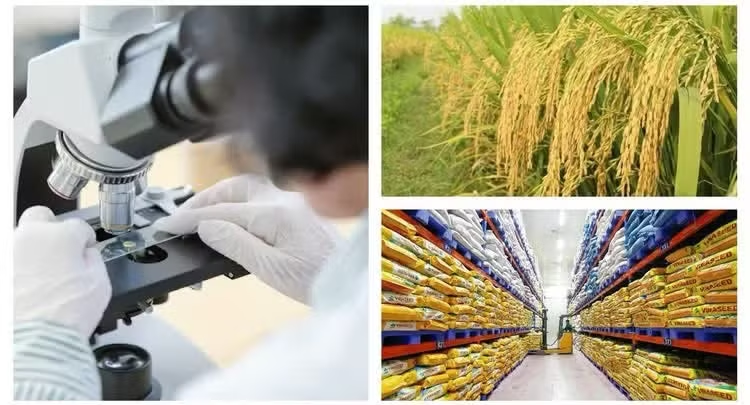
Viewing R&D as the backbone of agricultural development, Vinaseed has evolved into an innovation hub centred on research and development. Its biotechnology laboratories conduct genetic analysis for salt tolerance, identify hybrid advantages, and culture bacteria. A high-level scientific council brings together domestic and international experts to lay the foundation for climate-resilient crop varieties. The company also fosters strong connections between scientists and farmers — from young breeders to “informal scientists” in the fields — ensuring that all contributions are recognised and developed.
In 2025, the company recorded revenue of 2.299 trillion VND and pre-tax profit of 275 billion VND, achieving 83% and 88% of its annual targets, respectively.
For 2026, Vinaseed plans to reach revenue of 2.85 trillion VND and pre-tax profit of 315 billion VND, representing increases of 24% and 14% compared to 2025. The company also intends to pay dividends at a rate of 40%.
In 2026, Vinaseed’s Chairwoman outlined a consistent strategic direction for the entire system: placing customers at the centre and advancing digital transformation to ensure effective and sustainable governance.
Nguyen Thi Tra My has consistently stressed: “We do not compete on quantity, but on quality.” The goal is to bring “Made in Viet Nam” products onto the shelves of high-end international supermarkets through credibility and trust.
“Go Green”: A green mindset for a sustainable future
With more than 30 years of experience in the industry and a background in a European multinational corporation, Tra My has brought modern thinking into Vietnamese agriculture. In her view, agriculture is not merely about manual labour in the fields but a sector that requires high technology, continuous innovation, long-term vision, and a sense of pride.
Today’s Vietnamese farmers are no longer simply dependent on nature; they can be “informal scientists” who directly participate in breeding, documenting crop characteristics, and improving cultivation methods. At Vinaseed, R&D is prioritised alongside strong engagement with domestic and international scientific communities through international conferences and specialised scientific councils.
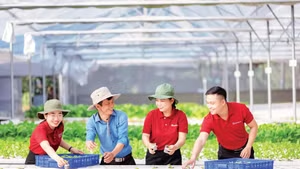
Vinaseed has also developed large-scale production areas standardised according to GlobalGAP standards, closely linking with cooperatives and enterprises to build a comprehensive value chain — from seed development and cultivation to procurement, processing, and export. The company has implemented a “seed segmentation” strategy, placing each rice variety in its appropriate market segment, ensuring complementarity rather than competition, and creating a flexible and sustainable seed ecosystem.