Distinctiveness of traditional crafts
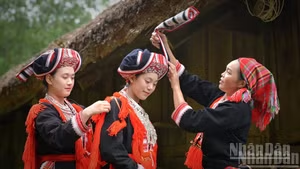
Visitors to Muong Khuong commune are immediately struck by Pa Di traditional costumes, most notably the distinctive upward-curving hat shaped like a house roof, which embodies a deeply humanistic legend about the community’s origins.
Pa Di elders recall that to honour their ancestry and lineage, their people designed the traditional hat inspired by the shape of a house roof.
Craftsman Po Chin Din from Chung Chai B village said that the hat is made from handwoven linen. Multiple layers of beeswax are applied to stiffen the fabric, and the top is folded into a house-roof shape.
“The hat symbolises a family’s prosperity and warmth, which is why it is a cherished gift a mother-in-law gives her daughter-in-law when welcoming a new member into the family,” Din said.
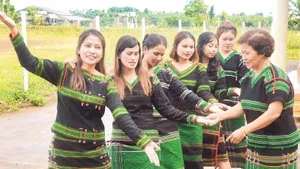
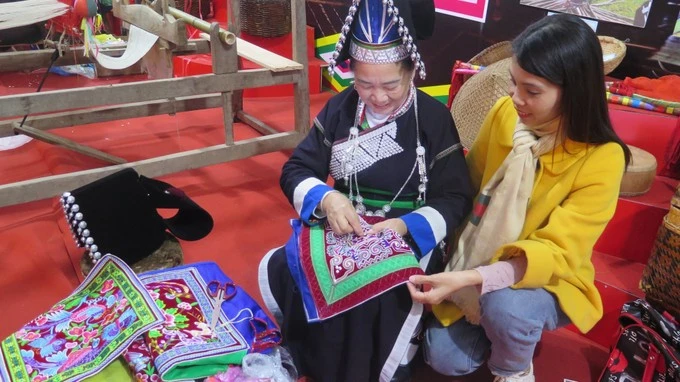
Pa Di women’s attire is made from handwoven natural materials, predominantly indigo with accents of green and black. Silver jewellery shaped like locks, roosters, and fish highlights wealth, prosperity, and harmony with nature, reflecting gratitude for the life it provides. Through simple and heartfelt ideas and skilled craftsmanship, Pa Di women have created a distinctive and humble aesthetic unique to their community.
Craftsman Din noted that a complete Pa Di outfit takes 2-3 months to make, or up to a year if done intermittently, since every step is handcrafted.
Recognising the artistic value of their embroidered clothing, in 2020, the Ministry of Culture, Sports and Tourism officially designated the decorative clothing art of the Pa Di people as a national intangible cultural heritage.
Efforts to revitalise heritage
Preserving traditional clothing is challenging for ethnic minority communities, and it is even more difficult for small groups like the Pa Di.
Po Min Thuy, who was born and raised in Ta Chu Phung village, nestled on a misty mountainside, recalled that Pa Di children wore traditional attire from a young age. However, with the tide of modern life, these garments are gradually disappearing.
Elders here worry that without passing down weaving, dyeing, and sewing skills, both the craft and the unique identity of Pa Di clothing will be lost, Thuy said.
To preserve traditional cultural identity and revitalise heritage, the Muong Khuong authority has recently organised classes on decorative clothing art of the Pa Di people, with artisans and village elders teaching young people how to weave and sew, contributing to safeguarding the cultural heritage.
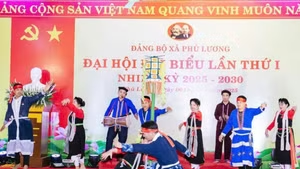
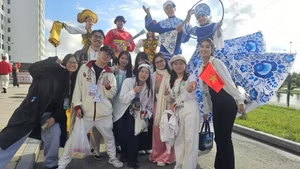
Lao Cai province began a project on preserving traditional costumes of local ethnic groups for tourism development in 2021–2025, collecting and photographing Pa Di clothing, jewellery and patterns for display at the provincial museum. People are encouraged to wear the traditional attire during festivals, conferences, cultural exchange programmes, and sporting events.
Deputy Director of the provincial Department of Culture, Sports and Tourism Duong Tuan Nghia shared that the value and charm of Lao Cai’s traditional cultural heritage are reaching far and wide, inspiring pride and a greater sense of preservation.
With the approach of ‘turning heritage into assets,’ the locality aims to leverage culture as an internal resource for socio-economic development, he added.