The search, recovery, and identification of the remains of fallen soldiers is a task of profound significance for the Party, the State, and society as a whole. It is not only a political responsibility and a reflection of the nation's tradition of gratitude to those who came before, but also the aspiration of millions of families hoping to recover information about relatives who sacrificed their lives for the independence and freedom of the Fatherland.
Decades after the end of the war, hundreds of thousands of fallen soldiers remain unidentified, posing major challenges for DNA analysis.
In that effort, science and technology are playing an increasingly important role. In particular, the emergence of next-generation gene sequencing technologies has provided breakthrough approaches, significantly improving the ability to identify the remains of fallen soldiers in cases where DNA samples have severely degraded.
Speaking at the seminar “Searching for, Recovering, and Identifying the Remains of Fallen Soldiers – A Call from the Heart”, organised by Nhan Dan Newspaper, Associate Professor Dr Phi Quyet Tien, Head of the Institute of Biology under the Viet Nam Academy of Science and Technology, stressed that recent advances in gene sequencing not only carry scientific significance but also create opportunities to fulfil the wishes of many families of fallen soldiers after years of waiting.
Breakthrough from NGS-SNP next-generation gene sequencing technology
For many years, mitochondrial DNA analysis has been the principal method used in the identification of fallen soldiers’ remains in Viet Nam. The technology is particularly suitable for remains that have been buried for long periods because mitochondrial DNA is usually present in greater quantities than nuclear DNA and can be preserved more effectively under harsh environmental conditions.
By mastering this technology, Vietnamese scientists have developed a range of testing procedures and transferred them to units within the national DNA analysis system. Mitochondrial DNA technology has made an important contribution to identifying many fallen soldiers, particularly in areas where the number of graves is not excessively large and where relatives can be identified for comparison.
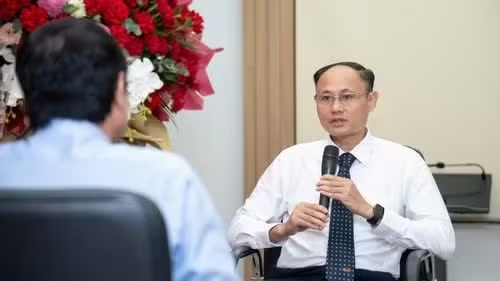
Associate Professor Dr Phi Quyet Tien, Head of the Institute of Biotechnology under the Viet Nam Academy of Science and Technology, said that practical implementation has also revealed several limitations in mitochondrial DNA technology.
By its nature, the method only traces biological relationships through the maternal line. This means that the identification process depends heavily on finding living relatives who share the same maternal lineage as the fallen soldier, such as siblings, maternal uncles and aunts, or related generations on the mother's side of the family. However, after several decades, many direct relatives have passed away or are no longer able to participate in DNA testing.
An even greater challenge lies in the quality of DNA extracted from remains. Viet Nam's hot and humid tropical climate causes bones and DNA to deteriorate rapidly over time. In addition, the recovery and preservation of remains in different localities have taken place under varying historical circumstances, resulting in significant differences in sample quality.
“Practical results show that the rate of DNA extraction meeting the standards required for analysis using traditional technology is only around 22%. This means that most samples do not yield sufficient DNA for testing.
These limitations highlight the urgent need to research new technological solutions capable of handling degraded DNA samples more effectively while expanding the scope for determining biological relationships,” Associate Professor Dr Phi Quyet Tien said.
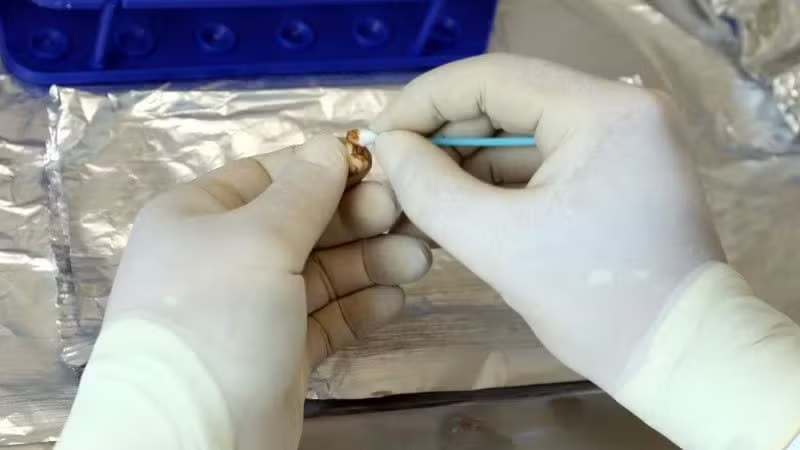
Faced with these challenges, scientists at the Viet Nam Academy of Science and Technology have focused on researching and adopting the world's most advanced achievements in gene sequencing. The most notable outcome has been the successful development of NGS-SNP technology based on the Next-Generation Sequencing (NGS) platform.
Whereas DNA testing previously relied mainly on analysing specific DNA segments, the new technology focuses on analysing single-nucleotide polymorphisms, or SNPs. These are very small variations within the genome that contain highly valuable genetic identification information.
The outstanding advantage of NGS-SNP technology lies in its ability to read and analyse thousands of genetic variation points simultaneously. Even when DNA has been severely fragmented due to time or environmental conditions, SNP markers can still be detected and used to determine biological relationships. This is particularly suitable for samples of fallen soldiers’ remains in Viet Nam, where DNA is often much more degraded than under conditions found in temperate countries.
“Test results at Tra Linh Martyrs’ Cemetery in Cao Bang Province showed that the rate of obtaining DNA suitable for analysis using NGS-SNP technology reached 86.7%, around four times higher than with the previous technology. This represents a breakthrough because it significantly expands the number of remains that can potentially be analysed,” Associate Professor Dr Phi Quyet Tien said.
The outstanding advantage of NGS-SNP technology lies in its ability to read and analyse thousands of genetic variation points simultaneously. Even when DNA has been severely fragmented due to time or environmental conditions, SNP markers can still be detected and used to determine biological relationships. This is particularly suitable for samples of fallen soldiers’ remains in Viet Nam, where DNA is often much more degraded than under conditions found in temperate countries.
Associate Professor Dr Phi Quyet Tien, Head of the Institute of Biology under the Viet Nam Academy of Science and Technology
In addition to increasing the success rate of DNA recovery, NGS-SNP technology fundamentally changes the way biological relationships are identified. While mitochondrial DNA can only trace maternal lineage, the new technology makes it possible to extend identification across multiple generations. Through modern genetic analysis algorithms, DNA comparisons can be conducted with distant relatives, even up to three or four generations removed.
This is particularly significant in the current context, as many families no longer have direct relatives available for comparison. Cases that were previously almost impossible to identify now have new opportunities thanks to this technology.
Another notable feature of NGS-SNP is its ability to support the development of a large-scale DNA database. Under current international standards, DNA data from relatives and DNA data from remains can be integrated into a unified system. Once the database becomes sufficiently large, every newly added DNA sample can automatically be compared against all existing records, significantly enhancing the chances of identification and matching.
According to Associate Professor Dr Phi Quyet Tien, this is the long-term direction that Viet Nam is pursuing to establish a nationwide DNA data platform to identify fallen soldiers.
Enhancing ability to master and develop solutions suited to domestic conditions
The success of NGS-SNP technology is not the result of just a few years of research, but the culmination of extensive preparation by Vietnamese scientists. Since around 2010, domestic researchers have continuously studied various DNA analysis technologies while successfully carrying out projects on ancient DNA using bone samples dating from 2,000 to 6,000 years ago.
It was these ancient DNA studies that enabled scientists to accumulate valuable experience in handling severely degraded DNA samples, laying an important foundation for the subsequent development of technologies used to identify the remains of fallen soldiers.
Alongside domestic research efforts, Vietnamese scientists have engaged in extensive international cooperation. They have accessed and tested a range of advanced technologies from Europe, the Republic of Korea, and international organisations specialising in the identification of missing persons. However, Viet Nam’s distinctive tropical climate means that many technologies that have proved successful overseas have not achieved the desired effectiveness when applied in practice in the country.
Therefore, the greatest achievement of Vietnamese scientists lies not only in acquiring international technologies but also in mastering, refining, and tailoring solutions to domestic conditions. This is clear evidence of the research and innovation capabilities of Vietnamese scientists in the field of modern biotechnology.
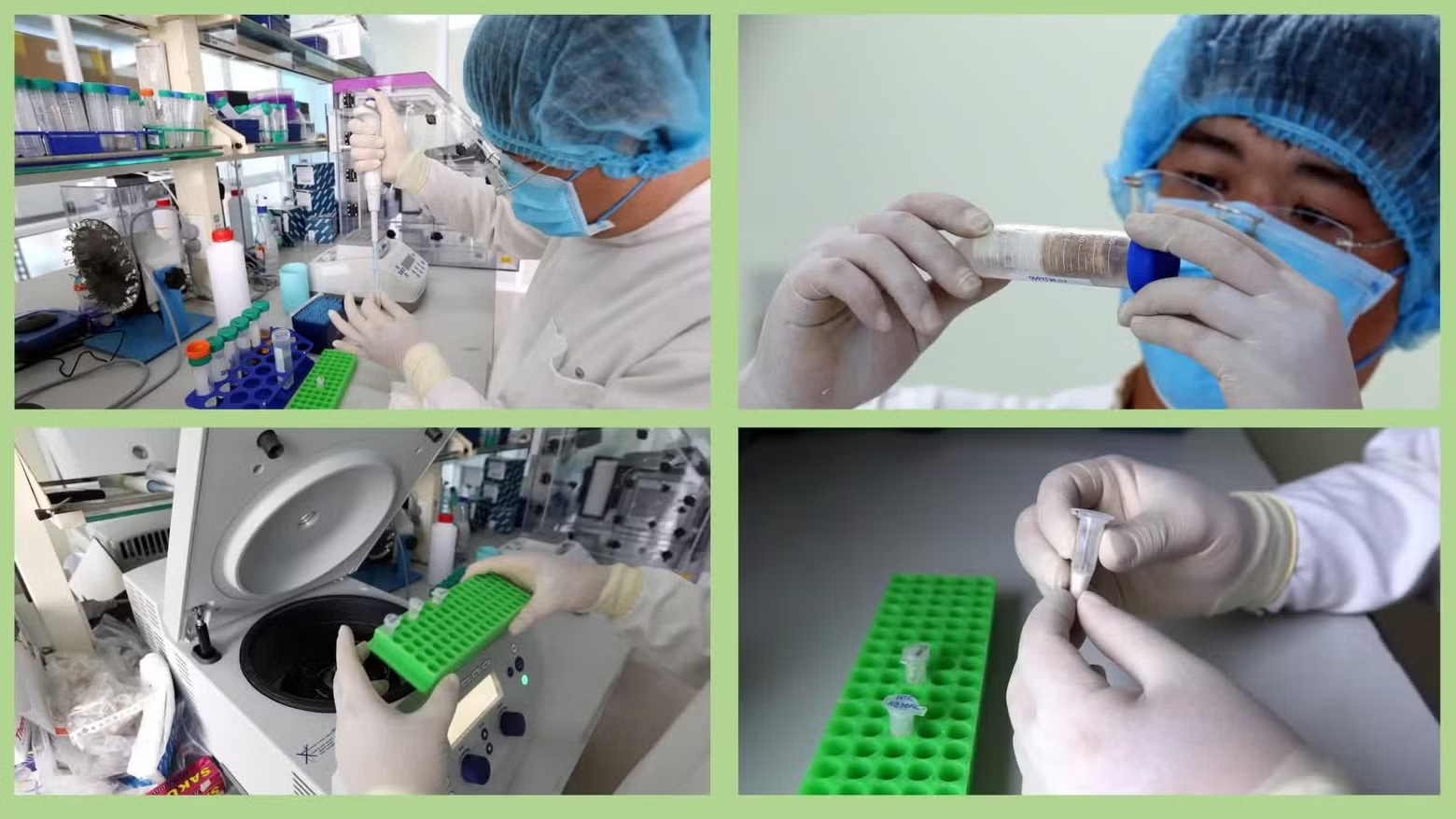
In the 500-day campaign to accelerate the search, recovery, and identification of fallen soldiers’ remains, the new technology is expected to bring about significant progress. Nearly 1,000 samples of fallen soldiers’ remains at Rong Rieng Martyrs’ Cemetery in An Giang Province were collected for the large-scale pilot application of NGS-SNP technology on May 21, 2026.
“We hope to have initial results to report on the occasion of War Invalids and Martyrs Day on July 27, 2026, while aiming to complete and announce the full results by July 27, 2027, marking the 80th anniversary of Viet Nam’s War Invalids and Martyrs Day.”
“If this technology continues to be validated and proves effective, we see it as a technology for Viet Nam, serving Vietnamese people, and one that will be transferred to domestic DNA analysis units,” Dr Tien said.
The Viet Nam Academy of Science and Technology will work directly with local Steering Committees for search, collection and identification of fallen soldiers’ remains to develop and implement the entire process, from sample collection, transportation, and analysis to the return of results.
We regard these as two parallel tasks: carrying out DNA analysis in accordance with assigned plans while continuing to improve and develop the new technology. Both tasks have been clearly assigned and specifically defined for implementation during the 500-day campaign and throughout the period to 2030.
Associate Professor Dr Phi Quyet Tien, Head of the Institute of Biology under the Viet Nam Academy of Science and Technology
With that spirit, the Institute is working closely with relevant agencies, including the C06 Department under the Ministry of Public Security, to develop a coordinated plan for collecting and managing DNA data from relatives. The objective is to establish a comprehensive data system capable of large-scale connectivity and comparison, thereby improving the effectiveness of identifying fallen soldiers.
“We hope that the 500-Day Campaign will not only produce tangible results in the immediate future but also help fundamentally address long-standing challenges in the DNA analysis of fallen soldiers in the years ahead,” Dr Tien said.
Under the assigned responsibilities, Dr Tien’s institute will directly participate in DNA analysis work in eight of the 26 localities involved in the campaign. The adoption of Resolution 26, together with a comprehensive framework of mechanisms and policies, has provided additional momentum for the institute to accelerate progress and strive to fulfil its tasks during the 500-day campaign.
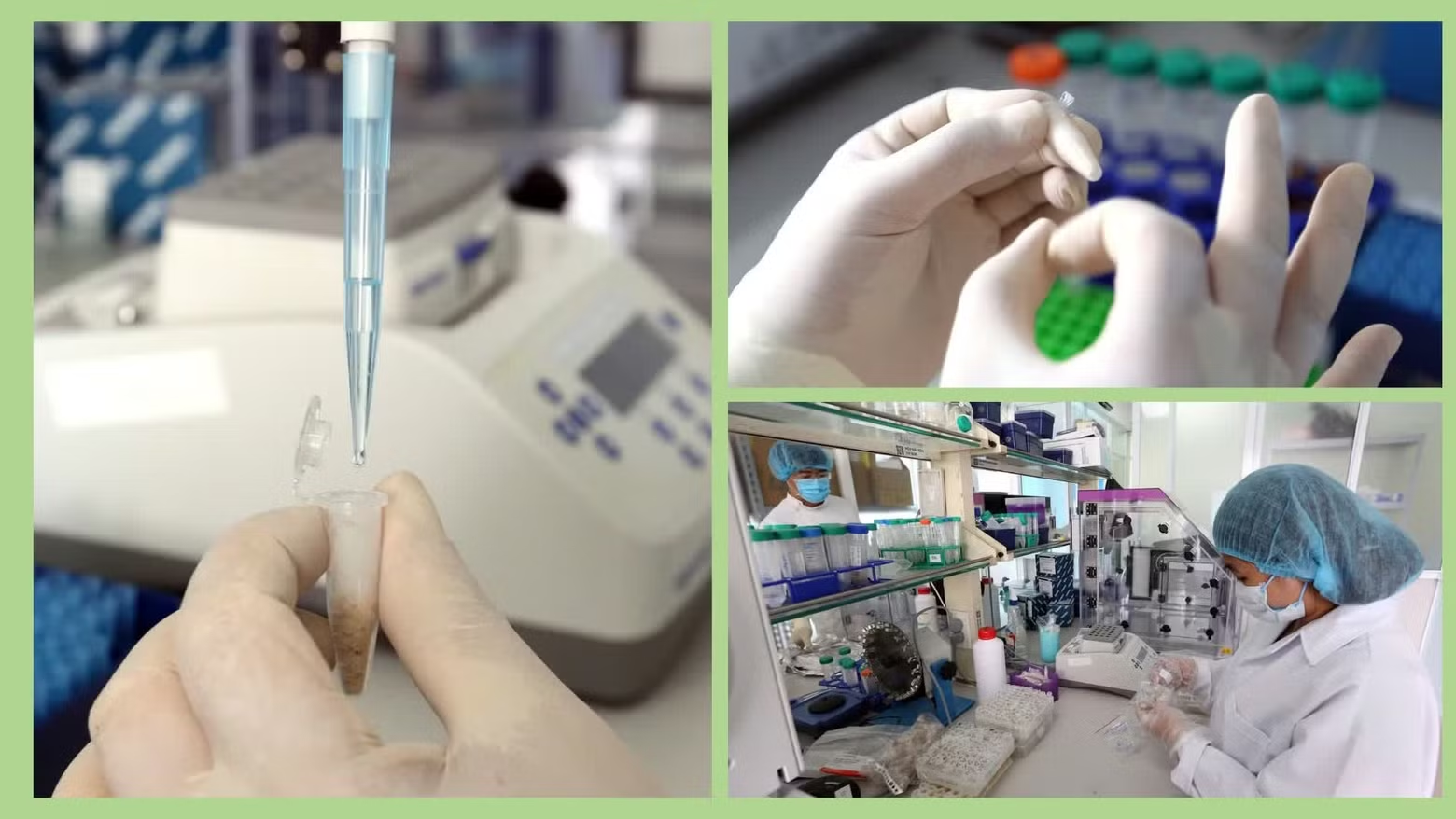
Associate Professor Dr Phi Quyet Tien said that the Institute of Biotechnology will work directly with local Steering Committee for search, collection and identification of fallen soldiers’ remains to build and implement the entire process, from sample collection and transportation to analysis and the return of results.
“We regard these as two parallel tasks: carrying out DNA analysis in accordance with assigned plans while continuing to improve and develop the new technology. Both tasks have been clearly assigned and specifically defined for implementation during the 500-day campaign and throughout the period to 2030,” he said.
Dr Tien shared that, for scientists, this is not simply a research mission. Every successful identification means that a family gains another opportunity for a spiritual reunion with a loved one who made the ultimate sacrifice, that a fallen soldier has his or her name restored after years of anonymity, and that a part of the nation’s historical memory is completed through reliable scientific evidence.
“The successful development of a technology suited to Viet Nam’s practical conditions is the result of tremendous effort and determination across the entire political system, together with the support of many ministries, sectors, and relevant agencies. I do not regard this as our achievement alone.
Without the cooperation of the Policy Department under the Ministry of Home Affairs, the Ministry of Public Security, the Ministry of Foreign Affairs, and many other agencies, we could not have accomplished this task. During the 500-day campaign, our goal is to continue testing to confirm the feasibility of deploying the technology on a large scale,” Associate Professor Dr Phi Quyet Tien said.
Decades after the war, the journey to restore the identities of fallen heroes continues through the latest achievements of science and technology. From DNA samples that have been severely degraded over time, next-generation gene sequencing technologies are creating the possibility of decoding information once thought to have been lost forever.
Behind the figures, algorithms, and modern analytical processes lies a shared aspiration of society: to give families a greater chance of finding their loved ones and to help fallen soldiers return to their rightful identities. This is also a clear demonstration of the humanitarian value of science, where technological advances not only serve development but also help heal the remaining gaps in the nation’s historical memory.