Amid the surge of Artificial Intelligence, the semiconductor industry — the foundation of all modern technological systems — is entering an unprecedented phase of growth. According to McKinsey & Company, the global semiconductor market could reach a value of 1 trillion USD by 2030.
However, this rapid expansion also brings a major challenge: the world could face a shortage of up to one million semiconductor engineers by the end of this decade. In this context, Viet Nam is emerging as a new hub for training high-quality semiconductor talent.
Viet Nam seizes opportunities in global semiconductor supply chain
Semiconductors are becoming a strategic sector, underpinning most critical technologies such as Artificial Intelligence, electric vehicles, and data centres. Amid the ongoing shift in global supply chains, Viet Nam is emerging as a new destination for the semiconductor industry.
In recent years, the shift in semiconductor supply chains has led to a growing presence of global technology corporations in Viet Nam. Intel has continuously expanded its chip assembly and testing facility in Ho Chi Minh City — one of its largest sites worldwide.
Meanwhile, Amkor Technology has put into operation a multi-billion-USD packaging and testing plant in Bac Ninh, while Hana Micron has increased its investment in OSAT (outsourced semiconductor assembly and test) services in Viet Nam.
According to Tran Duc Long, Deputy General Director of NXP Semiconductors in Viet Nam, amid shifting global geopolitics, the country is becoming an attractive destination for semiconductor firms expanding their R&D and engineering operations, creating new job opportunities for high-quality domestic human resources.
The presence of these major players not only underscores Viet Nam’s growing importance in the global semiconductor supply chain but also drives urgent demand for highly skilled technical talent. However, experts note that the domestic supply of engineers has yet to keep pace with the industry’s expansion, both in quantity and in meeting international standards.
According to Hoang Viet Ha, Rector of FPT International University and Director of Gachon Viet Nam under FPT Corporation, Viet Nam does not need to participate in the entire semiconductor value chain from the outset, but can instead focus on areas of comparative advantage such as IC design, packaging, and testing.
“The semiconductor workforce challenge is not only about the number of engineers, but also about identifying where Viet Nam can position itself within the global value chain. If it takes the right approach, Viet Nam can become a talent hub for key segments of the regional semiconductor industry,” Ha noted.
Building a semiconductor talent ecosystem
To address the semiconductor workforce challenge, it is essential to build a coordinated ecosystem in which educational institutions provide a strong foundation of expertise, businesses drive real-world demand, and international cooperation ensures training standards and access to advanced technologies.
Issues related to workforce ecosystem development will be discussed at the Semiconductor Future Summit – “Inside the Chip, Inside the Future”, organised by Gachon Viet Nam in Ha Noi on April 11. The event aims to strengthen linkages among universities, enterprises, and international partners in the semiconductor sector.
The summit will bring together experts from across the semiconductor ecosystem, including regulatory authorities, businesses, and academic institutions. Notably, speakers from Gachon University, the Republic of Korea (RoK), will introduce international-standard high-tech training models and share experience in developing semiconductor talent.

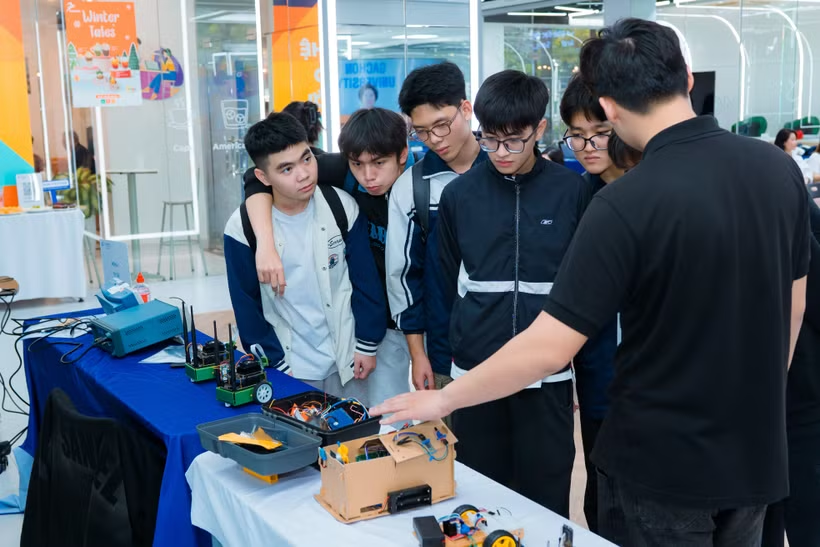
Beyond professional discussions, the event will feature interactive technology experience zones, allowing participants to gain hands-on insights into semiconductor technologies and emerging trends, from exploring chip technologies and international learning environments to accessing future innovations and career opportunities.
Within the framework of the summit, scholarship awards and networking activities among businesses, universities, students, and parents will also be organised, helping to bridge education and the labour market.
In this context, experiences from leading semiconductor nations are seen as important references for Viet Nam. Among global leaders in the semiconductor industry, the RoK is regarded as a top technology hub with a comprehensive and well-developed ecosystem. The country ranks among the global leaders in key segments such as chip design and memory chip manufacturing, while also standing at the forefront of R&D investment and innovation.
It is also home to major technology corporations such as Samsung Electronics and SK hynix — key players in the global memory chip market. The close integration between education and businesses in the RoK is considered a critical factor in building a high-quality semiconductor workforce.
A highlight of the event is the launch of the Gachon Viet Nam programme, a joint bachelor’s degree in semiconductor technology between FPT University and Gachon University, featuring a two-year study period in Viet Nam followed by two years at Gachon University in the RoK.
Gachon is the first university in the RoK to establish a dedicated semiconductor school with one of the most advanced laboratory systems. It is ranked among the world’s top 501–600 universities in the Times Higher Education 2026 rankings.
During their studies, Gachon Viet Nam students will have opportunities for hands-on training and internships within the FPT Corporation ecosystem and Gachon University’s extensive semiconductor partner network, including Samsung Electronics, SK hynix, DB HiTek, and Magnachip, along with research institutes and national technology centres. Upon completion, students will be awarded an international bachelor’s degree conferred by Gachon University.