According to reports and opinions presented at the meeting, amid developments in the Middle East and difficulties in the global oil market, in recent days the Government and the Prime Minister have held many meetings and issued official directives requesting timely, flexible, and effective measures to ensure domestic energy security.
The Prime Minister has also held phone talks, sent letters to leaders of various countries, and worked with ambassadors of countries in Viet Nam to seek support in ensuring the country’s energy security.
Implementing the Prime Minister’s directives, ministries, sectors, and agencies have used the Fuel Price Stabilisation Fund and adjusted taxes on petroleum products to support fuel prices. Corporations and enterprises have stepped up the production and supply of petrol, coal, electricity, and gas for the economy; promoted energy transition with new products gradually replacing fossil fuels; encouraged the efficient and economical use of energy; and strengthened inspections and actions against smuggling, hoarding, speculation, and profiteering in petrol trading.
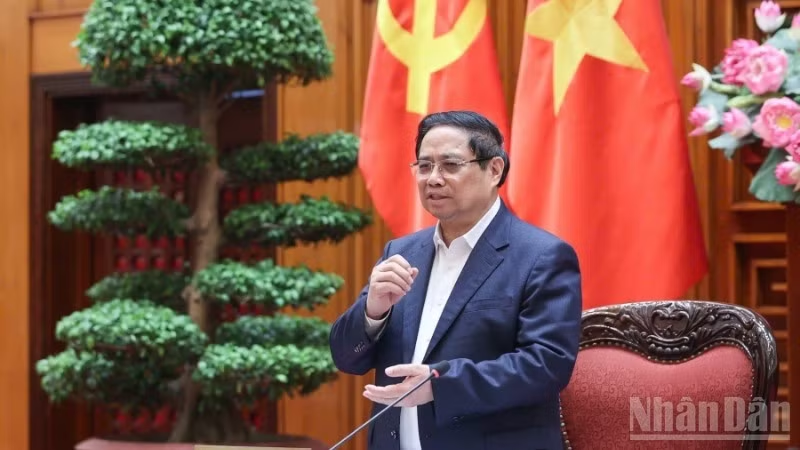
In his concluding remarks, Prime Minister Pham Minh Chinh stressed that the highest priority is to ensure no shortages of energy and fuel under any circumstances; to minimise the negative impacts of the energy crisis on macroeconomic management; and to avoid disruptions to supply chains, production, business activities, and people’s consumption.
To achieve these goals, a number of policies have been implemented, including fuel price stabilisation policies in accordance with regulations. However, in the context of the fast-moving and complex situation, and the possibility of a prolonged crisis, preparations must be made in case the Fuel Price Stabilisation Fund faces a shortfall.
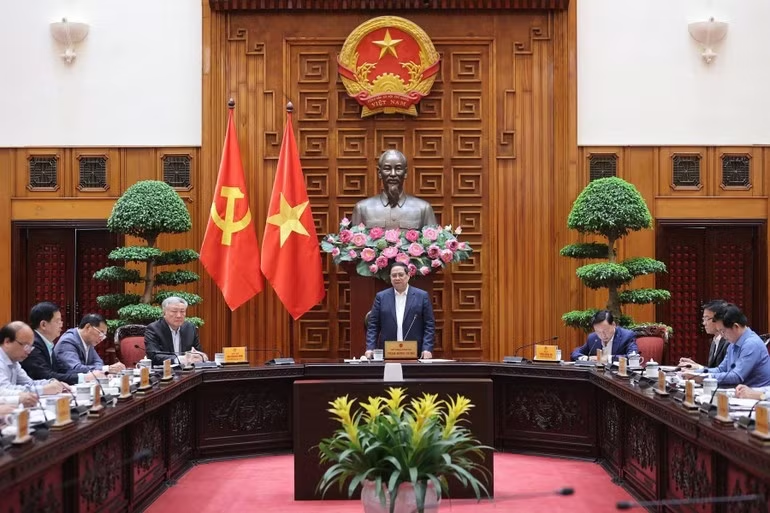
The Prime Minister agreed in principle with proposals from relevant agencies to allocate State budget funds (from the increased revenue in 2025) to the Fuel Price Stabilisation Fund. Once the crisis is over, the fund will reimburse the State budget. He assigned the Ministry of Finance to take the lead, in coordination with the Government Office and the Ministry of Industry and Trade, to urgently build and complete a draft report to seek approval from competent authorities so that the Government can proceed within its jurisdiction. The policy is expected to be applied until April 15, and if extended, the Government will assess the actual situation and report back.
The Prime Minister emphasised that management and administration must closely monitor developments, respond promptly, and build policies based on data and practical conditions, in line with the socialist-oriented market economy and national circumstances. Measures should follow an appropriate roadmap, avoiding abrupt changes or shocks. The management of the petrol market must be controlled and stabilised prices, while also taking into account fuel prices in neighbouring countries to both support people’s livelihoods and business activities and prevent cross-border smuggling.
The Prime Minister assigned Deputy Prime Minister Ho Duc Phoc to continue directly overseeing matters related to the State budget, taxes, and fees; and Deputy Prime Minister Bui Thanh Son to directly handle issues related to market management, stabilisation, and the State management responsibilities of the Ministry of Industry and Trade. Matters should be handled within their authority, and those beyond their authority should be reported to the Prime Minister.